To ease me into writing a piece for the new Dodo Ink anthology, Trauma: Art as a Response to Mental Health (here – out January, 2020: http://www.dodoink.com/blog/2019/2/13/dodo-ink-announces-a-new-anthology) I’ve been looking at my first book, Killing Hapless Ally*. This was an autobiographical novel; breathless, not without challenge to read and less than you’d think to write because it came after the life-changing therapy, not before it while the need was pressing in on me. Or when I was nuts and didn’t know who I was. Seeing literary figures in landscapes. Couldn’t compute at all that my fingers were my own extremity. Not then, after.
Killing Hapless Ally was the story of how a frightened little girl developed self defence strategies through pattern, colour and through a binding association with certain people in the public eye who looked kind, perhaps kick-arse and pretty or with a certain kind of powerful glamour (Frida from Abba, Dolly Parton, Shirley Bassey). These people became imaginary friends when the protagonist (well, she was me, so that’s okay to the people in reviews who didn’t like her!) was tiny; alongside them, a groups of authors and both real and imagined characters from books, or the books’ authors. Thus Albert Camus and, with quite astonishing contrast, Mary Anning the fossil collector of Lyme Regis. As a child and teenager I could see them and hear them: that’s how potent my imagination was. It’s like that now, actually. And, like miniature me, reading is a bedrock. It is has always been there, books consumed as if I’d die without them. Problems solved through the worlds encountered in books and beautiful language there, mouthed, sucked as soother for its mnemonic qualities and to stay alive, calm and in company. Which reminds me, something by me on poetry and mental health here:
https://www.writersandartists.co.uk/writers/advice/971/dedicated-genre-advice/writing-poetry/
Now, my sweet husband says it’s genius, this crazy old imagination of mine. I say, it’s because I was lonely and scared as fuck for years and years. And no-one knew. There was no-one to tell because my mother had so influenced how I saw myself and so shaped how I thought other people saw me, that I was both ashamed and thought I was a mad and bad thing who jolly well should be suffering. I didn’t dare tell anyone what went on. My earliest memory is when I was three and I felt a pop of excitement because it was unseasonably warm, the faces of the celandines were open to the sun and I had on a funny outfit of some sort. A colourful mish-mash. Readers: I am always a colourful mish-mash! It was my birthday. I felt happy, warmth on my back. Then my heart plummeted – the same feeling I get now when people say certain things to me or I am confronted by certain situations – and I was scared again. It was often an amorphous fear. It wasn’t necessarily – remember I was tiny so I cannot remember it with a detailed veracity – fear of my mother’s beatings, but more of the dread possibility of something happening and things being said and everyone knowing who or what I was. It has taken me decades to get out from under that woman and, more to the point, to get out from under the belief that I am a nasty little thing and everyone knows it and always will. My father and much older sibling could have done something to alleviate it – it was hardly invisible within the family home. I do remember my father removing my mother from me, handfuls of my hair in her hands; I have no recall of anyone holding me, cuddling me and, as mother of three and carer for two more myself now, I’ve got some pretty strong opinions on that.
Ah – all these difficult feelings. And, do you know, I cannot fully explain it but feeling like bad egg eldritch child led me to develop a sort of alter ego as a more palatable version of myself. Except that it all went a bit wrong and took many years and a lot of therapy to disentangle. That’s the Ally to to my Alison. The killing…well, it’s metaphorical. But let me tell you I took a few other people out at the same time. Actually, when I threw Ally out of a very high window in a site of special psychiatric interest, Albert Camus at my back willing me on with the rest of my long-loved posse, she landed on my mother, whom I’d thrown first. Again, not literal. Sloughing off of the selves, being given permission to do it and God Bless Wiltshire Recovery team because, without them, I’d be dead.
Here’s me, tiny kid.
‘The girl is standing on a soft bank in a spring breeze as the laundry blows high above her there in the orchard. The breeze blows cold, but there are currents of warmth about her legs as the day decides whether it will whip or kiss. She is wearing a long, chunky necklace that she had made of wooden Galt beads, a pink hand-knitted jumper and a pair of knickers. It’s the kind of outfit difficult to carry off once you’re a big girl. But sitting now, legs akimbo on the bank, she sees the faces of the yellow celandines open to the sun, the hedge full of primroses beyond the whirling laundry and she is happy. She knows she can bury her face in the violet patch and lounge there with their sweetness. That is, for a short while, because this child knows that after such delicacy come penalties and consequences.
Dozing now, in the day that is definitely kissing not whipping, the girl feels something against her elbow. She doesn’t open her eyes at first, but now she feels it shuffling towards her cupped palm: it is a thought—insistent; warm; compelling. Here came a voice now and the voice screeched, ‘Alison! Down here now and finish getting dressed! Hopeless dirty little child!’ (That was her mother.)
But also, the thought again, curled up in her palm: ‘Don’t worry, be a Hapless Ally whenever you need to. Make something new: to cover up you!’
The little thought in the palm continues to nuzzle; it won’t give up and so Alison suspends disbelief and decides that there might be an alternative to feeling skin-off vulnerable; unwanted. Now she had a new name to put in her pocket. She didn’t know what ‘hapless’ meant yet, but she figured it sounded clumsy; clunky and less of something―and yet useful. The funny thing was that it came to fit: right, like a well done sum. It was a red letter day: an invisible amorphous thing in the hand had given her a moniker.
But back to the things I am going to be writing about in the Dodo Ink anthology. I am thinking about how reading was a source of sustenance to me at an early age; a retreat and a way into new worlds and new possibilities. Even though I did not feel I could access such places, I never gave up hope that I could, one day. And my imagination ran wild, so that I constantly invented stories wherever I went, colouring things in. I was looking at Killing Hapless Ally and really struggled to pick a section because so much of it is about literary worlds. In addition to the books, I had a colour table and miniature books of rules that I had made in order to impose some order, I think, upon my world. I wonder if, looking back, the ruminating thoughts as a child, the phrases I had to repeat for safety and the constant careful settling of the items on the colour table where the roots of OCD for me. I can tell you, I no longer have that. I still have periods of depression but they do not last as long; I still struggle with a kind of hyper-vigilance at night, born in childhood, I would imagine, where I am watchful because I do not feel safe. There was more than one reason for that, too. I also have dissociative episodes which are scary as I don’t always know where I am and feel entirely separate from myself. Those seem to be triggered by events and people which remind me of my worst fears from childhood – largely centred on being sure that I was a terrible thing, a blot on the world: and everybody knows. Oh, but I read and I read. And now, I write too. I could get you a book in six weeks now**, that’s how my imagination is. It took me so long to write a novel – not to write it – I have written all my books in a few weeks; to get round to writing one – and I was so scared to do it. Well, not any more my bravehearts.
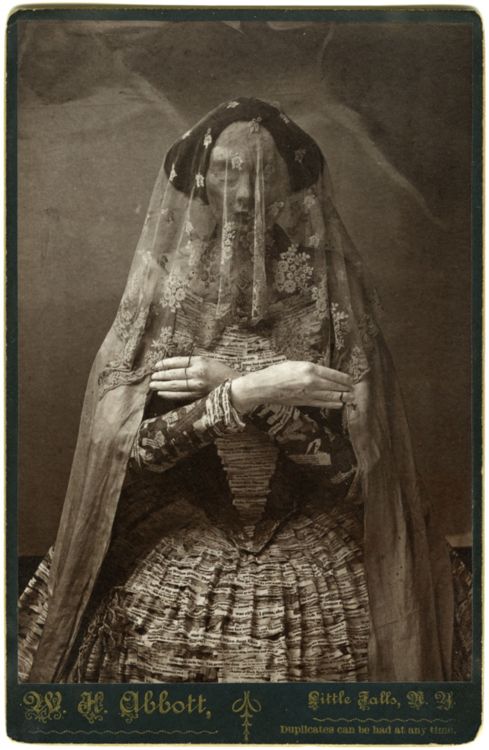
Now, Killing Hapless Ally is on the move; when it lands in a new home, I will tell you about it. And I’ve got loads of books coming and being read and next year is a BUMPER YEAR with two books out and I am ridiculously excited and and and. Shh now, Alison. Here, for you are some extracts from Killing Hapless Ally. An entire scattershot chapter on mis-education. But first this; it’s about my father’s peculiar family; Welsh emigrants, they moved for mining and caving to the Mendips where they isolated themselves and thus we have another weird element of my early life. When my mother died – I was orphaned early – my father’s family turned up and compassionately announced I wouldn’t see them again. Then my brother cut off contact. I have mired in the most profound set in dysfunctions (as well as my deep joys of aunts and uncles and cousins who live colourfully across Wales). Oh – I am okay; ultimately, it has made for great stories and an increasingly low tolerance for people who tell a shitload of lies, upholding them to others’ detriment. And you see, this strange isolated Mendip world had its own beauty because my semi-literate grandparent recited poetry – and it was a formative joy of my life. Here is an account, along with a terrifying picture of paternal grandparents and something which could scare you off pickled eggs for life! It’s about words.
Do write and tell me how it is for you, won’t you? x
Off the dark hallway, seeping red cabbage waited for the hard-knuckled hand and downy arm of Grandmother to scoop and slop and lay down with less than love. No-one here would have even noticed whether Alison was just herself or being the more palatable Hapless Ally; besides which, they hated everyone. It was almost a relief for the child. It didn’t matter who she was, did it?
Here, all the skewering and squishing death-stories were told as gentle reminiscence, horrible endings so comforting over an otherwise silent dinner on the huge table by the old range with the clothes on the Sheila Maid hanging overhead. Frequently, in this exposed position on The Hill, the wind would whip up, Grandpa’s chickens screamed like banshees, timbers creaked and doors quavered and smashed shut: perhaps the unquiet souls of the dead, disliking the cheery retellings of their worldly extinction. Grandpa was nearly blind, but compensated verbally with story after story, determinedly still driving his red Morris Minor van to ‘The Hollow’, the next village along, to go bell ringing with his wall-eyed, big-foreheaded friends: if he killed someone on the road, then clearly they should have known to move and anyway, tolling bells stopped for no man. He was a fine poacher and trout tickler and handy with an axe or chainsaw, with no maiming or fatality up to that point. Had he lived longer, propped up by tales of incompetent oncologists, chiropodists with shaky gin-hands and mental asylums, doubtless he would have expired horribly, like his brothers. Disappointingly, he went quietly, not far from The Hill, in an old people’s home, which smelled overpoweringly of wee, talcum powder and the pungent boiled cabbage smell Alison associated with Terry and Helen’s house. The day he chugged off, the grandfather clock kept going, but the staked dahlias wilted and the cats howled into a place behind the pantry door where a dead grandmother must have lurked as she waited to slop and slap the sludgy umber pickles at future despised grandchildren.
Grandpa had never been able to read very much, but he could recite poems by Tennyson and Arnold and the whole of Browning’s ‘The Pied Piper of Hamlin’. Those were the spellbound, golden moments. And it was hard to imagine Arnold’s ‘Sohrab and Rustum’ told with anything other than a broad North Somerset accent, a bit of a dribble and a touch of snuff on the lip and septum. It wouldn’t have made sense, which Alison remembered years later sitting in a tutorial in Corpus Christi College. The esteemed professor declaimed assorted lines and she thought, ‘Wrong! I don’t know what yer saying!’ It should have gone, ‘And firs grey o’ morning filled eeest,/And the fog rose out Oxxxxus streeem’ and not, ‘And the first grey of morning fill’d the east,/And the fog rose out of the Oxus stream’ in received pronunciation. But, however it was said, here’s the thing: words can heal. They can make you soar, whether read or heard. And you cannot take them away once brought into the world. Sometimes they are good even if a bad person said them; because the words can exist independently of the mouth that uttered them or the horrid geography that spawned them. It is magic.
And it is, oh it is! Here, I leave you with a whole chapter on my peculiar education. And I am off to finish my essay.
The mis-education of Alison
So let us tramp more through the forest of ardour later, and
tell now of Alison’s schooldays. There were a few things
worth the re-telling, but these days are really about The
Books and The Ideas, so forgive the story if we keep the
distinctions between Alma Maters necessarily vague. How
can it be that fourteen years of learning and the rest can
give us so little to crystallise on the page? But let us try.
For Alison—especially Alison wanting time and world to be
herself (whatever that was) and not to spend it as Hapless
Ally—the books performed vital functions, curing, as Larkin
had it in ‘A Study of Reading Habits’, most things you might
go through, but not school: school had to be endured.
Nonetheless, the books were always a vital salve and it is
impossible to describe these days without them.
Certain chapters in The Wind in the Willows had, we have
heard, the function of creating home and hearth; Alison was not sated by the pastoral pleasures of ‘The River Bank’
(although the hamper sounded a fine thing), but the tramp
through ‘The Wild Wood’ was read frequently because the
place where Mole lay down to hide sounded like the crawl
space where Alison communed with Frida. Looking back,
all the favourite bits were the descriptions of safe havens,
burrows and long corridors where Badger shuffled along
with a candle and carpet slippers that were scuffed and very
down at heel. Alison imagined herself in a tartan flannel
dressing gown, rusticating happily by a fire in a sett in winter.
She stepped gingerly through the descent to Mole End from
the open road; the episode prompted by Mole sitting down,
crying and giving way altogether to his emotions, because
he scented home. Alison had no particular sense of how that
would be (although the colour table and the crawl space
in the wood did a pretty good job), but read and re-read
significant chapters, ruminating on place and on the home
and the welcoming hearth.
Alison grew up in a beautiful place, but a sense of safety
and comfortable enclosure were best achieved through the
pages of a book, so she turned to ‘The Wild Wood’ (knowing
that Mole would escape its dangers in a hollow and with the
aid of Ratty with a stout cudgel), the home of Mr Badger and
the snowy journey through the fields in ‘Dulce Domum’. The
chapters on Toad and ‘The Open Road’ were best avoided
because they contained a Fucking Caravan but there was one
chapter which caused a shiver, without a clear understanding
of its cause. It would make her cry and feel helpless and lonely
as a child and yet she wanted to read it again and again: the world of our subject was never tidy in the way that the world
of, say, Heroic Alice might have been (although, of course
as adults we discover we never can tell: for the glossiest girl
might be inwardly crying, ‘Help me! My bespoke underwear
is holding up my soul!’). Alison’s world, with its itchy palm
and its sufferance was messy and confusing and caused
headaches and head banging. And so she would run for
places: for dug outs or soft meadows, whether in real life or
in books.
Once, after lingering on stories from The Wind in the
Willows, Alison canvassed her classmates on their opinions
of the book and thus it was that a peculiarity arose: none of
them remembered a particular chapter—and this caused her to
wonder whether it had been imagined in a dream by day or
night: ‘The Piper at the Gates of Dawn.’ It wasn’t the notion
of the child otter having wandered off, held safe by the great
creature, the friend and helper, and found again by his father,
but rather that it is about mystery: of something deeply felt
but, faintly, inchoately understood.
On hearing the pipes of Pan, Ratty knows he has found
the place of my song dream and when the moment is passed
Mole, ‘…stood still for a moment, held in thought. As one
wakened suddenly from a beautiful dream, who struggles to
recall it, and can recapture nothing but a dim sense of the
beauty of it, the beauty! Till that, too, fades away in its turn,
and the dreamer bitterly accepts the hard cold waking and all
its penalties.’
To Alison, it was like Caliban who ‘cried to dream again.’
She certainly understood cold waking—had many nights of
that, frightened, alone and convinced of appalling sin,
wetting the bed in her fear. Penalties were part of life;
sporadically most of life, and definitely the consequence of
happiness, as she had instinctively known that day in the
orchard, caressed momentarily by deferential celandines and
the warm threads of breeze. Alison would yearn to find this
place and its feeling, of sadness, but also of inscrutability and
throbbing, growing faith. And so into the nearby landscape,
she would run, early and before anyone noticed, to the fields
and the weir. Bounding out so early, unusually chipper and
comical, she might have been Hapless Ally, trying hard for
buoyancy and comedy. But she wasn’t: she was just Alison
and she was looking for something only she could see. Strictly
speaking, running out early was not allowed, but it was
worth the gamble. Yet would she ever find the kindness
of a great creature there? Of a great thing? Hope almost
exhausted, she would lie down in the wet grass and weep
there, knowing that the land retained a memory, sweet and
sad and buried, of something extraordinary there in the sods,
by the pounding of the water. One day. One day.
And so we turn from a tear falling on the grass, to a funny
little girl at school. There, everybody was reading Charlie and
the Chocolate Factory and acting out scenes from it; they were
crazy about it. It didn’t do so much for her. For Alison, the
book added little to her internal inscape but was more use for
the caricature you created to cope: she thought of the nasty, elegant little ballet girls as resembling spoilt, demanding
Veruca Salts. Augustus Gloop was worryingly like Terry
in aspect; Augustus just drank from the river of molten
chocolate rather than imbibing of the multitudinous spotted
dick, tripe and onions and any kind of pie and probably
didn’t watch ‘Countdown’ in a tropically-heated house on
Tyneside. Alison hoped that if she were one of the children,
she’d be Charlie Bucket, a nice kind of kid—and she would
have liked to own a grandparent called Joe. Alison was not
unfamiliar with the concept of relatives who never got out
of bed (although Mad but Nice Andrea tended to wear her
duffel coat in bed, not pyjamas), but for her it would have to
be Frida as your golden ticket companion. Or Helen, before
Cyclamen Terrace, the rain and the short interim before the
brain tumour and bonkers, with the smell of the cabbage
wafting up the stairs, but she was probably being a bit busy
having affairs and smoking in the cool way; sashaying in her
knock-off Chanel suits and cute pillar box hats. Adventures
that never lasted and which they never shared. Alison didn’t
know yet that the bequeathed Albert Camus was the gift that
delivered.
Now, while the peppermint grass in Willy Wonka’s
factory was one to remember as you plucked a blade and
sucked, for her it was a swig of cider in Fantastic Mr. Fox
that provided the correct dosing of comfortable and cosy.
Something about the illustrations of the fox’s lair, with the
table of plenty set out; something about the way Mr and Mrs
Fox were clearly crazy about one another in a truly foxy sort
of way struck a note with her. A note that spoke of hope and possibility. Another from this canon, Danny the Champion of
the World, might be a book for Alison to read securely now
in adulthood and as a mother herself, but as a child the fine
evocation of the joy between father and son was unreadable;
the book scratched and itched, however much you liked the
concept of pheasants being dosed with medicated raisins.
Moreover, they lived in a caravan. And we know about
them. Also, Alison’s father had remarked that Roald Dahl
was known to have disliked children, which placed him on
the same dais as Santa Maria and Alison’s father and she
could never get past the first bit of James and the Giant Peach;
not just because of the ghastly, mutually adoring aunts, but
because of the prefatory blunt description of death. Death, in
Alison’s consciousness, was always a-knocking at the door.
In books she wanted feasts, cosy spaces, secret gardens with
high red walls and gnarled trees; she wanted safe dark rooms
with tall drapes and haven hedgerows of red campion and
honeysuckle. She wanted all that and to be warm, silent and
extremely small. She did not care for a mauling, trampling
or skewering of the parent kind. She could get that at home,
with plenty of gore—particularly over tea at her grandfather’s
house. So what was needed was the comforting detail of
‘Concerning Hobbits’ in The Lord of the Rings (a winter
book), or the straggling but lovely roses of The Secret Garden
(a book to be read in bed, but only when it rained―and in the
autumn).
Back at The Hill (thus interrupting the vital reading
programme) Restless Rhonda, Alison’s cousin, had died mysterious causes while apparently potting on in the shed and
there ensued much shuffling and whispering about the dark,
old house with the creaky gate and the old plum tree that
had been struck again by lightning; at the funeral, no-one
cried, but raised their waxy faces to the altar beyond the waxy
face in the open coffin and sang the hymns quietly through
cold, pinched lips. And in The Place beyond the Sea (which
is to say a corner of South West Wales), cousin Lewis had
died by his own hand, leaving his mother, Mfanwy, turned
inward and mute for decades, looking one way across the old
churchyard where her son lay and the other across the sea
to the islands. The Sound was a place where Alison loved to
be on the boat looking at the whiskered seals, but it became
tinged with the melancholy of a mother, looking out across
the water and thinking of her dead son; local people referred
her to her as ‘Muffled Mfanwy’ as her voice never came
out properly again―for she was stifled by an inexpressible
sorrow. Then Maternal Grandma turned her face to the wall
and Santa Maria responded with an angry bitterness: there
was a late phone call and she said, ‘I am going to watch my
mother die.’
It sounded like a play at the theatre; like Beckett: Theatre of
the Absurd. Alison hadn’t the faintest idea how to comfort her
mother; her carapace was hard and shiny and so hugs would
slide off. Anyway, Alison didn’t really know about hugging;
she saw her relatives extend their hands and brush an arm
stiffly with fingertips, looking into the middle distance. That
must have been their hug. But she saw other people do
something different. Even kiss. To Alison, a kiss was what happened before a man fucked you and what, once, Helen
planted on her forehead, all puffed up with tumour and
morphine in bed.
It had gone like this: ‘Love you, my little one. It could have
been so good, you and me.’
‘Please don’t die, Auntie Helen: what will I do without
you?’
‘You will “lie down”,’ said Helen, between pops of clear
breath, ‘ “where all the ladders start/In the foul rag and bone
shop of the heart”. It’s Yeats, you know. You remember?’
‘I know, Auntie; he’s on our bookshelf, although we
haven’t talked to one another yet.’
‘There will be time, my darling.’
‘It doesn’t sound very good, though. The foul rag and bone
shop bit—and in the heart, too.’
‘Au contraire, my little one. It is where you will begin.
Where you must begin. And you will survive and be happy.’
‘I don’t know if I can do either of those things.’
‘But you can. And take the Camus from the shelf before
it’s chucked in the skip when I’ve shuffled off. Terry doesn’t
read French and I wonder—but I love him; I do love him,
pet—whether he thinks the examined life is one best avoided.
Don’t tell anyone I said that. I’ve got to stay at Cyclamen
Terrace now, so you take Albert. Look: isn’t he handsome,
too? Maybe he can look after you now?’
Helen knew. She knew everything about Alison. And she
gave her the knowing look: the one which said, ‘You will
become the girl who did.’
‘One day,’ thought Alison, ‘perhaps I can begin and do
what she described.’
Helen kissed her.
‘What did you just do? What was that thing?’
‘I kissed you. Because I love you. It’s what we do.’
Home was silent. No kisses. No ladders. For reasons that
weren’t explained, Alison was not allowed to attend Maternal
Grandma’s funeral. That being so, the girl, true to form,
wondered if she was implicated in her grandmother’s death
and that was why she should not attend the funeral. It was
frightening and shaming and Santa Maria spat angry tears
when her daughter tried to help.
‘I want to make you feel better. And I thought, if Muffled
Mfanwy was at the funeral, I could help her feel better too.’
‘The best thing for me is to be nowhere near you. I am
grieving for my mother. Go away, you little fuck-wit. Go to
your crawl space.’
Alison shook and felt cold and sick.
‘You, you…know about the crawl space?’
‘We know everything and if you’re not careful, we will cut
it all down.’
‘Did I…did I hurt Grandma?’
‘Probably. How could you do otherwise?’
Thus it was that Alison turned to her Important
Acquaintance with Mary Anning and her treasures: because
she felt she couldn’t be implicated in anything there and quite
liked digging things up. And who could she hurt on the
beach at Lyme Regis?
Mary Anning was the carpenter’s daughter from Lyme Regis, she who collected many fine fossil specimens and
found the first ichthyosaur. Acquaintances now, but the
friendship was coming along, although Alison was always in
the way on the beach. There were some hitches, though:
Mary had a cunning little Jack Russell called Tray and Alison
hated him for his perspicacity. When Mary wasn’t looking,
Tray became a leering little black dog who said, like the itchy
scratchy sometime thought in the palm, ‘Better watch out. It’s
going to get you Alison. Or are you Hapless Ally? Which is
you? Which is better? Wait and see. Woof ha ha woof!’
Alison was desperately clumsy and could do a lot of
damage when Mary was cleaning off major specimens with
all her little tools and brushes, so there were lovers’ tiffs and
consigning to storerooms to cause less damage. But Mary
behaved as if she were fond of her and when Alison closed
her eyes, she would imagine that she and Mary were walking
along the Jurassic coast, towards Golden Cap or Black Ven.
Mary would tell off her foolish friend for knocking over
the ‘curies’, the abbreviation Mary gave to the curiosities, the
fossils she collected.
‘No not like thaaaat (in her gentle and flavourful Dorset
accent), you are just hapless—and go gently through Father’s
shop. Step away before ‘tis broken.’
There were some fine things, tumbled onto the floor by
her clumsy friend. Things that, ‘Ah! Things that could have
reached a pretty penny with the folk in London, if you hadn’t
have been and knocked them on the floor. Ah! Anyone ever
told you were haaapless, Alison?’
Well, that was ironic.
Mary had extraordinary faith in herself. She didn’t care
whether other people were interested or not; she was just
led by her eye along the beach, knowing what was worth
the collect and what was just beef. She told Alison that her
vigorous way had been formed by—a story many folk in
Lyme Regis knew—being hit by lightning as an infant. She
had been under a tree and three women with her had been
struck dead, while the infant Mary survived, thrived and
bloomed. Alison watched her in awe and thought that, if she
were struck by lightning, it would be more as it was in the
Stevie Smith poem, where a girl contemplates how it would
be nice to get hit by lightning and killed while she was just
walking across a field, not that anyone would be bothered.
Alison, struck, would be fried and dead, or all raggedy and
alive and Santa Maria going, ‘What have you done now, you
little maggot? Haven’t I been punished enough?’
Mary Anning was the first and last person Alison could
imagine was pretty in a grubby bonnet, stained by the blue
lias—and a dirty apron over the plainest of grey dresses. And
her little dog, Tray, skipped joyfully behind her, but growled,
skulked and strolled behind Alison, when Mary bent
suddenly to dig. Mary was light on her feet and she had the
great love of her father. There were men, important men,
who loved her too, later. Or at least that was the gossip Alison
would hear, whispered in the sea breeze on the Jurassic Coast.
She thought she wanted to have Mary’s clear and unwavering
gaze, but instead she fell over the rocks and picked up the
wrong stones. And, in the end, Mary dumped her for the
more sophisticated Miss Philpot and that was that.
She shouted as Alison left the workshop, jars tumbling
behind her, ‘You really are haaaaapless. Ha ha ha! Take
thaaaat! Duck now: ‘tis a bezoar!’
Mary had thrown a bezoar—a coprolite—at her: fossilised
dinosaur shit. Another face and voice to mock.
Her mother had bought her the book and now quoted
Charles Dickens on Mary Anning to her, ‘Look: here’s
something that could never apply to you, hahaha: “The
carpenter’s daughter has won a name for herself and has
deserved to win it.” Heroic Alice or Mary Anning you will
never be.’
Alison knew that this was a fair observation, but it felt
pointed and, useless palaeontologist that she was and would
ever surely be, the quotation stung. Now, on the bedroom
shelf, Mary was laughing at her throatily from within the
book and her laughter had been joined by the more sedate
chuckle of Miss Philpot and the laughing, goading raised
eyebrow of Santa Maria. Bitches.
‘I wish I had a coprolite to throw! Santa Maria’s right!’
After this humiliation, Alison put the book Mary Anning’s
Treasures to the back of the shelf, behind the Bible full of God
who was Dead if He ever Existed and went back to spending
more time with Frida in the crawl space, while it lasted. Frida
said, ‘Oh ya, fossils and mud. Not good. I’d like to see her
survive a Swedish winter. Bonnets and aprons? Not not hot.
How about ice skating with me? Björn could meet us. He’s
still mad for you and has written ‘Fernando’ in your honour.
You could borrow my fur muff, if you like. Muffs are hot!’
In addition to the friendships, there were many love affairs
over the years. Sunday afternoons, even as a child, would find
Alison’s mouth full of Porphyro’s marvellous jellies and fruits
from ‘The Eve of St. Agnes’. For her, the identification of
the author was a little like that of Pip at the beginning of
Great Expectations, deciphering what his parents might have
looked like from the graphology of the stones. Except Alison
decided who and what John Keats was from the beautiful
ochre leather-covered book, its spine and title pages limned
with fulsome gold. She had a sense of who he was even
before she ventured inside and saw pages featuring the most
winsome picture of John Keats, with a frontispiece of autumn
fruits, putti, roses and waving grasses. The font was
beautifully rounded and the words Keats Poetical Works
looked like they might be edible. Certainly, Keats didn’t look
as if he could build a wall or do anything really manly, but
he was her first blueprint of what a sensitive man might look
like and possibly the first man she fell in love with, aged
ten. Clearly, Alison’s attachment to John Keats (or ‘JK’ as she
liked to call him) was not what you might call a normal first
crush. The shirt was loose at the neck, white and flowing,
and the eyes were intense and sad. There was absolutely
no doubt he would have understood her, unlike her actual
boyfriend Stuart, in school, who touched her chest under a
table in the school library and said, ‘Look your boobies are
developing.’ JK would never have stooped to that. He would
have been too embarrassed and tried euphemism; harked to
The Ancients. But Stuart moved to Barnsley and she went
back to lounging about with Keats and never returned Stuart’s letters. He kept writing, ‘I love you’ and, ‘I bet you’ve
got big boobies now’ and enclosed some black jacks and a
rainbow chew. But what did he know about Greece, urns,
autumn, plants or men in closets with spectacular feasts while
a soft amethyst light was gently falling on their beloved’s
breast? (Or boobie?) But JK wrote, ‘I wish that I were alone
and in your arms or that a thunderbolt would strike me.’
Lines were declaimed with the stroke of a nascent breast
and a hot cheek. They did well to stay hidden while, on
the other side of the sofa, Alison’s parents scowled their way
through ‘Songs of Praise’.
‘Look, dear! Those fuck-wits are miming. Obviously
miming!’
Keats stayed with Alison for some years; her Sunday
afternoon love affair, there by the bookcase, on the scratchy
carpet behind the sofa. Sometimes poor old JK had to stay
entirely in the book because he had something called
consumption and needed his rest and some wet cloths over
his face, but that was part of the romance. Mind you, he
did get a bit demanding, asking her where she had been,
could she alter lines in her letters to him—which she wrote
when she was away in The Fucking Caravan—here and there
so they were warmer and kinder and she got cross once or
twice and told him she wasn’t going to fanny around with
that sort of thing. He would cough and his pupils would
dilate spectacularly and tragically and she would assent to
his requests. Much later on, however, Keats was moved to
the background as someone altogether more manly stepped
forward. Not for this homme a lie down in the afternoon, but a manly growl after lunch, some Gitanes and a Marc.
Step forward Albert Camus and also the story of becoming an
existentialist on a campsite. Not Albert; oh no, no, no: he was
far too cool to be seen in a Fucking Caravan. It was Alison,
trying to translate the world into something that made sense.
We have already shared fateful tales of The Fucking Caravan,
of the entrapment between two alder trees and, on the same
trip, tales of two blacksmiths. However, on that same
‘holiday’, parked up by the Seine and sitting under the
willows for days (with her parents somewhere else; they
didn’t say) Alison began a roaring and extraordinary affair
with Camus. It was a reading summer, between the two
sixth form years. All around was the sense that people were
dropping like flies and the deaths of Dad and Santa Maria
must surely be imminent; she just hoped, ever practical, they
didn’t happen when the two were out in the car, or maybe
driving on to the cross-channel ferry, with everyone hooting
furiously behind them. But the reading: for days on end by
the river: Sartre’s Nausea, Genet’s The Thief, and, best of all,
Camus’s The Plague, The Fall, The Outsider and Selected Essays
and Notebooks. Also, at speed on the journey home, Simone
de Beauvoir’s The Force of Circumstance and, cheerily, A Very
Easy Death. When she got home, Alison devoured Gide’s
Straight is the Gate and Fruits of the Earth: ‘Nathaniel—I will
teach you fervour!’ Fervour: Holy Fuck—what was fervour?
What was lust for life? Were those things somewhere in the
unknowable distance, just visible beyond the bacon grease of The Fucking Caravan? She was intoxicated: dislocated
entirely from her surroundings. The dislocation did not
provide a new or unfamiliar sensation, but this kind of
dislocation was one in which she was on fire and in splendid
company.
‘Come. Come away with me now. Tonight,’ said Albert
Camus.
Now, one could dwell on the literary qualities of Sartre
and Simone de Beauvoir, but the most impressive thing for
an adolescent Alison (she whose constant companions to date
had been imaginary Swedes in a crawl space) was the sense
she gained of Sartre and de Beauvoir’s love affair; that they
wrote and argued and shared and, of course, smoked (like
Helen) in the cool way. And when de Beauvoir wrote about
her love affair with Nelson Algren—not to mention sharing
bricks (bricks: Ooh la la!) of raspberry ice cream with
him—Alison had a peculiar light-headed and heavy-hearted
sensation. It was, we would have to say, the first knowledge
of the erotic. And it hurt, because it didn’t exist in any part
of the real world, where there was just getting off and, for
some girls, an early, clumsy, grasping fuck. When Simone
de Beauvoir wrote of their ‘contingent lovers’; of love affairs,
known about by both but clearly allowable and part of
happen-stance rather than a dedication for a lifetime, it
sounded both painful and delicious. How entirely entrancing
for the teenage Alison that de Beauvoir and Sartre wrote and
expressed an intensely creative life to one another. This was
something Alison could never quite get out of her head. And
when she tried and failed to engage something which might look like it, the stone dropped in her heart and she was scared
to open her hand in case the frightening thought was there,
pressed into the palm, waiting to open. And she was scared of
being herself: Just Alison (as Denis the Lusty Blacksmith had
it), while in her heart remained the appalling leaden feeling
and the acute sense of being separate; eldritch-girl, possibly a
killer; not inclined to the magazines and spontaneity of her
female peers: missing the point always. Wrong and Weird Kid.
She willed herself to live on in a way that was meaningful
and hoped that she would find people to discuss these feelings
with; that she could know someone who understood about
absurdity, existence precedes essence or the frightening
experience Sartre’s Roquentin has when, in Nausea, he
touches a door handle and comes face to face with jarring,
sickening anguish: that anguish lived alongside Alison
permanently. At five, it had started somewhere after Saturday
morning cartoons, as the day unfurled; at sixteen it began
after Weetabix and before the first application of lip-gloss.
‘This I understand: it is when the scenery collapses,’ said
Camus.
He made it sound exciting in his low tone. But it wasn’t
in real terms: at least, not yet; instead, it was terrifying and
yet Alison had a timorous sense that from that terror came
only a beginning. That definitely made sense. Good God:
intellectual heat; the erotic in its most subtle form; a notion
of how to live with hope, when God quite clearly does not
exist and we must travel to the frontiers of our anxiety to
understand where to start. Alison was not asking much in a
man, then.
Ah—but one ready day along came Albert, ready for
action. If you have ever read his peculiar, flat, sparkling, cold
story of Meursault in The Outsider, then there is little to
express. But if not, imagine a wandering, solitary individual,
not inclined or feeling the pressure to act as expected. Not
cruel, but mercenary because appetitive; plainly erotic in
responding to his needs as and when they push forward,
articulate of who and what he is and yet without what would
feel like morality to us. He did not cry when his mother
died; he shot a man on the beach and did not express regret,
only annoyance. For the teenage girl, it hit a nerve. The
description Camus had of his protagonist as a solitary and
wandering individual; as somebody entirely alone and on
the edges of society, now, that was the truest description of
her to date. It was—and there is no other way to say this—a
first orgasm. Not only with the plainness of the character
and Camus’s prose, which Alison gamely attempted in both
French and English, but also because of the man. Let us
describe him. Alison had to get over Meursault first, a man
both in love with the world and separate from it. Camus
told her of how his protagonist was inspired by a stubborn
passion, for the absolute and for truth. His truth remained
a negative truth, but it had its own beauty and without it
there could be no adroit comprehension of ourselves and of
the world; no self-containment. Meursault’s life was that of
a foreigner—a stranger—to the society in which he lived,
and he wandered about on the fringe, in the shadows of
others’ lives: plain, but deeply sensual. Such descriptions made
Meursault enormously attractive to Alison and made her fall more for the man who wrote him into being. Such a telling
of the outsider, the wandering foreigner living and breathing
a negative truth, pierced and had a difficult heat for her
because, of course, that was Alison. We could say she was
Weird Kid—plenty did and probably still do—but L’Etrangère
would sound altogether more arousing, non?
Alison had photocopied a picture of Camus: it was of
him, apparently sitting on a rather lopsided sofa, and leaning
forward with his hands tensed, his mouth slightly open, his
eyebrows raised and his trousers showing his socks as he
inclined towards a co-combatant to advance his argument.
He was so fabulously French; so fabulously exotic because he
came from Algeria, that he carried off the sock thing with
élan; socks were not normally a detail of erotic piquancy.
Camus might have been describing how brilliant it was that
William Faulkner had pulled off the language of high
tragedy; that a man from Mississippi could find language
that was simple enough to be our own and lofty enough
to be tragic. Or perhaps he was dictating something for the
Resistance magazine, ‘Combat’, of which he was the Editor
in Chief. But, to a teenage girl, under his spell, he was also
evincing arguments for ‘Come away with me.’
And, ‘Let me show you.’
Or, ‘Let me show you how to live in the face of despair. Sit
on my knee and we will begin.’
And, occasionally, when the Oran sun roused his temper,
‘Come here now. Stand against this wall. I will take you.’
Was this what Helen had meant, in gifting Alison the
Camus as she lay on her Cyclamen Terrace deathbed? It was a jolly long way from a few drunken fumbles in the dark when
they—the boy-kind—mistook her for someone else.
Albert’s cadences were delicious: he was declaiming
phrases of profound, shattering erotic power to Alison’s ear.
And he had enough style to be vulgar, if he wanted. Camus
had a history of manly pursuits, too: goalie for a prominent
Algiers football team; a fine swimmer and athlete. She had
a sense of his being a consummate man. Funny; brave; a
demon in the bedroom—if you ever got that far, because
what are walls, floors and furniture for? And, unlike JK, he
could have built a wall or changed a tyre. On the occasions
when Alison went to other girls’ bedrooms, she saw they had
pictures of The Cure, or Bono, when he was ragged, young
and angry. She, meanwhile, had a picture of Albert Camus
next to her desk. People said, ‘Who’s that?’ and she said,
‘My godfather.’ The notion felt entirely, naughtily fitting, for
the Camus books, en français, that Alison possessed had been
bequeathed to her, as you learned earlier, by her godmother
Helen, studying Camus at The Sorbonne. Perhaps Helen had
been similarly intoxicated (which made the Terry the Fat
Controller, the unexamined life, Friday-pie thing even more
depressing). So the honorific chimed as fitting. Plus it felt
like Albert leaned over Alison in a proprietary and manly
style. L’Etranger was inscribed with the words ‘Helen Griffiths,
Paris, le 19 Janviér 1962’ and Alison had always hoped that,
in leaving France for Terry, Mammy’s pie and a new life in
Tyneside, Helen was able to say, like Camus’s protagonist
at the point of death, that she knew she had been happy.
She hoped it was like this for Helen especially when the
morphine gave her respite from pain and the unexamined life
downstairs, punctuated by the sickening puffs of air freshener
from the Cyclamen Terrace plug-ins.
Now, in all their years together it never mattered to Alison
that Camus had been dead ten years before she was born: he
was there on her wall now.
Godfather. Most louche, brilliant, gorgeous godfather.
She saw in his Notebooks that he wrote, ‘I loved my mother
with despair. I have always loved her with despair.’ Albert
even understood the paradox of that! It was exactly how she
felt about Santa Maria. And by God (although He was Dead
if He ever Existed) Albert was brave: he would stand in the
face of despair and say that now he was free.
Ah, the growingupsexthing. Alison had hopeless
expectations, really, for while Camus smouldered away
behind her closed eyes, real life was, shall we say, more
a damp inconsequential thing than a smoulder. There was
Johnny in the barn. Always, ‘Let’s go to the barn,’ a bunk
up against a bale: no use there expecting conversations about
Proust. She asked him about books and he said, ‘Why would
anyone want to read boring books?’ But in school, there was
an important dalliance with D.H. Lawrence. It was Sons and
Lovers and she remembered mostly Paul Morel’s loving: not
the bit which was like a communion (with Miriam) but the
bit which was ‘too near a path’ with rather racier Clara. The
evocation of Paul’s mother, however, as he drifts back to her—and drifts to his own future death (as Lawrence himself
had it in his notes on the text), now that was a theme best
avoided during these delicate years. Besides which, no-one
would have got it because at that time boys just wanted to get
you drunk and feel you up in a dark room when the parents
are away. Only in reality, they were feeling up someone else.
Like Heroic Alice. Oh yeah: Heroic was still around; jiggly
tits, cool-thriving and diving and looking on her hapless
(again, ironic, though note lower case) counterpart with scorn.
She had the best clothes and hair; told the kind of jokes boys
liked. When she moved upstairs, the party moved with her,
while Alison stood downstairs thinking about existentialism
and, ‘I’m a misfit and nobody fancies me.’ Alison was
definitely Weird Kid. Good job she had Albert.
Not long after, Alison discovered Sylvia Plath: now there
was someone with an embolus of fear and an itchy, scratchy
little thought in the palm. Alison would act out scenarios
of meeting Ted, based on the diaries she had read; they
would meet, drunk and—again—smouldering (she liked
smouldering) at each other at a party and she would bite his
cheek. The room would hum harder and all was in a brandy
glass whirl; the blood ran down Ted’s face and along Sylvia’s
arm. And oh Lordy: the poetry and the sex. In class, the girls
would say, ‘Uggh! She is mental.’
But Alison would think, ‘Sylvia: oh my God, you’re
gorgeous! Look at you, rocking your fifties swimsuit, your
twin-set and pillbox hat. But you put your head in the oven
and I am so so sorry. You know, I head bang and cut myself and think all kinds of dangerous things. Your father might be
full fathom five, but my parents? Well, they are pillars of the
community. We are a middle class family and that, Sylvia, is
how they get away with it. Everyone’s looking at me Sylvia:
they’re saying they know what I’m like and that’s why my
parents are dying. You say you tried to rock shut? Well so
did I: when I was fourteen I took a big dose of paracetamol
and I tried so hard to die and come up through clear water as
someone else. It’s crazy, isn’t it? I even made a big mug of tea
to go with it and lay down with no note. I told Santa Maria;
didn’t want her to find me, but she said, “Oh well that’s just
typical of you, you little bitch.” I never went to hospital, but
I survived. I was always sore―but I survived. And it was so so
selfish. I’m sorry that you lost Otto so young and that your
mum didn’t understand you and that life went wrong with
your Ted and that you ended up getting a bit obsessed with
bees and water. The day you died, February the eleventh? I
will always remember you…And I think you were a fucking
genius.’
Alison reflected that Sylvia was the new Frida. She
certainly had some unusual imaginary friends. Frida had been
stylish, cheeky and coolly Nordic; she had always known
how to distract. Sylvia was a bit trickier: she wrote in a frenzy,
declaimed that she was a genius of a poet and made jam in
between times. Her diaries and texts were full of compelling
and weird images—mirrors, bees, foot lampshades,
candlesticks, panzer man, eating men like air, Hiroshima ash,
more jam making. She was both whore and domestic
goddess. She was a roarer of a girl in an immaculate twin-set; at once a plain, resourceful woman and, as Alison’s classmates
had it, mental. This wasn’t going to be tidy—plus Frida wafted
about Sweden, had a house in the woods, did a bit of
painting; was calm and quite the yoga buff. Plath was
unutterably, horribly, by her own hand dead in the gas oven
and poor handsome Ted was getting a rough time at the
hands of the Plath acolytes. But Sylvia had the uncanny
ability to put into words some thing; some concept or anxiety
that Alison was trying to give shape and form so that it was
less frightening; in this case, the words with the tireless hoof
taps that meet you on the road years later.
‘Oh,’ said Alison, ‘the words. How they pierced and how
they pierce today still. I wish that I had a way of muffling
the words when it hurts me to hear them…But they’re
indefatigable! Always.’
Alison dabbled in Beckett too: Waiting for Godot needed to
bide its time, but Happy Days—Winnie buried up to her waist
in a mound of scorched earth in the first act of the play and
her neck in the second half? We were getting somewhere.
Once, in those days, a boy came up to her in a pub and
said, ‘You’re weird. You dress weird. You’ve got crazy hair
and a big nose. You’re really fucking ugly. Heroic Alice said
you were!’
There was a crowd looking on; no-one said anything
either to disagree or agree, so she was trying hard to think of
Denis the Lusty Blacksmith seeing them off with his tongs.
Or, ‘What would Albert Camus do?’ Of course, he would
laugh, in a hot, derisive, Gallic way and the youths would scatter like thistledown, insubstantial in the presence of A
Man. It didn’t work this time: Alison couldn’t summon him
up for circumstance pressed down too hard; she couldn’t even
summon up the alter ego to laugh, ‘Look here’s Hapless: the
better part of me. You’ll like her.’
And where was Hapless when you needed her? Somehow,
she couldn’t be called up to adhere. Alison thought only that
she was Winnie, in the second part of Happy Days, except
that, unlike the brave and bellicose Winnie, the only word
Alison could say to the boy and the crowd was, ‘Sorry’,
then leave to sit down and punch and scratch herself with
Hapless Ally, who had now sauntered in, apparently quite
independently, and was energetically egging her on. Alison
realised with a horrible prickly jolt that the latter appeared to
be developing a cheerful autonomy: popping out to do things
separately.
‘It is this way that madness lies?’ asked Alison.
‘Oh yes. And Boo!’ sneered Hapless, now skipping off with
a popular boy who thought her lovely. She had that familiar,
‘I’m about to get off with someone, but how about you?’
look. The one that curled about the lips of the girls that could.
Absurd.
After this painful and pivotal incident, Alison considered
whether a relationship with divas might be more germane:
Dolly Parton and Shirley Bassey—heroes to this very day.
Dolly and Shirley will meet you again, later. They are gently
competitive these two: you’d love them for it. Va va voom!
Now, in the growingupdays there were days which, at the
time, gave the promise that they were eternal: these were the
Cambridge days. But the thing with the dreaming spires and
ivory towers is that there are untidy people under the spires
and in the towers. There are archives of beautiful things;
there are, indeed, dreams and the reveries that come with
absorption in something that is brilliant. But there are also
desultory cackles and fingers that point: it is like life and it
is not one thing. Alison always struggled with the question,
‘Did you enjoy university?’ because the answer would have
taken half a day: ‘…well, yes and no and story and anecdote
and dusty shelves and accidentally living in the seventeenth
century so I wasn’t safe crossing the road and oh―the clever
folk and the light on mossy Cambridge stones and college
bells at dusk and exeats and climbing over Magdalene Gate
at three a.m. and suddenly Dad (hereafter Vaguely Dead Dad)
was dead on the bathroom floor at home―and Santa Maria
was blaming me―and bedders and porters and dinner in
hall…and of course some days I unravelled…’
Besides, she had a relationship with three universities in
the end because of the ill-advised research projects that came
in later days. There were Cambridge, Oxford and another
fine institution that we must leave unnamed for reasons of its
name being too painful to write or say aloud and because it
was shit. Life in university days would have been so much
easier if not befuddled by roads less taken and kerfuffle and,
well, very funny turns. The kind of thing where you hear
the beautiful chapel bell ring: it is autumn and dusk. Outside
the city the birds fly low over the fens; there is a faint mist over The Backs. It is fine indeed, but Alison would hear the
mellow tone of the bell and in a second it would be alive and
mocking, pulsing and frightening—as the stones of the old
paths rose up to hit her face and she thought for a moment of
the story called ‘The Yellow Wallpaper’, by Charlotte Perkins
Gilman, where madness falls to rise as the patterns on the
wallpaper animate and quietly terrify their watcher. In those
times, it felt like there was another figure, watching her from
rooms on the first floor: it was Hapless Ally again, beginning
once more to detach more confidently: doing her own thing
and laughing at her host. When you are not wholly well, the
very ground you walk on can do that too, chanting mockery
and perhaps spitting venom. And all around, the mists and
mellow fruitfulness abound: but not for you; no, not for you.
You don’t know then that things can be different. Alison
didn’t know it for a very long time.
Books and more books were eaten up at speed as she came
face to face with her extraordinary ignorance and the more
she read the less she came to realise she knew. There were
Latin and Greek to try and understand; the whole canon of literature before the seventeenth century, as the mis-education to date had not even touched on it. Alison had spent a fevered summer in a static caravan (oh the irony) in
Pembrokeshire stuffing her face with books when she saw the
course contents for the first year. In tea breaks, Camus would
visit to discuss the reading; on walks, he would pull her by the
hair and bite her lower lip; taking her into a sea cave, when
‘Time was away’ and when it was, happily, somewhere else.
Sometimes, boy-Dylan Thomas was on the beach, on holiday from Carmarthenshire, but still dipping his hand in the fish-
frozen sea and Albert would say, ‘Oof—he has potential. He is not afraid of paroles. Now that is a man I could tangle with.’
Alison countered with, ‘Where were you Albert, when the
boy shrieked of my ugliness in the pub? When Hapless Ally
joined in? You’re my godfather and you’re supposed to be
there.’
‘I was in the desert. I went away from Oran to think and
took only dates and anise.’
Existence precedes essence could be a right selfish bastard if
it so pleased.
Such sojourns aside, and alone again in the caravan, there
had been a solo introduction to Chaucer, Langland, and The
Gawain Poet—a desperate and busy rush to fill in some gaps.
For the first time Alison read Arnold (although she had heard
it declaimed by Grandfather at The Hill) and Tennyson and
felt a wild urge to get started and also the fear that she did
not know very much. She didn’t. And yet the world inside
her head was the only world she fully inhabited, because there
had lived Frida, JK, Mary Anning and Albert. And those days
were heady and frightening. They were a helter skelter rush
from her parents dropping her off and sighing at the pretty
view of the punts on the Cam, a sudden collapse by her
father, groaning on to her bed in his endgame, Santa Maria’s
admiration of everybody else and then suddenly being alone.
Alison felt that she must make a life there while, at home,
everything was dying. There was nothing for it but to buy a
packet of cigarettes and steel herself to it. Start on the rituals: turn around four times, walk three paces, recite the first lines
of The Secret Garden four times. And do it all quickly.
Indeed, Cambridge looked to her a forever place, although
she must also have known that this was not possible. Alison
felt helpless in the face of a crush on Germaine Greer: she
had never seen this kind of confidence before; plus she had
humour and was most definitely clever-hot. The historian
David Starkey would visit: a severe, surprisingly funny and
brilliant uncle—before he became media Don and everyone
started being nasty to him on Twitter
#inthequietdaysbeforesocialmedia. Upstairs in Divinity College
sat Doctor Llewelyn, who always showed the students at his
own college the exam papers the night before they sat them,
although Alison rather gathered that it might not even have
been all of them, but just the acolytes with whom he shared
flagons of gin and possibly a biscuit. He made good tea,
though; his cleverness was incendiary; he once cried while
reading Dante’s Inferno in lectures and introduced students (or
perhaps the shiny happy students, who were everyone but
Alison, and who already knew of such) to Walt Whitman,
William Empson, and counting with utter concentration in
the observance of rhyme and rhythm. Alison was terrified
of him, though: his intelligence laid her bare, both Alison
and Hapless; both suffering from a poor education and, not,
apparently, the intellect to set that right. Alison would sink,
on Friday afternoons, into the big armchair in Dr
Rabbithole’s parlour because he gave the impression that he
was sympathetic to Weird Kid: he listened intently, offered
sherry (while she noted how disarmingly strong his wrists looked, as he poured) and once said, shortly before finals,
‘You’re brilliant but, for the first time you’re lucid: you must
be scared.’
That was the picture in other rooms and across other quads,
‘You’re clever but we can’t disentangle what you are saying
or who you are! There are no signposts.’
‘Signposts? Ha! How do you have signposts when the
scenery has collapsed: there are no real landmarks: it’s just a
heap of detritus, now.’
Albert Camus on the wall kept a watch on proceedings,
Godfather with her real-time own father very much having
played his endgame after screaming all night. And Alison’s
night was not always very pretty, with its clangings and
jungle sounds and screeches. Albert could not save her from
it: probably, he thought she had to feel the despair to be free.
Her night said, in resonant voice, over the low tones of
Albert, ‘I am you. I have no signposts. My essays have no
signposts. They are all laughing at me. At you. Dante is
consigning me to the lowest rung; Whitman is telling me to
stay away from his Leaves of Grass; not to “loose the stop from
your throat” but to keep it in there: not to speak.’
In her dream, the poets looked at each other, looked at her
and looked at each other again, the corners of their mouths
contracting into a sneer. Santa Maria stood behind them.
Virgil was refusing to be Alison’s guide; Whitman told her he
was not for her as he loafed upon the grass, ‘For what did you,
aberrant, know of how it is to be lyric with self-reliance?’
‘But I know that I contradict myself and that I definitely contain a multitude—friends others can’t see, alter ego and
all.’
William Empson, looking askance, chimed in, ‘What I
wrote: it is beyond you, so give up now. There is no
ambiguity about what I said, so don’t look for it, worm. Now
go.’
Santa Maria nodded in agreement, laughed and barked,
‘Told you so’ and Alison woke up to the cold world. Still,
holding the feeling of the dream in a pocket or in the palm of
her hand where the bad thought would come, Alison carried
on reading and carried on having desperate and unobtainable
crushes; clever men left her aflutter for three years, regardless
of whether they were gay or not. Maybe they could be turned
with a jiggle of tits and a declension or two. Ah—but not by
her, of course: it would have to be a mighty show of Hapless
Ally and even so, trimmed of too much vivacity because its
excess would have made them stare in this socially articulate
world. While she simply did not have the confidence and the
hauteur of the Heroic Alice-like girls from public schools (or
maybe just those who weren’t repeatedly hearing, ‘I should
have left you in a bucket’) it still sometimes felt just like one
long three-year fuck: from time to time an actual coupling,
but generally just a theoretical one. Lexis, rather than praxis,
as Aristotle might have said if he had written about different
sorts of fuck. And I don’t think he did.
The fractured days were, dreams and hard spites withal,
tremendously, scarily exciting. Exams were managed only
after the little rituals had been performed and even then her
large, looping script was punctuated here and there with the tears she tried to stop up. And as for the excitement, Alison,
melancholy sort as she was, judged that to be a symptom of
its very mutability; the prelude to a universal ‘Fuck off!’ But
how about we just focus on Professor Pobble? For a while, he
looked like a keeper in a mutable world. Ah―but as what?
- My first two books are on the move at the moment and so you cannot buy them. I will update you on this soon. In the meantime, I have some original signed stock for sale. You can message me through contact page stuff on this blog x












 Anna Vaught Writes - Dr Anna Vaught: teacher, mentor, author, campaigner