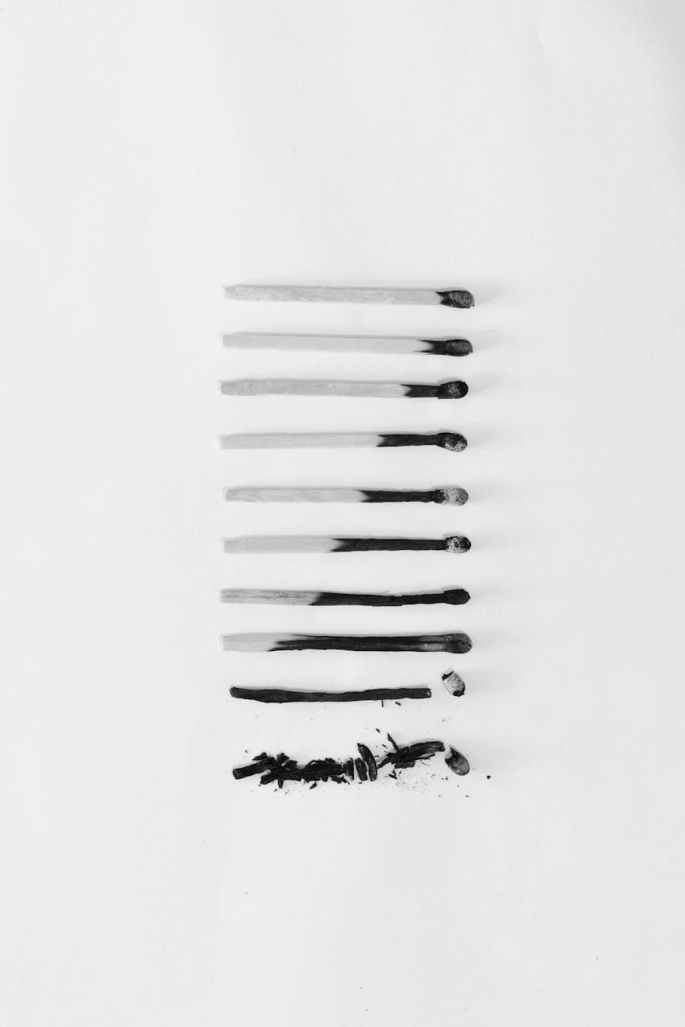
On Burnout

Today has been the day when I made decisions. I hope some people out there will find what follows helpful and loving. To you, from me, with hugs. Much of this is publishing industry-related, but in the context of a complex life – and my realisation that I am not meeting my own needs.

(Picture is of me, in one of my favourite places, on St Brides Bay in Pembrokeshire – much of my family is from around here.)

You read about burnout and, while some of what I write will be about industry, this is in the context of my managing life. I feel very tired, but in a way that is not relieved by sleep. I need a broader rest and considerably less stress. So, without going into detail about the care needs and complexities in my family, just know that I am sad and need time and space to offer more loving care and more to myself. Because of my past, I am hyper-vigilant and find it difficult to let go and not be in charge. In short, to respond to life’s demands as if they are not an emergency because much of my early life and key developmental stages were predicated upon threat and emergency. I need time and space to build on the repair work I have done in specialist trauma therapy and EMDR and with meditation practice, yoga and keystones of self-care. I need time to be alone and recharge. It is very rare that I can be; that someone does not need me to do or be something and so, of course, in I rush. But you see, I am already carrying a lot and this is partly trauma response. I want to fix everything. I need to turn back to my immediate family and to myself.

What will this mean? In no particular order…

  1. I have shaved back work to teaching and mentoring for which I am contracted over the next two to three years. If I am waiting for confirmation of an event, the new rule is chase once, no reply, OUT. In other words, I am on time and frequently ahead of deadline out of respect for others. I know doing things when you say you will is not always possible, but it happens so much in publishing – in my experience that is – and the strain has shown on me. So where things are open-ended and I said I needed a decision, I allot a time period and then it’s over.
  2. I am going to start initiating deadlines more often because I just cannot have so many open-ended things happening. This will not always be possible, but I need to be more in charge of timetable where this is possible in order to plan for the care of my immediate family and to have space to respond to need and to crisis.
  3. At the moment, I have five books, including a previously published novella, two nonfiction proposals, a novel and a brand new novella under consideration. I just finished a PhD. Honestly, at no stage have I seriously given myself time to understand the volume of work that was. I need to. I need to celebrate that level of outputting. Just me. I also need to do some writing slowly and some for fun. I am switching partly to digital-first commercial fiction – if they will have me, that is – so that, among other things, the timetable is more predictable. I am feeling the strain.
  4. I realise that I am carrying much grief – for the illness, pain, the long road during which my family has been let down by any number of health and education professionals. It has been and is heart-breaking.
  5. I am just…really disappointed by elements of publishing. I am grieving that, too. But I haven’t allowed it properly. I’ve been thinking it’s trivial to have got upset, but it DOES bother me that most of my books (there is shining exception) have not been promoted much, have been ignored, that communications have been so poor, that a beautiful book sits there with stacks of unsold rights which I cannot access to sell, that I have never got funding, that I am chasing royalty statements, that Curae and the young carers’ project didn’t get funding, that I have been so let down by the industry press and by some industry professionals on the Curae prize. It’s a ground-breaking initiative for unpaid carers, for heaven’s sake. I need to grieve all that – the time wasted, only I couldn’t have known. The situations and people who just…ought to have been better.
  6. I want to find time to recharge so that I can appreciate blessings more acutely – because there are many. Teaching is the joy of my life, for example. And I actually get paid for doing something which means that much to me.
  7. I found that with my out of office on, publishing and writing folks still filled up my inboxes across socials because they need help. I don’t think I have anything spare right now. I also realised that, much as I adore people, socials were depleting my energy. I feel compelled to stay in touch and also, partly through not having been promoted as a writer, I feel compelled to always be ON. Engaged. But I’m too tired. I can’t keep this up any more. All apps off my home screen, and possibly will come off my phone, but it’s not practical just yet.
  8. I realise that I am going to have to cut a few ties, frankly. Though I am an adult, I am still seeking approval from family members who will never approve of me because my own mother didn’t approve of me and the lie settled. It’s still there. I’ve had enough now. There are other people in my life whose demands on me exceed what I am able to give; it’s tough to say, but it’s time.
  9. I want to concentrate on beauty, breathing, my kids, books, hearth and home. You may know, if you’ve kept an eye on me elsewhere, that over the past year for reasons we don’t know, threatening behaviour has happened towards me in my own home and an area of my garden was vandalised. I have not felt safe at home for some time, but I have spent the past few months strengthening boundaries, adding lights, security cameras, being supported by the community policing team and the council, who have been delightful, and by my lovely local community. We don’t know who has done this or why. For someone who comes from a trauma background, to feel invaded in this way by persons unknown has been very stressful. You see another reason I feel burned out? I haven’t felt sanctuary.
  10. I want and need to simplify my life and ringfence time to be alone and to heal. To build the strength to bear sorrow with more equanimity. That will not impact my work, which is teaching and mentoring, but it will in terms of my toleration for others’ demands, people flaking on projects, and open-ended publishing situations. I need shape and structure in a chaotic and restlessly sad world, so I can find my way back home. So I can find myself.

Author burnout

It may be that you saw a recent slew of articles in the industry press on burnout in the publishing industry. I then did my best to dovetail with pieces in The Bookseller on this – you can read what I had to say here:

https://www.thebookseller.com/comment/under-pressure-the-authors-perspectiv

Here is the first paragraph of my article:

First let us define burnout. The World Health Organisation, which classified it in 2019, conceptualises the syndrome as resulting from chronic workplace stress that has not been successfully managed. It has three dimensions: feelings of energy depletion or exhaustion; increased mental distance from one’s job, or feelings of negativism or cynicism related to one’s job; and reduced professional efficacy. When it comes to authors and this definition, it’s important to remember that our workplace is often our home, and the site of a multi-strand freelance career, which can make things harder, rather than easier; I personally have experienced all these feelings over the past three years while launching two books in lockdown, being unwell, home-schooling, teaching online, and being a carer. Writing can make for quite an isolating as well as an overwhelming life, especially in times of strife.

So there is a definition.

Then, I was able to suggest some things we might do to support ourselves, but in a short piece I could not offer much detail. So that’s what I want to do now. If you are feeling rotten, exhausted, what might you do?

  1. First line of defence – and I am not a medical or mental health professional, but these are things I know: if you feel you are in crisis and you are frightened, remember that The Samaritans are there twenty four hours and here is a link. There are ways to access help beyond calling and these are outlined here: https://www.samaritans.org You may be aware of the text line SHOUT but here: https://giveusashout.org/ – this is twenty four hour text support. I also offer you this next page, because there are further resources and it also lists urgent mental health care routes in your area: https://www.nhs.uk/nhs-services/mental-health-services/where-to-get-urgent-help-for-mental-health/ Promise me you will not ever be embarrassed about being scared, feeling vulnerable or needing help? Human beings get ill; they have tipping points. Here are some starting points if things have got very bad and you don’t know what to do. Emotions are massive unwieldy things for a start, no-one is invulnerable and it is estimated that, at any one time, one in four people in the UK is coping with a mental health problem. It may be that you are overwhelmed and exhausted and what you need are rest and pals and respite; or it could be that this needs input. I think it’s important to say that it need not be your call: I have been in and out of mental health care for decades and this is something I would say. On two occasions I got extremely ill and because I had things to do, kids to look after, classes to teach, I did not ask for help soon enough: it resulted in people needing to advocate for me because I fell apart and could not verbalise what was going on. For me, that’s bad! So yes: promise me that you will take action and not feel embarrassed, that someone else’s need is greater or that you ought to toughen up or you’re probably okay really. Bravery is actually asking for help. Now, in more specific terms, that is, in terms of being an author, what might you do? I am going to have to approach this one rather broadly, because being an author may mean that you are first querying work, that you are more established, or that you have stalled. That’s a lot of situations. Some things that I have done, because of feeling awful, have included everything on this bullet list…
  2. Evolve a group of writers at similar stages. Your tribe. It can be online: put the call out on twitter and do not be shy. You could have a writing support group through twitter DMs or WhatsApp, say, considering which option feels best. When people are very down or overwhelmed, the tap tap and pressure to keep up in an online group can be too much, so you could all set some parameters for what is helpful.
  3. Compare and despair. Look: I regularly see people with the opportunities and exposure with one book and after one book (and no other writing) that I have yet to access after many articles, pieces in the national press, a column in the industry press and seven books either published or coming to press. Is it fair? Well no, you could say not, but it’s common, just as it’s common in life. If you are expecting parity of this sort, you’ve come to the wrong industry! Possibly the wrong planet! So you can allow resentment to curdle here or you can smile (I KNOW it is hard) and understand that everyone has a different route in writing and publishing. You do not know what will happen further down the line after a magnificent debut with full voltage exposure, just as you do not really know what else is going on in that person’s life. Be generous and also be kind to yourself. As I said, compare and despair. Plough your own furrow here. If you reiterate to yourself how unfair it is, you will suffer creatively and become – which I know, because it happened to me – less buoyant and more vulnerable. It is hard, but focus on you.
  4. Now, people may write, oh take a break. But that is predicated on privilege and, frequently, ableism, and the assumption that we can all get out for a run, or a weekend away. I have tried to rethink this, so it is the case of finding time and support in your mind supported by, as far as possible, being in and honouring your body as best you can (which you are also not going to beat yourself up about right?) How might you repeat helpful things to yourself, praise yourself? How might you develop that quality of rest? Think about that and do it. Write it down if need be. Because of the serious challenges my family and I have had to face over the past few years, I have had to recalibrate and rethink the notion of success. So, for example, while other families were putting their amazing holiday pictures on socials, I was focusing on the maxim, ‘Everybody fed, nobody dead’ at Bookworm Towers. Do the same with your writing. It takes courage to put your creative work out there, for example: never stop reminding yourself of that. As treats, be very kind to yourself in your head. If I do this, it is like a tiny holiday and it makes me feel less tired. It all helps.
  5. It is trite as hell, but live in the moment as much as you can to minimise panic and overwhelm. You can never BE in the future, up ahead, and the past is a different country: it was and there’s nothing you can do about it now. Focus on right now: what you can do, in this moment, to make yourself feel better. Because I have had a very ill offspring, I have had to do that. I didn’t at first, but exhaustion claimed me. Things are scarier when you are always anticipating and, in my experience, getting too stuck in anticipation leads to catastrophising. Feel free to disagree.
  6. Try using the Kaizen method – google it but there are a number of books (around £2-3 second-hand; I just checked) – where you think about making very small positive changes – VERY small – to change your attitude or practice. That could be a simple to-do list you set down for writing goals; a small piece of industry research. The point is small. It’s all you need to keep moving.
  7. If you are burning out or think you have burned out because of others’ unkindness in the industry – cutting to the chase here, in seven years I have encountered a handful of shockers – take it to your tribe (point 2, above) and don’t be shy about joining and telling a union. In my case Society of Authors – such as here https://societyofauthors.org/advice There is a range of guides, but you can also call and write to them about a specific matter. Something that caused me a great deal of upset led me to ask for help and they replied in considerable detail to everything and also outlined how a professional complaint might be made. My point here is two-fold: don’t suffer alone and, also reclaim some power – which brings me to the next point…
  8. Rejection happens at all stages, whether you are first querying or a few books in. Some have an easier road of it than others but, as in point 3, compare and despair. So know that this is normal and natural. It is actually ghosting and being ignored – from first queries to full books sent to commissioning editors by your agent – which floors me. I got extremely low about this. Talk about it, but look at what you can do – because this is disappointing and feels disempowering, yes? (And I should say, cope with rejection by always being working on something else, at however tentative a stage.) What I have done now in response to the ghosting is to set deadlines in my mind and then move on. In some cases. I have begun, very politely, to ask for deadlines when I have queried independently. For agency work, I’ve asked that we do the same. It has been a way of reclaiming some power.
  9. Don’t see patterns where there are none. It is very easy to assume that because it has been tough, it will always be tough; even to connect other areas of your life where you have screwed up and connect that to feeling terrible as an author. But life is not a place where everything happens for a reason; it is full of happenstance and changes, small and radical, and tomorrow can be different from today. That is easy to forget, isn’t it? I believe that human beings mess most things up and I am absolutely sure that most creative projects fail – because creative endeavour is full of risk. I would say, start each day – each moment – afresh and then it is easier to spot opportunities; to be as positive as you can be. This is something I have been practising in order to feel lighter.
  10. Reading. I am a reader before I am a writer. I think of reading as my saviour, so if you are burned out, increase or vary your reading and into your life will come new forms of beauty, new worlds and new ideas. And do you know, I talk a lot about gentle productivity, so I want to emphasise that it is in play here: you are also working – writing – when you are reading, even though you don’t notice it. Nourishing your imagination, your core; relaxing into it and finding a myriad ways of looking at the world.

With much love and remember that you are not alone,

Anna xxx