Today’s new review of Killing Hapless Ally


Format: Kindle Edition

A new review showing on Amazon this morning.
There are so many things that I like about ‘Killing Hapless Ally’; here are just a few of them:

i The supreme confidence and natural flow of the writing. It was so good to be able to relax almost straightaway and know that I was in the hands of an exceptional writer, who wasn’t going to irritate or pull me up short with sloppy workmanship.

ii The humour, which as the author clearly knows, helps make the parallel tragedy even more palatable and poignant.

iii The intelligence – this is a constant, and very welcome, presence throughout the narrative.

iv Quirkiness: I like this not only because it’s hugely refreshing but also because it feels so spontaneous.

v Subject matter: Whilst an individual’s breakdown is so damaging in its own way, I was most definitely with Alison in her car by the White Horse. Vaught describes the cacophony of the disintegration of the mind superbly.

vi The bravery of the writing: Vaught manages to convey the subject of overwhelming, constant fear with such paradoxical fearlessness.

Goodreads reviews

I was just re-reading a few of the Goodreads reviews for Killing Hapless Ally. I did have my first negative review (well, a three star, accompanied only with the brief comment that the reader got muddled and couldn’t understand it – and I do see that it will have its detractors). Also this week, the book was entered for the 2016 Goldsmith’s prize  – lookee here: http://www.gold.ac.uk/goldsmiths-prize/ , I did a spot of blogging for http://www.selfishmother.com and wrote a guest feature that will go here: http://thecontemporarysmallpress.com/

So some comments:


*I have now read this wonderful book, and think it so brave, true and moving, superbly written and brilliantly funny! Thank you for such courage.

*Wow! This book is incredible.

*I identified with Alison so quickly, I frightened myself. (Mind you, what sort of mother tells their child she was a mistake?) This novel felt like going through psychotherapy. Alison’s struggle out from the depths of depression is here written so beautifully, so intricately, so real. The streams of consciousness left me breathless and the letters written by Alison have inspired me. I am going to write my way through the depths and endure. I rejoice in Alison’s survival.

*This was worth reading. It is a powerful book that gives you a peek behind the mask into a private struggle, a concealed personal experience of being someone who lives with overwhelming levels of shame and self-contempt. We use these terms a lot but in this case it is a military grade phenomenon with significant consequences. So what happens when some-one is really unwanted, really unloved and learns to assume that if some-one else knew them, they would hurt them, reject them. This is what Alison has to live with and this is her story. How she manages to survive and how when the real world becomes unbearable, there are other places to go with other people in them. It’s a demanding book, not an easy read and you have to concentrate, but it’s worth it. The content can be upsetting, the madness difficult to keep up with, but that’s the point. I’ve read loads of accounts of this kind of thing, but rarely is the author up to the task of telling a good story and keeping it up through the whole book. Anna Vaught, the author, is bold and honest. She respects the reader and doesn’t try to protect you so at times you have to put the book down and take a break, but not for long as it is a page turner and you want to know how it turns out. It’s not easy to live with this kind of stuff, the professional help has its limits and it’s a test, but you come away from the book with hope and a belief that although some people can be cruel, not everyone is and sustained kindness can really help.

*Anna Vaught’s debut novel takes us on the helter-skelter ride that is the making of Alison, a seemingly ordinary girl, growing up in ordinary village in an unsuspected, undetected ordinary family. The book spins in ever-increasing circles, starting with the very young Alison, clever, loving and seeking to be lovable, struggling to make sense of the chronic pain she feels from believing she causes others’ pain. That struggle, delivered with humour, much literary wit and visceral determination, forms the book.
Vaught gives us much more than a glimpse into the world of mental illness; how it festers in the least suspected settings, how it can taint even the most brilliant, funny and promising minds and how much strength, inward and outward, is needed for recovery. Through Alison’s misadventures we laugh, often, as she shares with us her many heroes, both imaginary and real, and are prompted to consider the ordinary heroes in our own lives. For Alison’s heroes are the thread which pulls her story together: the sexy poets and popstars, the mums bearing lemon drizzles and cleaning products, the NHS angels who wear expensive-casual to work in vomit-coloured rooms.

Alison declares, after recalling her grandfather’s recitations that ‘…here’s the thing: words can heal. They can make you soar, whether read or heard. And you cannot take them away once brought into the world. Sometimes, they are good even if a bad person said them: because the words can exist independently of the mouth that uttered them or the horrid geography that spawned them. It is magic.

Indeed, it is.

A review from Goodreads that moved me greatly and starter questions for book groups

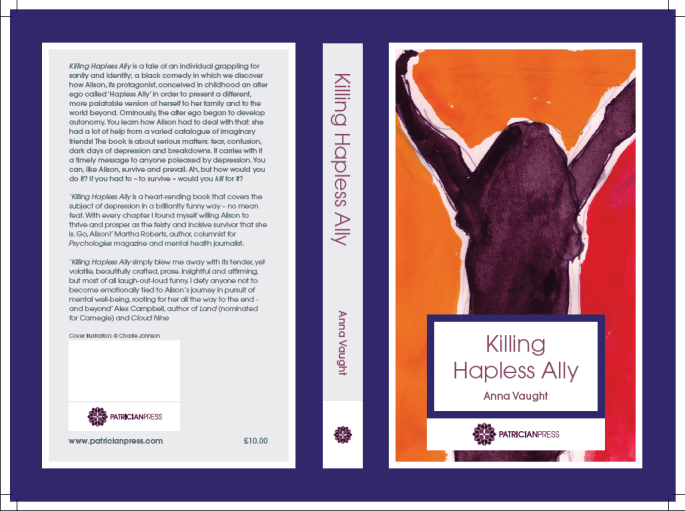
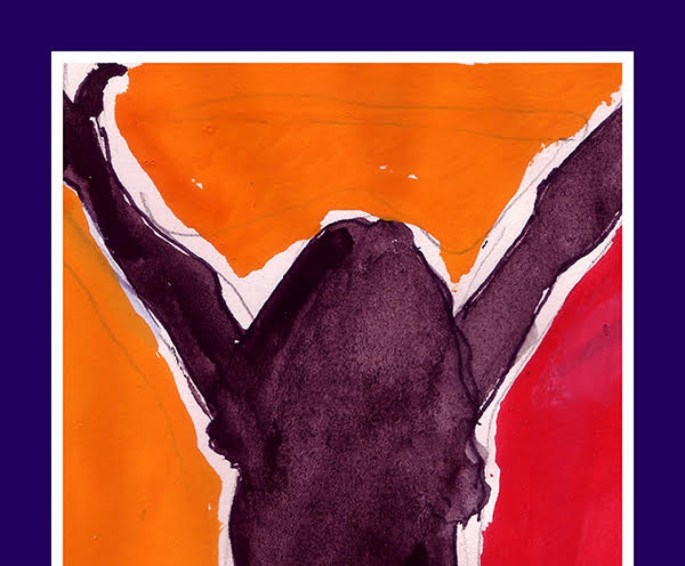
I have so been enjoying listening to feedback from readers of Killing Hapless Ally.  I know it is also being read for two local book groups, so if you fancy reading it for yours, I have added some suggested reading group questions, as given in an earlier post. The book is free on kindle to Amazon subscribers – although I must say that the paperback is a substantial, beautiful white and lilac thing with a striking cover by artist Charlie Johnson,

Here is the last review for the book, this one at http://www.goodreads.com this afternoon, followed by book group starters for you.

I received a signed copy of this book through Goodreads Giveaways – thank you very much – but this has not influenced my review. 

Wow! This book is incredible.

I identified with Alison so quickly, I frightened myself. (Mind you, what sort of mother tells their child she was a mistake?) This novel felt like going through psychotherapy. Alison’s struggle out from the depths of depression is here written so beautifully, so intricately, so real. The streams of consciousness left me breathless and the letters written by Alison have inspired me. I am going to write my way through the depths and endure. I rejoice in Alison’s survival.


Questions for book groups.

Who is Alison and who is Hapless Ally? Are the same person or two separate people?

Would you describe Hapless Ally as real?

What is your opinion of Santa Maria?

Who is the most horrible person in the book and to whom do you warm most?

Did you guess the ending?

What’s the significance of the book’s title? Is it simple and straightforward, or something more complex and nuanced?

Did you like the names for people and places in the book?

Did you take offence to any of the descriptions – for example, of the f…… caravan, the funerals, dying?

There are many literary references shot through the narrative. Some are obvious and documented explicitly in the text (and thus you will see them on the acknowledgements page) but some are harder to spot. So get spotting!

Did you feel that you learned more about mental health from the book?

Did you think that the book gives us insights into therapeutic practice and the sort of help available (although I feel I must add, not routinely available) through our National Health Service in the UK?

Did the book help you? By which I mean, did it make you feel better about your own problems or state of mind? Did it give you a nudge to tackle things that are holding you back and making you unhappy?

Was the book shocking? If so, why?

Is it a happy ending? Is it over – in a good way?

Who was your favourite imaginary friend – and why? Dolly, Shirley, Albert, JK….

Did you feel sympathy for Santa Maria? For Dad? For Brother who Might as well be Dead? For Terry?

What do you think of Dixie Delicious?

What makes you laugh in the book? Is it the pickled egg murder/horrible deaths/caravan of evil/revenge on the tutus…?

What does the book show us about the power of literature and, more broadly, of the written word? What of the spoken – the “curses ringing”?

Why do you think there’s a shift in narrative from first to third person between the prologue and chapter one? Do you think it’s successful?

What’s the significance of the foreword to the rest of the book?

Is Alison strong, or is she weak?

Did all this really happen? Do you believe it did? Why?


Book groups and readings!

I am about to establish a year’s worth of Killing Hapless Ally events, (while I am writing the next one, working title A Life of Almost) so just to say that there will be a couple of local and local (ish!) talks, hopefully a collaboration (musicians; other authors..) and also that if you have a book group not too far away (West Wilts, Bath and Bristol – South and West Wales even as I am often there), then if you order the books from the wonderful Mr B’s Bookshop in Bath, I hereby promise to turn up at your book group to answer questions if you would like – and will even bring cake! How about that? I was speaking last night to other authors about this as they have done some reading groups and found it a great thing to do. So let me know! If I am there, you can ask me anything about the book’s content – anything you like – and feel free to tell me its flaws!

And I had the best launch at Mr B’s Bookshop!


Launch tomorrow and something for book groups!

So tomorrow is the launch of Killing Hapless Ally and it occurred to me that, since we haven’t published book group questions and starting points at the back of the book, I’d do some here. You know, in case, wherever you are in the world, you belong to a book group and would like to tackle the book  (as I know a couple of book groups local to me are already planning to do) – maybe with a few ideas to get you going?

Who is Alison and who is Hapless Ally? Are the same person or two separate people?

Would you describe Hapless Ally as real?

What is your opinion of Santa Maria?

Who is the most horrible person in the book and to whom do you warm most?

Did you guess the ending?

What’s the significance of the book’s title? Is it simple and straightforward, or something more complex and nuanced?

Did you like the names for people and places in the book?

Did you take offence to any of the descriptions – for example, of the f…… caravan, the funerals, dying?

There are many literary references shot through the narrative. Some are obvious and documented explicitly in the text (and thus you will see them on the acknowledgements page) but some are harder to spot. So get spotting!

Did you feel that you learned more about mental health from the book?

Did you think that the book gives us insights into therapeutic practice and the sort of help available (although I feel I must add, not routinely available) through our National Health Service in the UK?

Did the book help you? By which I mean, did it make you feel better about your own problems or state of mind? Did it give you a nudge to tackle things that are holding you back and making you unhappy?

Was the book shocking? If so, why?

Is it a happy ending? Is it over – in a good way?

Who was your favourite imaginary friend – and why? Dolly, Shirley, Albert, JK….

Did you feel sympathy for Santa Maria? For Dad? For Brother who Might as well be Dead? For Terry?

What do you think of Dixie Delicious?

What makes you laugh in the book? Is it the pickled egg murder/horrible deaths/caravan of evil/revenge on the tutus…?

What does the book show us about the power of literature and, more broadly, of the written word? What of the spoken – the “curses ringing”?

Why do you think there’s a shift in narrative from first to third person between the prologue and chapter one? Do you think it’s successful?

What’s the significance of the foreword to the rest of the book?

Is Alison strong, or is she weak?

Did all this really happen? Do you believe it did? Why?


Writers and Artists, Goodreads, reviews and being thankful.

Here is the last review on Goodreads, just left, by one of my pre-publication reviewers.

There are so many books out there, so many tales to tell and yet this book is a rare find. As you turn each page of Killing Hapless Ally, you start to understand why. It takes more than a good story to make a great book and the author’s use of language, her ability to interlace harrowing with humour and extract strength from despair, is nothing short of extraordinary. With black humour and crafted language, you are transported to an emotionally harrowing childhood in Wales, introduced to Ally and the characters she created in a bid to control a world that that could make no sense to an innocent child. Adolescence sees a whole new set of challenges and it’s an extraordinary writing ability that makes you laugh, cry and shake your head with incredulity. With lusty shenanigans afoot in France, you accompany Ally in the f**cking caravan and shudder as she experiences her first orgasm.

There are few books that really stand out for me. As a small child, televisions were banned and I was raised with the likes of Dickens, the Brontes, classical poetry and oddly, Pam Ayres! As an adult, One Hundred Years of Solitude by Gabrielle Garcia Marquez stills stands out as a tale that is all consuming on every page, with no need for superfluous cliff hangers. The Killing of Hapless Ally combines the beauty of language, the skill of a gifted writer and a story so realistic that it is almost unbelievable. When you throw in sex, death, self harm, suicide attempts and the ability of the human mind to survive, this becomes a book that you simply have to read. A rare find indeed.’

Yesterday, I heard I had publication from Bloomsbury’s Writers and Artists website for an article on the value of poetry in today’s society. I focused – and it was a very personal piece in the end – on poetry and, in its broadest sense, mental health and included a section on my observations on poetry and teenagers. I hope you like it. I would have liked to write a much bigger piece (hint to anyone…)

I have a piece on ‘Mother’s Day’ that I couldn’t place in the press, so I will put it here. It may not seem like a celebration and it’s rather full of curses, and yet love is a complicated thing. I have spent decades trying to get out from under the shadow of my mother, someone, as with my father, I never knew as a adult. I have heard only and repeatedly that she was a saint. This is my riposte to that. But did I love her and do I miss her? Oh yes, oh yes: every day of my life.

So my book launches a week today. I have had an exhilarating week, but one that gives pause for thought. I have found that people are coming forward, having read a little about my book or heard what it is about, to tell me about their own experience of depression and anxiety; to begin to put in words their feelings about obstacles they want to get over or cruelties from which they feel they have not recovered. It would not be my place to give advice, only to say, ‘I hear you.’ And also this. Look at the fear you feel or have felt; address the things that hold you back; seek professional help if you feel you need this to heal. If you ask and don’t get (for you have only to look at the brilliant supportive MH community on twitter to see the stories of this), ask again; try a different GP; speak to Mind for advice and support. I know it is hard. But I have found that in dealing with my febrile imagination, rapidly shifting moods and moments of panic and despair – and I want to say that I had thirty mangling, enervating years of these before I even fully believed I deserved help. Yep: thirty years – I was able to begin again. Some days, it’s like I am going backwards, such is the delight in the spontaneity and freedom I can feel; some days are difficult, but that is life. I have learned that in the more difficult elements of my personality, there are also clues to, for example, a greater elasticity of imagination. That scared me when I was younger, but now I am beginning to appreciate its other side.


x


Early pre-publication reviews of Killing Hapless Ally..

If you buy the book through Waterstones or Amazon, do please leave a review. I also have a page at Goodreads (pop the button on the page) where you can review and add a question for me, if you would like.  Praise is wonderful – of course, it is – but so is constructive criticism. I also like to tangle with others’ arguments and views, so please ask me questions or comment on things you thought didn’t work. The book is candid in its exploration of what it means to be well; to have mental health problems; to hurt and wish to annihilate yourself. Also, its humour is dark. Oh yes, dark. It will offend some people. But if reviewers comment that the events don’t seem plausible, I’ll have to state that the foreword tells you it’s fiction “drawing on many episodes in (her) own life…” The things I could tell you of caravans, spotted dick, tripe, people buried with their dog, evil relatives….

Anyway,

“I thought it was a splendid read. And it made me laugh. I enjoyed her literary references too – all my favourites; I used The Wind in the Willows as comfort reading too. I genuinely liked this book (or I wouldn’t have read it so quickly!) – very likeable narrator, many familiar references that chimed – and funny – which is difficult to pull off, especially whilst dealing with such a knotty subject. Congrats to Anna!”

‘Killing Hapless Ally’ is an intriguing and powerful novel which explores one woman’s quest for freedom from the overpowering clutches of depression and dislocation. With dark humour, sprightly wit and insight the author follows Alison’s twisting and often frightening path towards positive mental wellbeing and a release from fear and self-loathing. The book is both touching and savage and is imbued with exquisite description throughout. I think this story will appeal to many people; it is definitely a ‘page turner’ and one which will make you laugh (a lot) and cry. I greatly enjoyed reading it and will definitely be recommending it to my friends….