A new piece on anxiety and some suggestions for managing your world….

https://brizzlelass.co.uk/2016/05/12/guest-post-anxiety-where-it-came-from-and-how-i-manage-it/


Here is a guest blog piece I wrote for this rather lovely blog (above).

ANXIETY. WHERE IT CAME FROM, WHAT IT DID AND HOW I MANAGE IT

I just wrote a cheerful book about things that suck. In it, I drew on episodes in my own life, early childhood onwards. It was a carnival of anxiety.

I came from a middle class and well connected family, with both parents paragons of the community and I had a substantially older brother who was, by turns, angel and devil. When he was devil, I thought it must be me. Because the thing was that within this socially lauded family, there was risible dysfunction. Don’t laugh: I am aware that there will always be dysfunction to some extent because we humans are inconsistent and not one thing; we are flawed and wanting. So let’s say this is only a question of degree. If you, as a child, are repeatedly told that you were lucky to have been kept at all – that you are an aberration, dreadful, responsible for terrible things and – more to the point – that this is a view held by your entire family and that everyone out there in the chilly old world can see who or what you are, then I am not sure it is easy to rebound and feel at ease. If, to others, your immediate family is praised and if, say, your mother is referred to as if she were a saint by people she worked with, or people that you would meet, sometimes family, sometimes just passers by coming to receive benediction from the blessed lady, then what do you do? It HAS to be you you you. It cannot be her or them, can it? When your sibling repeatedly tells you weren’t wanted and are a burden, the bringer of illness and the harbinger of death, you think that’s about right. And you cannot tell anyone because, on the occasions you tried, you were told, ‘Who would believe YOU? Everyone knows what you are like!’ That is the sort of dysfunction I am thinking of. If they think you’re that appalling, then you must be.

So, as a young kid, I did this.

I packed it down tightly.

I invented an alter ego (partly to have someone else to confess to and partly to provide a more palatable version of my horrid child-self to provide in company) and gradually began elaborate conversations with imaginary friends from books (and their writers) and songs (and their singers), because I had to tell someone otherwise the anxiety and sadness were so bad that I knew I was going to explode.

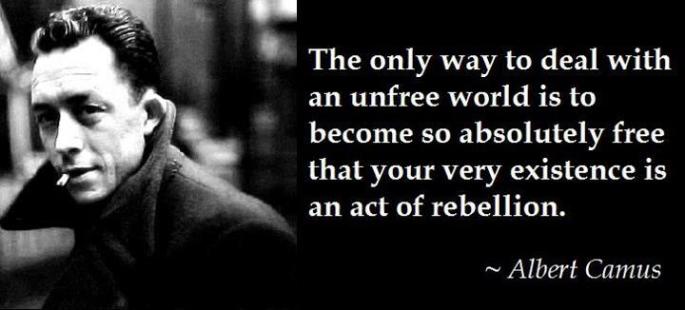
I kept up the imaginary friends for years; my first was Frida (the brunette one) from Abba. She was cool and complimented me a lot and always told me how pretty I was and that I was really a good kid and that even if I ended up in prison, she would visit me. And I was a reader; a devourer of books. I still am. So I used lines from them as a talisman (which went awry at several points when such lines became incorporated into elaborate and frightening OCD ritual) or as a place to find people to have conversations with, which is how, as I got older, I came to speak to Keats and Yeats and Dickens and Dante and Charlotte Bronte and Albert Camus. Despite these early strategies, however, I needed, in the end, to know others – other ways to cope – because life as an adult was awash with shame for me and could not be corralled just by speaking to Mary Lennox from The Secret Garden. My mother had been ill most of my life and died when I was twenty. I thought that I had contributed to her illness and was told that I had ushered in her early death; one of her closest friends told me I had begun the ushering with my very birth. My father (who went not long before her) had been fit and strong all his life and was diagnosed with serious illness, all too late. He refused most treatment, as far as I could ascertain, and in his final year he entered a startling decrepitude, shuffling around the house and refusing to speak to me. His last words were ‘You have let me down’ and when I went to see him, toes up and surrounded by the lilies he had loathed in life, my thoughts were confused, jarring, terrifying: I thought I had killed him. I had nightmares about it for years, lilies and all. Also, a childhood friend that I had used to play with when we were in reception class died around the same time as my father and my mind was in such a maelstrom by this point that I thought I might be implicated – things I had done aged five, when rough and tumbling. It didn’t matter how little logical sense this made, to me I was scared that this bad little girl had hurt a good little girl and fourteen years later had caused her death. I think I lived on my nerves constantly by this point. I was leaving university; both parents had now died; I felt ill, scared and confused, but thought that I had deserved it all and out I went into the adult world and made a fist of it. In the adult world, I had to keep up the cheery voices because inside my head were the cackling voices of my late parents and their assumed entourage.

‘Look at you. You should never have been born!’

What gave? I established a teaching career, did some pretty adventurous travelling and some satisfying volunteer work, but it would all come crashing down periodically and the self-harming of childhood took up: what gave? I did. Twice in my teens I had tried to take my own life; periodically in my twenties and early thirties things would come crashing down and I was given various courses of anti-depressant as my anxiety was linked to low mood and some more serious periods of depression. I had disabling and regular panic attacks, frequent insomnia and horrible nightmares, where I would wake up shaking and crying. The same recurrent dreams and their pointing, screeching, accusatory phantoms. I was offered CBT and, for me, it didn’t touch the sides; then, when I was ill after my first baby I was sent for psychotherapy, which achieved very little and when I had my third child, my whole world came crashing down and I was temporarily unable to function at all.

I remember sitting, paralysed, in the front room. I was frightened of everything and thought that I had broken irretrievably. Even looking at my shoes or bag made me anxious. But this is where things shifted. Now, for the first time, I began to let people in. I told more people of how I was feeling. Friends rallied and advocated for me and, dear reader, after thirty odd years I got the help I needed partly because of them. CAT – cognitive analytic therapy – delivered by a hugely skilled psychologist and long-term support. It was life-changing to be with this clever, kind lady. We unpicked patterns of thought and found new pathways; I did homework and wrote letters; she wrote to me and I wrote back. Very gradually, I got rid of the nagging voices in my head and became more sure and more dependent on my own voice and my own judgement, because it was as if I were a sort of composite person, arranged of other people’s motley opinions and condemnations. I gradually looked at the whole picture; at how I couldn’t have caused the things that I thought I had: it was as if someone had finally given me permission to let go. I began to look at my world more clearly and understand that there were some people (especially dead ones!) I could say goodbye to and that I could disentangle myself from past situations by freeing myself from blame for terrible things that had happened to others. I think that I had been incapacitated by shame and fear for so long and these things were at the heart of the anxiety I felt: I was perpetually at the point of annihilation, if that makes sense. I had always wanted to explore faith properly. I would try to pray. But I thought I was beyond redemption. Appropriate support meant I could begin to do this. I do believe that in therapy we could do well to explore our attitudes to faith (or not) and to end of life and what comes next. We all think about it. But that is a story for another day (although the Dorothy Rowe book I mention below tackles this).

I wasn’t totally fixed at the end of this year of CAT but now, these days, I am very different. To celebrate this and, I suppose, acknowledge the bedding down of new ideas, I based my novel, Killing Hapless Ally, on my experiences. It got picked up by a publisher and, while, it’s billed as literary fiction, I hope that there is much in it to guide and give hope to those suffering from severe anxiety, or other mental health problems. If you read the book, I should love to know what you think. But in the meantime, for what it’s worth, here are my coping strategies. I’d say for anxiety, but we need to remember that anxiety, in mental health terms or in terms of mental illness, may be a complex thing and bound up with a myriad mental health disorders – so it is not a case of one size fits all here. So much rubbish is peddled about mental health; there is so much sloppy vocabulary around it. Please accept what follows only as a list of what helped me and of what I have to remind myself pretty frequently. So…

1. Accept that just because you feel something does not mean it is real. Sounds simple, but having that expressed to me, in therapy (or by my favourite psychologist writer, Dorothy Rowe, in Depression. The Way out of your prison) was revelatory and revolutionary. Unpick a situation. Tweak it. Look at in a different way. When I tell you that at one point I fell from my chair with relief and that at another I thought I could see colours as brighter and truer…well, I know that sounds excessive or hallucinatory, but to me it was as if I had entered a new world. One in which I could be at ease and which I didn’t experience only through a glass darkly.

2. Be kind to yourself. No-one has ever treated me as unkindly as I have treated myself and I would never judge anyone as harshly as I do myself. Nope. That doesn’t work, so practise getting rid of it.

3. Be aware of your triggers, but laugh at them, reason with them and don’t run away. Face them down because, in my experience, anxiety amplifies if you don’t look it in the face. Know that you CAN do this.

4. Bad day? Overwhelmed by conflict and to do lists and things you’ve screwed up? I think ‘tomorrow is another day’ sounds trite and twee, so I say ‘Keep it in the day’ otherwise you shift today’s concerns and start tomorrow burdened.

5. Think, the past is a different country and that tomorrow is up ahead, where you cannot be or live. Focus, therefore, on the present, the hour, the minute, In other words, mindfulness.

6. Frankly, don’t give up on finding the appropriate MHRA help for you. If your GP is not understanding, ask to see a different GP. If questioning your treatment feels too daunting to you, ask someone to come with you, if you can.

7. Decent food; fresh air; self care. Reading to refresh and renew and help you see and entertain new ways of doing things; of building or re-building your mind. I do not say this lightly. I would not have survived without my books. And relax. If the pace of modern life and tirade of information and stimulation through social media make you feel overloaded, then give yourself permission to take a break. Pressing the ‘off ‘ button does not make you a total Luddite or a social outcast. (But see below*)

8. Friendship or familial relationships. Keep at it. BUT I have had to learn to be ruthless, though. If someone puts you down constantly or if they are workaday cruel to you, ditch them. I hope that doesn’t sound too harsh. And maybe remember something I have learned: family is a flexible construct – both internally in terms of roles and externally in that friendships may provide you with a warmth or love you never had in your family. Also *know that there is a great deal of support out there on social media; I find twitter a source of such – for example, through @mhchat every Wednesday night

9. Focus on others. Look at what they need. I have found that if I am taken out of myself because I am absorbed by the needs of others, then I can help them and, as a side effect, it is healthful for me, too.

10. Accept yourself. Compare and despair. No-one else can be you; don’t try to be someone else. Also, accept difficulty as normal. Failure is part of life. In a way, when we continually ramp up expectations, we raise the stakes and find ourselves feeling anxious and got at. I am not saying that I don’t look forward to things. Just that, for me, I find I am regularly delighted because I have let go of such weighty expectations.

I cannot promise you this is easy and I am realistic that MH treatment varies around the country; to say ‘help is out there’ is trite and all too glib. But, as I have learned, all the answers, for me, really lay, after all, within myself. These days I experience anxiety, but it is not the terrifying, all-encompassing thing it was for a long time. I teach; I write; I do volunteer work; I am raising three young sons and I have had over thirty years of depressive episodes, self harming, OCD, Generalised anxiety disorder and two suicide attempts.

But things are different now. I am well and I am happy and so I am sending you love and encouragement as I type this and I am crying a little bit now because I have just realised that I have never written the words ‘I am happy’ before.

Anna xxx

http://www.annavaughtwrites.com Follow on twitter /bookwormvaught

Killing Hapless Ally is published by Patrician Press (2016) and available to order from bookshops, on Amazon and Waterstones online and from http://www.patricianpress.com Latest review here: https://thecontemporarysmallpress.com/2016/05/04/darkly-funny-and-courageous-killing-hapless-ally/

For help with anxiety or other problems: Mind, Saneline and The Samaritans have all helped me. For young people Healthy Minds is a great resource and @respectyourself is of great encouragement on twitter. Also there, @MHChat is for everyone, every Wednesday night; it is used by a diverse group of people. My favourite book about mental health: Depression. The Way Out Of Your Prison by Dorothy Rowe (Routledge, 2003). And, by the way, that’s Albert Camus in the picture. He was there, in my head, all the way through. x
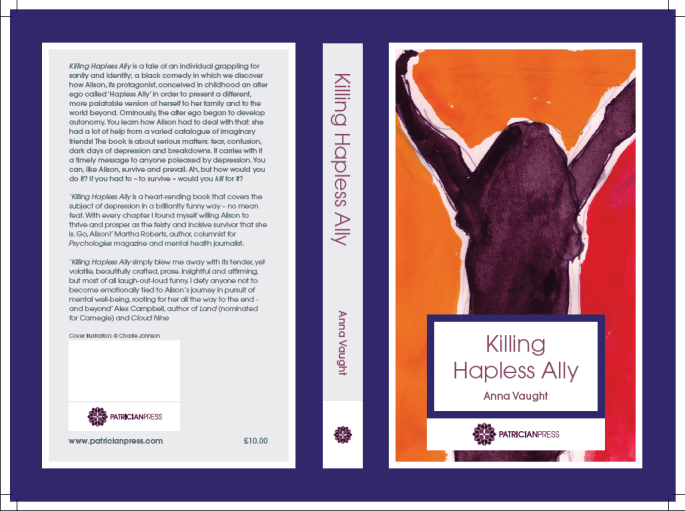


Darkly Funny and Courageous: Killing Hapless Ally

This bold, unique novel is a first-rate example of the innovative and original approach exemplifying the contemporary small press scene.

Source: Darkly Funny and Courageous: Killing Hapless Ally

Talking to your children about mental health; helping your children cope with your mental health problems


TALKING TO YOUR CHILDREN ABOUT MENTAL HEALTH; HELPING YOUR CHILDREN COPE WITH YOUR MENTAL HEALTH PROBLEMS.

This text contains some frank descriptions, a swear word and a hint of humour in unsettling places.

Here is an extract from my new novel, Killing Hapless Ally. And in it, I drew very much on my own experience of managing my mental health problems as a mother. In this bit, there are three sons to be cared for and this is how it went when I was once quite unwell and my husband and I struggled to manage until — because for the first time in my life I really opened up — a community of friends swept in. It was this — the honesty of it all, I think — that was a key element in my getting better. Here, in the novel, when the protagonist struggles to hold herself up and doesn’t entirely know what day it is, are three young men, seasoned by fire and the determination of their parents’ love.

‘There was no choice but to let the exigencies of motherhood force Alison to cope. But today, everything was back to front and the wrong colours; clothes were in the incorrect place; there were two packed lunches in one bag and she was crying and her knees were buckling as she came apart. It is a testament to these children that they went off and out, knowing that they were loved. And knowing you are loved is all, perhaps. Not feeling guilty; dirty; too responsible too soon, or with a head full of macabre images and angels howling.

“Bye Mum.”

The boys’ eyes were like saucers.’

The ‘boys’ here recall what I remember, just a few years back, of seeing my two boys go out into the world, with their mother very distressed at home (the third was six months old and so I partly fictionalised the text because he was pre-verbal!). Like anyone who has had mental health problems, I have worried about how seeing their mother so upset and so poorly has affected the boys. But I want to say something about this. It’s not that knowing — and seeing — I am being frank; my boys have seen some pretty raw things — a parent at rock bottom is exactly ideal, but you see they have watched me get better, too. They have a sense, they tell me, that I am strong because they have seen me battle and seen me get better. Of the two, it’s the battle they respect the most, apparently. On Mother’s Day this year my eldest, who is nearly fifteen, made me a home-made card listing the reasons I was ‘Greatest Mum in the World’, and he noted that I always ‘took on’ illness and the problems I had had and that he thought this was amazing. No cupcakes; spendy holidays; kit. Just, ‘Mum. You are amazing. You have had all these problems and you have never given up.’ If you are a mum, reading this, worrying, let it be known that I am giving you a HUGE virtual hug RIGHT NOW. And also commenting that sometimes I feel I learn more from my kids than they do from me. Ever feel that way?

We have given the boys information so that they are informed without being over-burdened with facts, answered questions and told them things about mental health and about how and why (insofar as we know) things can go wrong. Certainly, the older two, who are at secondary now, will learn a bit about moods and feelings and where to ask for help in PSHE, but (as well as being their mum and an author I have always worked with secondary age students and also been a PSHE teacher) mental health is still not addressed fully, I would say, in the national curriculum. In our daily lives, it still attracts some pretty horrid vocabulary and whispered voices. Sometimes — I think of ‘Daily Mail’ headlines and the careless lexis of all kinds of people (including teachers) about ‘psychos’, ‘nutters’ and, most recently, ‘going schiz’ to describe a child’s misbehaviour in class, all of which infuriate me — and I wonder if there is still a hefty element of wishing the crazy people ’round the bend’. That screened place, which, in years gone by, was eclipsed from view after the straight drive swept off in its bend to the psychiatric hospital. And by the way, I am not suggesting that we should be, forever, sharing and emoting left, right and centre; emotional continence and discipline have their place; on the other hand, by demonising ‘bad’ emotions we teach nothing of any real value to our offspring. And when people – or when we – need help and support because things have gone wrong with our minds, moods and emotions, we need to be able to have open dialogue about it just as we might about our physical health; I know that we can create a context for that as we speak to our children.

As parents we have a responsibility to talk to children so that they are not frightened if they know someone — and I want to say that one in four people will have a mental health problem — who is experiencing difficulty and so that they are properly compassionate to others and to themselves. I would want my boys to see the reality of who people who have mental health problems or mental illness actually are: they are us; they are you; they are me. Shame and stigma are destructive and while they obfuscate, they cause more problems and more misunderstanding and, perhaps, cause people not to seek the help they need. Because there isn’t really a they; there’s only an us.

Let me tell you what happened to me.

When I was a child, I knew that, in sections of my large family, things had gone awry. Strange things happened and I had glimpsed into them and listened in, furtively, on private, grown-up conversations. I was forever thinking about some terrible things that might be happening behind the silent screens, behind the whispers, but being entirely kept in the dark about them made them more terrible for me, because my imagination and limited knowledge built them into things of gargantuan proportions. For example, I had an aunt who hadn’t got out of bed for some years and her condition was referred to as overwork, yet I caught snatches of conversation about ‘nervous breakdowns’ and heard one of the neighbours say she was a ‘mental case’; sometimes I heard screaming and then recalled it in nightmares; I knew that at least two of my cousins had disappeared and was hastily told they had brain tumours (I know — a strange things to be saying to a young kid; but you see this must have been considered a better explanation than the real trauma); again, earwigging, I came to understand that they had taken their own lives, and sort of wondered where they had put them. It was my family’s epic-fail mythology, on both sides, but particularly in my late father’s, that all was well and that you didn’t tell for shame. A mythology that the sadness wasn’t, anyway, palpable. Because, of course, it was. As a child I sucked it up and felt sick; it was there on the table with bangers and mash when no-one spoke but sat, as Auden had it, ‘in a place beyond glum.’

No-one spoke about what was going on; I had to over-hear the accounts of wife-beating, of a gold-digger marrying the terminally ill aunt who was the person I loved most in the world; of why another aunt had to be sedated for the vast journey across Somerset; of why the aunt who didn’t get out of bed occasionally threw furniture at visitors. Even as a young kid, I knew she must have been so distressed because I was left in the car outside willing myself to think of something else. ‘Bang!’ That’ll be the bedside table. I was told to shut up when I asked. Because everyone was so dead keen on stifling things, it almost killed me when my father cried at said married-to-a-gold-digger aunt’s funeral. And he was furious with me that I had seen it and belted me for it because his shame was so great. I am aware that my family was dysfunctional, but because they were such pillars of the community — and had apparently joined the middle classes now — there was no-one to tell because, as I wrote in my novel, ‘Who would believe you?’ Ah, keeping up appearances does a lot of damage, does it not?

I could also witness, within my own home, familial mood swings that, to me, were terrifying and I do believe that the secrecy and lack of articulation made me into a frightened child and probably adult, too. Because my family (albeit ineptly) covered it up, it felt worse; moreover I was always taught that moods, and PMT and adolescence and passion and crying apart from alone were signs of the most hideous weakness; at least two of my cousins suffered from eating disorders: no-one called them that; despite the fact that they appeared to be wasting away and there was one cousin whose scratches from self-harming I could clearly see. I feel and see this all so clearly now and I know that I desperately wanted to talk to someone about it all.  When you become a parent, maybe you feel more acutely for your child self? And this child self needed to be told that she was okay and coping and she wishes that there had been someone to say, ‘It isn’t you, kid’ or ‘Mental health problems and mental illness are not weakness’ or ‘Your family’s suppression of anything that looks shameful is actually the unhealthy part and totally sucks because the problems are so clearly there.’ And I needed that talk about it because also, as a small child, I began to develop problems myself, in my topsy-turvy, back-to-front world.

My black comedy, sort of bildungsroman of a novel explores the ways in which a child develops problems of some dimensions, has not a soul to tell, is traumatised by many key events in her childhood and is very fearful and full of self-loathing; she scratches and pounds upon herself and uses her imagination to populate a world which, to her, makes no sense. This kid also develops an alter ego who turns nasty. What can I say? I was a funny little girl, but I survived with my unorthodox means. Unfortunately, I also had years of mental health problems — OCD, panic attacks, generalised anxiety disorder, self-harming, extremely poor coping skills in the face of stress, periods of depression — and I thought that I was a ghastly person who had brought terrible things upon her family and, possibly, on others too; an individual whose presence was always deleterious to those around her.  I believe that, at the heart of depression (I am with the Australian psychologist Dorothy Rowe on this one),there is a sense one is a bad person, a wicked person; this, unsurprisingly, colours all events that happen to one, making a person feel responsible for things they were not, finding pattens of failure and let-downs and things they can’t do and shouldn’t have entertained. That was me and it took me a long time and many false starts to get better; it was a combination of culling a few people, dead and alive, I am afraid (you’ll have to read the book!), surrounding myself with a good community of friends and getting the appropriate therapeutic support after other systems didn’t work. It was CAT (cognitive analytic therapy) delivered with stupendous skill and compassion that did it and when this worked I want to tell you that things were a different colour and that I fell on the floor, cataleptic with relief. THAT is what skilled support delivered for me and my heart bleeds to think that others cannot access it because they do not have a supportive GP, because they feel they cannot advocate for themselves, because funding is such that the help is sparse — which is the reality in the UK — or because they have always harboured a sense of shame (thus cannot tell anyone) or never received any useful knowledge or information and find themselves stymied by fear: what is happening?  Had I been able to ask and tell as a child, would things have been different? I think it likely, although I am no health professional, that they would.

Let me return to that quotation from the beginning of this article.

‘It is a testament to these children that they went off and out, knowing that they were loved. And knowing you are loved is all, perhaps. Not feeling guilty; dirty; too responsible too soon, or with a head full of macabre images and angels howling.’

If children feel loved and if they have some knowledge, but not too much, of what is happening, I think the situation is more manageable for them. I would say that we need to speak frankly and answer all questions — and find out some answers when we don’t — because mental health is still not given the focus it needs. I should like to think that things are changing gradually. Recent books and the excellent work of mental health campaigners and advocates, many of whom are prolific on twitter, and groups with a good presence on social media, such as ‘Respect Yourself’ and ‘Young Minds’ are resources for younger people in distress themselves or trying to cope with that of a parent. Mind and Saneline are terrific and I think Matt Haig’s recent book, Reasons to Stay Alive was a sensible and gentle resource which will, in its way, and for a broad age demographic, help to comfort and de-stigmatise; I am a huge fan of everything that Dorothy Rowe (see above) ever writes and I think that Juno Dawson’s recent book Mind Your Head is an excellent guide to mental health for young people. And there’s us — the parents, many of whom, like me, will have suffered or be suffering from mental health problems or perhaps a thoroughly debilitating mental illness.

Something I do is to make sure — and I will always do this for as long as I can — that I give top priority to those people who have given my children a sense of safety and fun and in whom they can trust; for me, this has also meant those who knew how hard things had been for me sometimes and who didn’t walk away. I have been very careful to ensure the children can go and talk to some of my friends because, as I like to say, family is a flexible construct and sometimes, as I have learned over and over, family cripples you if it can’t look something scary in the face or if its sense of shame is so heavy as to weigh down your very soul and the world you walk through. And sometimes family fucks off in a crisis because it doesn’t like unpleasantness. So I’ve been practical and I hope our boys feel they have a loving community around them and that a shorthand exists because these friends don’t judge and know that people are people and that we can talk and break through problems with open arms and through open conversations. And, yes, that it’s an us.

The open conversation and the consoling warmth of an extended hand: they would be good for everyone, wouldn’t they?

Please feel free to comment on what you have read. x

Thalassa-Môr – seventeen draft poems and a finished one

These eighteen poems are, excepting the first one (which is already accepted for publication), in very draft form and are the basis of a poetry pamphlet I am currently calling Thalassa-Môr. It gets its title because, although it’s about countryside I know, difficult things that have happened, my family and other much loved people and events, I have also threaded through it elements from Greek literature and from Welsh. The title of the first poem is from The Odyssey; ‘Rhiannon’ lower down refers, albeit obliquely, to characters in the Mabinogion. I have also woven in stories from my grandmother and from other elderly storytellers whose auspices and provenance I couldn’t grasp as a child. Was I related to them? I wasn’t and am not exactly sure. The storyteller was the important thing. Anyway, these poems (plus some others) in a much more polished form will be going in different directions in the summer – so fingers crossed. NB: the layout that pops up on wordpress is not how they are set out in my ms, so some of the verses aren’t quite preserved and the left spine is uneven. This is an anomaly I haven’t fixed yet.

Do feel free to comment on the drafts at the bottom of the text. Anna x


1

‘Cast out, my broken comrades’

St Justinian at dawn; the boat,
Its clenched hull scowling,
As braced against the swell,
Collected errant figures – all
Adrift, so lost on land, and sad.
We reached out, emptied souls,
To Ramsey Sound; the island
Siren-called us, brought us home
To sea: to stay afloat a while
And find our shipwrecked selves.

It wasn’t in the landing of our craft,
Against the crashing deck of shore,
But somewhere in between the rock
And rock, that melancholy came to rest –

And tumbled down through navy depths

And we were free, unbroken: still.

This poem is published in Anthology of the Sea by The Emma Press, October, 2016.


2

‘My heart unbroken, then, by fish- frozen sea.’


‘Oh never fill your heart with trawlermen!’

My Nanny told, then told: ‘You want
a man with both feet on the ground –
a man with roughened nails, from
dirt and labour on the land,

not brined and drenched through by the Sea.’
But Nanny never knew the sound
of oilskin slipped on clover bank;
of danger in the stolen hull,
of silver, limned above your head,
while thwart hands toiled through the night,
and washed me up and brought me home.

I wouldn’t learn: I dreamed of pearls, full fathom five;

I sang of gales, the tang of salt,
the storied depths of sea and sea –
limb-frozen journeys, far from home
With yellow light on midnight crests.
But Nanny told, then told, ‘You want
a man with bone-dry shoes, inland;
your sailors leave you high and dry,
they catch and throw and pack in ice
the keenest heart that you can toss.’
But Nanny never knew the song
of siren journeys way out there,
Of labour stoked by heat and loss –

She didn’t feel the azure pull,

the mermaid kiss, the tongues that spoke;
she died a desiccated
ideath, in clod
that choked, while primrose mocked.
Still, out at sea, I rocked and bobbed:
we drew the finest catch that day.


3

Madonna of the Cleddau


The sea coast was too far for you;

To keep inland was your advice,

Away from Jack Tar, foreign folk:

Stay cloistered on this estuary.

Madonna of the Cleddau, come:

Square jaw, dark eyes and, counterpoint,

Retroussé  nose and powdered cheeks:

And born of earth, not briny downs.

You birthed eleven, stood back up,

With apron on and sleeves rolled high,

Delivered livestock, lipstick on,

With plaintive songs of field delight.

But, round the wall, the sea began,

Spoke not to you: you had no thought

To jump and best a warmer wave;

A voyage out was lost on you.

What did you care for them or theirs?

Madonna’s night world of the quay

Had supernatural force: the owls,

The rustle of the hawk, black elms,

The screech and call and elsewhere sound.

Such pale wings drew on navy sky

As you looked out across the flats

And thought that this was world enough,

The kelp, the wrack was only stench.

I’ve seen it now, your home; your hearth:

The summer quay was bunting dressed,

The village pub all polished up,

No gossip, snarling by the bar;

A ‘Country Living’ August snap,

All cleansed of snuff or pewter cup,

Sent gentry, as you might have said.

And rag and bone man, gone to dust.

Madonna of the Cleddau, mine:

I sing to you from farther shores:

I wish that you had gone to sea –

We could have basked there, you and I.

It never changed, waves’ thunderous moods

Could not be altered, made anew.

I look at Cresswell now and wish

The sea would roar and cry and break

The weeded walls, the altered beds,

Bring wrack and shells to grace the stones

Where mortar tidily restrains.

4

When did I

I went out early, tiger-clad, for bravery’s sake

To try the sea. Its bite was worse than mine –

It told harsh words and mumbles spat a briny sound

Of fury’s heart. And I was spent, so roared no more.

5

Returns a sea echo

Had I not been mute, still yet, as Milton might,

I should have cried to miss a mirror in every mind –

Not to have glimpsed the swallow, bright,

Such cresting clarion call and bravest hunter’s horn.

I might, I say, have wished to be alone,

Caressing so the dampening blossom now –

Finger tipped to velvet wings at dusk,

Unbound by duty, or amaranthine depths

To sit on quiet rosy evenings, darkness settling by

In bowing woods, with harebells pealing close.

For stillness made replete what things I saw –

And bosom sentiment was only that

Such contemplation of this hour was wasted not:

The honour was replete.

But very now, then up the churchyard path

A fox came, sharp; the beech tree whispered thanks

Thus honour was in being quiet,

Reverent in this storied landscape, still.

6

Myfanwy, I loved

Mfanwy, as you were: bay window, a side light and a black background.

Then as you were again: middle room – direct front light. I was specific.

Mfanwy – I was precise; exacting with the fall of dark and bright: I wrote it down.

Mfanwy, as I hoped you were. But you smiled and sailed away, sassy girl.

I sat for hours as the shadows fell, knowing what night must still portend: my craft.

I drew a nail across a pane and scratched your name, invisible to others as

the evening settled in. I knew that morning brought a monogram in window frost

for you to see and I to know: I showed you how its feathered lines and confidence

spoke truth to us – that you could stay. The frost had crept along the span

to show you how this foolish clot had said the most that could be said

and then I spoke – and ruined all. A foolish joke: my love; my word –

Mfanwy, stay. Mfanwy, do not sail away.

I tried to draw another length to keep you here: pellucid worlds for us to share,

yet how I knew what I had done. You cared not yet for crystal casts,

the shapes recorded day by day. The metaphor for heavenly plan

was lost for you in my thwart hands – and so I scratched and tried to show

a simple script, its blazon – you. I fell and fell and no-one knew.

Oh sassy girl, why should you stay or want a watcher of the skies,

a gabbling fool, like me? Why, no.

Mfanwy, stay. Mfanwy, do not sail away.

7

County Town

If I should fall, then say to me the reason clouds form as they are,

why ice should seed along a scratch, why I should love my six point star.

I do not know or care to see the smiles that fall in brazen line,

but innocence and clearest eye embolden me to make her mine.

I speak of love and quiet worlds, the county town on winter nights:

the sweets of honey bees, a view of ruby sky and amber lights –

of unctuous syrup mixed with snow, auroras made of rosy glow,

My Borealis blood-red sheen – if I should fall, then make me know.

When I am not and you are here, beholden to this dusty room,

be gentle with the tenuous forms of memory; do not grieve too soon.

Consider this – why should we be, ephemeral and urgent? How?

And speak to me with confidence, declaim for me on cliff or prow.

In nature’s fragile frame I see a world that lives beyond the hill,

Beyond the log pile, salt and shed; behind our eyes when we lie still.

And when I fall, then say to me you read its language, pure and keen –

And set my records on my desk and light my lamp: make them be seen.

8

‘Always there were uncles’ (Dylan Thomas, A Child’s Christmas in Wales)

I longed not to talk to him, the schoolmaster;

He was always old, even as a boy, Llewhellin.

His eyes blorted thick, his voice rasped:

Never a pretty thing was he.

But I misses him now, you see, that old man

Cresting the corners of the foxgloved lanes –

Standing at Walton West, scowling at the tankers

Bound for Milford from great bright places

He hadn’t seen and didn’t want.

And I misses the silent pouring of tea

And the picking of apples from his headland-wizened trees;

the storied estuary, century feuds and nodding campion.

And I cry when I scent, alone, the violet patch, dug up,

Where I found him. And he was gone, eyes closed and young.

9

Walton West

In this drear place, I see my family loved

In celandines and mugwort garlands drawn;

I do not not know what tears or mossy lies

They fought so hard to keep from being said

Llewhellins, thick and fast and tired and gone,

Their stories drawn in stone or footstep sand.

10

Still to be sad

In the old shop on the harbour walk I saw a note: ‘Be Mine:

were you that girl I saw on the sand, turning to face me

against the gale? I think you saw me and I want to know.’

It was there for weeks, that note, rusting in the sun,

And brushed by arms of the boys running from the beach

for ice cream and the papers for bored parents.

And weeks more it hung, unnoticed, torn;

down in shreds it was, a girl would never see.

But a girl had never seen. She’d been looking instead

over the shoulder of the keen bright boy

to the man who broke her heart: a challenge –

find me, save me. Do not let me now walk out into the sea.

But in the keening of the wind and

the straining of the gale, all turned away

And she was gone and the slips of note removed,

for something clean and tidy and not sad.

11

Druidstone Haven. A sonnet

We climbed the downward spiral of the trail

To best the shedding fingers of the cliff,

I’d promised you, oh love, I could not fail

I’d prove to you against our lovers’ tiff,

That there was treasure to be found that day –

Albescent moons to cradle in your hand –

Sea urchins fine, a little world to say:

Echinocardium, wanting to be grand.

But my world was not yours, you did not care

To hold the little lanterns in your palm –

The hollow globe within the greatest fair,

You did not care if such should come to harm.

So cracked the sea potato on the tide:

I knew, although I smiled, my love had died.

12

Grave bag

‘Girl, get the grave bag from by the back door!’

‘I’m doing it now, in a minute!’

‘But have you got there the water in the milk bottle,

the scrubber and the cloth and the scissors,

they’re rusty but will do to trim?’

‘Yes, yes, I see them now.’

‘But have you got them, have you? We musn’t forget

and mustn’t leave the bag at home and mustn’t take it

to the graves half full, is it done now, is it all and are you sure?’

‘Yes, I am sure.’

The bag was bundled and the car was roared and the dead were glad

of a well-kept stone and the brambles trimmed and no-one cursed,

like they did, all did, in life, and the door was keyed and the grave bag was refilled

and sat just as it should, and the life was endless not altered,

even in this loud new world.

                                                                  13 

                                                                 Cariad.

                   Rounding the headland at St Brides and sighting the small churchyard,

Cariad, you were aware, weren’t you now, that things were changed that day?

You saw us with the girl, cousin by marriage, I think she was,

And all was well because she was not you. You were, weren’t you now,

The same age and the same beauty and the same dimension, even, roughly now,

And all so different because she was not you. And daddy said, I know he did,

‘Ah, my lovely girl, my cariad, look at your lovely golden hair

And your blue eyes and the light foot and a tumble of a laugh’ –

But that was not for you, but for your cousin, by marriage I think she was,

And she was fair and pretty and you with your welter of a laugh

And your thin voice and your pinched nose and you my shameless,

shameful little girl, mine but not mine and yapping now

as we rounded the headland at St Brides. Sing to the sailors, girl,

cry for the mermaids if you see them there, but in this dark world

where cliffs heap up and the boy drowns and the wrack fills,

think always that none of this cares for you, but for her, cariad.


14

Lewis, who went away

When I was a kid, Lewis took his own life.

I heard them say he took it, but where it went,

I couldn’t say or wasn’t told. Perhaps it had

been drained, in the sloop, with all his pints,

or thrown gladly off Stack Rocks with a shout

that he married well and was a man they liked,

but I don’t know. For once, though I was very young,

I saw a look from out the corner of his eye as he shipped

off, went laughing with the pot boys and his girl:

that look it said, I think, that Lewis wanted rescuing,

but no-one came, as the sea foam danced in Cardigan Bay.


15

Auger

The Auger shell, unbroken, in the palm,

still yet, such tenor of this hour upon this tide,

I wait at Nolton, looking out to sea:

you do not come. I nurse the shell,

its whorls and tidy chambers tell

of secrets and of things I cannot know;

the grains of sand, or filament of carapace

swept up inside its little maze,

its rooms, its tidy cap, once came from elsewhere,

elsewhere on this tide, I’ll never know. And you,

I wait for, still, looking out to sea. I hear you laugh

and cannot say from where it came, but seabirds circle low.

I throw the shell where anemone and spider crab

have made their home – more life reclaims it now,

as your laugh is lost to me, in warm thrift and gorse

and the tenor of this hour upon the tide.

16

Rhiannon

My mother taught at Wiston school,

Her hands were lithe, her mind so sharp,

Her friend Rhiannon worshipped her

And plucked her name upon the harp

Which sat all gold, in sight of all,

Rhiannon’s talons told mother’s fall –

She plucked a death upon the strings,

Her dainty nails scratched their goal:

‘Your mother will have feet, not wings

And with their clay, they’ll crush her soul –

Oh read The Mabinogion, dear,

You pretty pretty little child –

For you shall be my daughter fair,

my son Avaggdu’s ugly – wild –

the thick and thwart upon his brow

why should she have while I’ve not got?

Your mother taught at Wiston school

and so I tell you, she shall not.’

She plucked and plucked and screamed her rage

now mother’s clad in primrose dell,

But I can’t go and see her now,

Rhiannon keeps me in a cage

And sings to me of dulcet love

And all the things I cannot gauge:

Avaggdu cries for he’s not loved

And spits upon upon sweet mother’s grave.

17

The Famished House

Around here, the trees suck air and, at night,

when the last shriek of the plump and pretty-breasted curlew

s drawn from its throat, and when the strand-line treasure

is dulled and shredded against the rock, even in fair weather,

well then: that is the time that the houses take their fill.’

‘Nanny, is it true?’ ‘ Oh yes. Around here, when the moss

spawns bad, it creeps across your foot if you slowly move,

so be sure to move quite fast, when the twilight stalks,

then that is the time that the houses take their fill.’

‘Nanny, is it true?’ ‘Oh yes. When the jewel sky

and the lapping wing, have beat their very blood

into the hour, take heed; the tidiest stones

we built such with, will stretch up so to bark at silly men,

the silliest from away, for we shall know

what is to come, as groaning, crafted stone leans in

to kiss a sleeping face and staunch, in wild rebellion, dear,

the men that wrest it proudly from the ground.’

18

Slebech Forest

Today we will go inland dear, to see the rhododendron bloom,

Away from sea scent, sunset shell; away from me, away from you.’

We travelled for hours on little tracks, their way being marked with showy prime,

It was, at first, of some delight, but then my love spoke of his crime:

‘So stay here, love, forever held, unless you scent the estuary,

And I fly high, to England bold, away from you, away from me.’

Ah dear, you underestimate my knowledge of this mazèd land,

You did not hear the laughing breeze, dead mammy’s come and with her hand

She’ll pen you up, beside the Rhos, and I will run forever free,

I’ll not stay here, forever held, not stay with you but live for me –

An orient boat will rescue me, blown on dead daddy’s pretty curse

And rhododendron casket blooms will strip your life and end my verse.


Latest Goodreads review…

I enjoyed finding this review of Killing Hapless Ally this morning. I should love to think that someone would re-read the book and think that it would bear re-reading.


This is a wonderful book. It’s not one that readers of ‘chick lit’ will take to easily. Nothing is spoon fed to the reader. And yet it is expertly written by someone who not only knows their craft, but enjoys it as well. The author has a habit of placing powerfully upsetting lines, lines that make you want to physically jerk when you read them, in the middle of laugh-out-loud funny scenes. The effect is powerful, making the both the humour and the shock support each other with a sort of literary alchemy few writers can achieve.

I feel like the central character Alison is, if not a friend, someone I know inside out now. The book will bear re-reading (several times over I expect) so I am looking forward to meeting her again.’

An exciting new literary prize for small presses and their authors

Have a look at this new literary prize for small presses and their authors.

Anna Vaught's avatarAnna Vaught Writes - Dr Anna Vaught: teacher, mentor, author, campaigner

I am delighted that the award-winning writer, Neil Griffiths, has agreed to be interviewed here. Griffiths has just set up the Republic of Consciousness Prize for small literary presses and their authors and, as a small press author myself, I want to say many thanks to him for that. I am sure that authors with small presses, the presses themselves and readers too will all benefit from the creation of a prize, the intention of which is to shed light on some of the wonderfully exciting work that readers often don’t know about and on the presses which writers may not know they may approach.

But why don’t they?

Why don’t more people know about books from Calisi, or Mother’s Milk, or Patrician Press, or Galley Beggar or Fitzcarraldo, Comma or Linen Press?

Because small presses don’t have the hefty budgets behind them to shift their books into the spotlight…

View original post 2,167 more words

An exciting new literary prize for small presses and their authors

I am delighted that the award-winning writer, Neil Griffiths, has agreed to be interviewed here. Griffiths has just set up the Republic of Consciousness Prize for small literary presses and their authors and, as a small press author myself, I want to say many thanks to him for that. I am sure that authors with small presses, the presses themselves and readers too will all benefit from the creation of a prize, the intention of which is to shed light on some of the wonderfully exciting work that readers often don’t know about and on the presses which writers may not know they may approach.

But why don’t they?

Why don’t more people know about books from Calisi, or Mother’s Milk, or Patrician Press, or Galley Beggar or Fitzcarraldo, Comma or Linen Press?

Because small presses don’t have the hefty budgets behind them to shift their books into the spotlight. Books from small presses may win major awards – I mention the  truly striking A Girl is a Half-formed Thing‘ by Eimear McBride which was published by Galley Beggar Press and went on to win the Goldsmith’s prize and the Bailey’s among others – but this is very unusual. Small presses may operate at a loss or break even/make a small profit; to run them, their originators may re-mortgage their home or work several jobs to make it happen because they think it is important that it does. But they don’t have big budgets for publicity and their books may not be widely stocked. Yet I want to say that of my five or so favourite books of the past year, four were published by independent (I tend to use the term ‘independent press’ interchangeably with ‘small press’) presses (the fifth was Odysseus Abroad by Amit Chaudhuri, if you want to know) and I admit I also read some BIG selling books that many raved about and which fell flat for me, one of which actually made me cry because I was so disappointed. (It would be churlish to name those, so I won’t.) When Griffiths began to read titles from small presses, something he admits he took a while to do, he was astounded by their quality and wondered what to do. The result was the prize and you can see an account of this in ‘The Guardian’ here

http://www.theguardian.com/books/2016/feb/22/new-award-fiction-small-presses-republic-of-consciousness-neil-griffiths

As I said, I am myself published by a small press, Patrician Press, (www.patricianpress.com) and can tell you that I have learned much from being a part of such. I am a debut novelist and I was put through my paces by a firm and talented editor called Patricia Borlenghi, who is also the founder of the press and is its heart and its everything. Her husband, the artist, Charlie Johnson, designed the cover of my book, she keeps an eye on me, inspires me and chides me as necessary (definitely necessary) and I am blessed to have met her and to be part of the Patrician cohort. She took on my strange little book when I had heard bigger publishers deride ‘misery memoirs’ or even scoff at ‘yet another’ book about mental health or books which did not fit neatly into genre. I am lucky in that I only had two agent rejections, (the other three never replied, which I have written about a bit saucily elsewhere) before I found Patrician. Before I did, I was told by a literary consultancy that I had to be able to go into a bookshop and see straight away which shelf my text would sit on and that, realistically, customers (readers) go into a shop and need to know that they are getting Heinz baked beans and not some ersatz brand or, God forbid, a tin of corned beef.

Obviously, there is some good advice in there; I am not arrogant and I am definitely a rookie. I understand, from the many conversations I’ve had about my book, that I’ve written something which a number of readers describe as ‘difficult’. I knew someone would have to take a chance on my book because it was a bit experimental and didn’t sit so tidily in a genre. I am not sure the next one will either! I don’t know yet what will happen with that (it’s called A Life of Almost – oh, you can tell it’s going to be another strange one if you take a little look at the beginning of my research board here: https://uk.pinterest.com/annacvaught/a-life-of-almost/ ) but suspect I will be sending it to small presses when submissions windows are open – for even small presses receive many manuscripts.

I have loved being with a small press, learning to think laterally, make links, offer to write in all kinds of places for free, do talks, rock up at book groups, put on a very jolly book launch, reply to anyone who asks me about the book (as readers have done), crazily fitting it all in around other little publications (I’m also with www.theemmapress.com later this year), my day job, volunteer posts and three young kids, and to contribute work to those movements which aim to change things – hence an article, called ‘A Small Press State of Mind’, I have just done for https://thecontemporarysmallpress.com/  which will be up at the end of the month. They will also feature Griffiths and his prize very soon, so publication of this interview is a little  taster for that.

I suppose I feel that I have a home. I’m an outlier. But hey, I’ve probably always been that. I just didn’t think there was a place for me as an author, but I underestimated what a wealth of presses and readers were out there! Noli timere if I sound like you. Get out there.  May you find a home for your book, too. And homes for you as a reader. With bookshelves of titles which stretch and tantalise you; which make you re-read books to find new subtleties and ideas.  I wonder if Proust would be stuffed without the indies – the small presses – if he popped up now. And who would take on Faulkner?

But back to Neil Griffiths. Betrayal in Naples won The Author’s Club First Novel Award; his second book, Saving Caravaggio (which I am reading at the moment) was shortlisted for Best Novel in the Costa Book Awards. Both were published by Penguin. But things are a little different now and his new book, The Family of Love, will be placed with an independent press.’We need small presses: they are good at spotting the literary outliers,’ he writes on his  site here http://www.republicofconsciousness.com/2016/02/a-broadside-against-mainstream-publishing/  ‘Their radar is calibrated differently from agents, or mainstream publishers. Small presses don’t ask how many copies will this sell, but how good is this – what is its value as literature? Quality is the only criterion.’

And here is the YouTube launch film for the prize:

https://www.youtube.com/watch?v=JfkUxuAj1UE

SO, AN INTERVIEW WITH NEIL GRIFFITHS ABOUT THE LAUNCH OF THE REPUBLIC OF CONSCIOUSNESS LITERARY PRIZE

Could you tell me why it took you, by your own admission, so long to notice small presses?

I wonder that myself. Possibly bookstore exposure is lacking. Certainly they don’t get the kind of exposure in the book sections of most newspapers. It needs a novel to have already ‘broken out’ for it to be featured. But it’s not all their fault. When something is not on your radar – it gets missed. If I look over my bookshelves there are small presses there, but I guess I didn’t think to wonder about them as having a particular mission – in the sense I didn’t at that point think of any publisher being like that these days. Small presses are a culture, not one particular book – we have to be aware of that culture to notice what it’s doing.

And what about the books you read, for example those by writers at Fitzcarraldo or Galley Beggar Press? How was it they impressed you so much?

The first book I read was Zone by Mathias Enard (Fitzcarraldo), which stunned me. As if I’ve said before, I think it’s the most serious novel ever written. It deals with post-1st World War conflict in Europe, North Africa, and the Middle East from the centre of the consciousness of one man as he tries to wrestle with his own actions. It might be about the darkest points in recent history, but it’s a deeply human novel. And formally interesting – one sentence over its 500+ pages. A work of genius. There is also Playthings by Alex Pheby, from Galley Beggar – based on  a true story, it’s a novel about the lived experience of a 19th century German judge as he descends into madness. Writing of the highest order – it has more control than any novel I think I’ve read, given it’s dealing with vagaries of a shifting phenomenology. More recently Martin John by Anakana Schofeld, from And Other Stories. Any novel that’s about public sexual exposure and manages to be formally exciting and sympathetic deserves attention.

You mentioned in ‘The Guardian’ that your third book would be placed with a small press? Could you tell me why and how the process has been different from that with a big publisher? (Griffiths’s previous two novels were published by Penguin.)

It’s different only in that the people are different. In the end an editor has to read your novel and love it – that’s the same. But my experience of mainstream literary people is that they are mostly risk averse and professionally competitive in a way that disadvantages the writer. All the people I’ve met from small presses seem genuinely in love with great writing, interesting novels, and promoting difficult writers. It’s a mind-set that I suspect most people in publishing once shared, but lost because of the need to keep their job. Someone last week told me that at a large literary agency, each agent had to be bringing in £200k a year in advances just to support their employment. It’s a disincentive to take on a difficult book that will unlikely get a big advance and may only sell 2000 copies (initially).
Another way small presses differ is access. I’ve just placed my new novel with Dodo Ink, to be published Autumn 2017. I met Sam Mills, author and MD, at The Small Presses Fair in Peckham. We talked books, and I pitched her Family of Love, and she wanted to read it.

What do you hope to achieve with the new Republic of Consciousness Prize?

Humble objectives – increase exposure for small presses and their novels so a few hundred, maybe a thousand, more copies are sold.

Have you had a good deal of interest in the prize? I have been reading a number of truly supportive comments on the prize website and on your youtube channel, for example. Conversely, have you received any negative criticism? As a side note, I read the myriad reviews of A Girl is a Half-Formed Thing on Goodreads and Amazon and was fascinated by how divided they were; how a relatively high number of reviewers baulked at its difficulty. How confused, startled or cross readers had been. How others felt it was a work of brilliance and daring. I was thinking, then, of folk sitting, perplexed, in front of Beckett’s ‘Waiting for Godot’, until Harold Hobson and Kenneth Tynan received it warmly and with fascination and the tide turned. I am naturally enchanted by such a polarity in reception; it would make me want to read the book, frankly. I am digressing. Interest in and support for the prize?

Huge support from writers and presses. Now it’s about getting some people with money to support it. I want the prize fund to be large enough to give something to the shortlisted presses as well as the winner. As I’ve said, I’m going to write to the ‘richer’ end of literary novels for donations.

Can you tell me how you went about selecting the judges, the details of whom are now on the prize site?

I needed help, so Nicci Praca – a PR consultant for small presses –  recommended some; and Lisa Campbell from The Bookseller also did the same.

Are you able to tell me just a little about the books you have already received?

What I will say is that the covers have been variable. And production quality perhaps not quite what I expected after the beautiful work of Fitzcarraldo and Galley Beggar – the bible black of Galley Beggar’s first runs are my favourite. And the reason this needs mentioning is that book stores won’t take books that aren’t well produced. Small presses are already at a disadvantage. Make your books beautiful and it will make a difference.

Have you had support from any of the bigger publisher or agents? Has the ‘guilt trip’ notion of getting some other authors with bigger publishers to chip in been successful?

Next on my list.

How might we writers from small presses floor you with our brilliance, then?

The prize is for risk-taking literary fiction – in the sense that doubles the jeopardy for a small press. But in the end, beautifully crafted sentences full of insight into what it means to be human will do it.

I know it’s early days, but might you tell me about any future hopes and dreams for the prize?

Given my new novel is out next year, I want to win my own prize. That’s a joke, obviously. I hope it runs for a few years, and the prize fund is such that it makes a tangible – and that means financial – difference to small presses’ continued existence.

Thank you so much.

Very happy to do it – thank you.