An interview with Joanna Barnard, author of Precocious (Ebury, 2015) and winner of the 2014 Bath Novel Award

                       AN INTERVIEW WITH JOANNA BARNARD

Write the book you have to write, the story that keeps you awake at night.’

Joanna Barnard won The Bath Novel competition in 2014 with her novel, Precocious. The literary agent Juliet Mushens went on to represent her and Precocious was subsequently bid for in a four way publishing auction – with Ebury Books taking it on. Exciting stuff! The book will be out this July and Joanna is working away on her second novel. I have taken the synopsis and comment below from The Bath Novel page – with thanks.

NOVEL SYNOPSIS:  As a schoolgirl, Precocious’s Fiona Palmer has an intense crush on Mr Morgan, her English teacher. She writes stories, poems and plays for him; he praises her talent and offers a glimpse of what life might have to offer beyond her council estate. The crush develops into a relationship which ends badly.

The novel opens with a chance meeting between the two fifteen years on. Morgan seems once again to offer a form of escape and they quickly begin an affair. A young woman visits Fiona, seeking her help in prosecuting Morgan who she claims abused her at school and Fiona finds she must re-visit her own version of the past.

Gillian Green, Ebury Fiction publishing director told The Bookseller: “Joanna’s debut is an utterly compelling, clever and controversial novel which the fiction team has become hooked by. It’s that Holy Grail in fiction: quality writing but with a commercial heart and a subject matter ripped straight from the headlines.”

I went to hear Joanna, the literary agent, Juliet Mushens, Caroline Ambrose, Chair of The Bath Novel Award and Dionne Pemberton, one of The Bath Novel Award‘s readers, speak at the Bath Literary festival. If you are a writer – however tentative your efforts so far – I would really recommend going to such events for the insights you will gain. It is as if you are saying to yourself, ‘Right. I am taking my writing seriously.’ And go even if you don’t enter the competition!

For me, it was the talk at this event, my manuscript review at Cornerstones Literary Consultancy and the day I said to myself, ‘I have a story I so want to get out there’ that changed things. Because I decided I wouldn’t give up or fall so early in the process. I’m a rookie, don’t you know? The quotation at the top of this article is from my interview with Joanna: that just about sums it up for me: ‘Write the book you have to write, the story that keeps you awake at night.’ It’s a great maxim, isn’t it? And, as Robert Frost had it in ‘The Road Less Taken’, ‘way leads on to way’, because through Cornerstones I  found sterling encouragement in the novelist, Alison Taft; because of The Bath Novel talk I read Joanna Barnard’s blog – and the exchanges we subsequently had were so encouraging; she’s generous with her time and hers is a great story – that she almost put the ms away before giving it one last shot. Finally, after The Bath Novel talk, I went for coffee and a chat with some recent graduates of the Bath Spa MA in Creative Writing, which was how I came to notice profiles on independent publishers in Mslexia magazine – and how I found someone who wanted to publish my novel.
So KEEP GOING and here’s the interview with Joanna!
1. Why did you start writing?
Well, that’s a tough one because I started writing stories at the age of six or seven years old, so I can’t really remember! Like most little girls I had loads of career ambitions growing up, from ballerina to teacher to nun (!), but I always said I was going to write books as well “at the weekends”. I just loved books so much it seemed natural to want to write them myself.
2. Do you have any particular sources of inspiration you could comment on? Events, conversations? I imagine that, as a teacher, I could not have got away with writing a book that tackles a pupil teacher crush and the dark events that ensue over a considerable time, so I am fascinated to see how you handle them. But back to the sources of inspiration!
There were certainly rumours at our school (as with every school) and instances where I would say the pupil-teacher relationship seemed inappropriate. It’s funny because at the time it doesn’t seem that big a deal, in fact you feel jealous of the girl getting the ‘special attention’ – it’s only as you get older that you look back and think, hmm, maybe that was actually a bit off. I’ve known of at least one teacher who was taken to court, but it resulted in him being acquitted, so I can’t really comment on that.
It’s a topic that’s always in the news though, isn’t it – from the Jeremy Forrest case a couple of years ago [when a teacher and his student ran away to France together] to the more recent case of Stuart Kerner [who was excused a jail sentence because the judge felt it was the student who did the ‘grooming’]. It’s an interesting and complex issue to write about.
3. How did you keep going when the going got tough? For instance, after rejections from agents?
Being part of a writing group really helped. Their feedback was so useful and they encouraged me to keep going after rejections. I’ve said before that the Bath Novel Award felt like a bit of a last chance, but for some reason I felt strongly that Precocious would find an audience – if I didn’t get anywhere in the competition, I planned to self-publish it on Kindle. I was determined to get it out there somehow.
4. Do you have any advice for aspiring writers? 
Read widely. Write the book you have to write, the story that keeps you awake at night. Write every day if you can, even if it’s just a few sentences. If you get stuck, stop and write something else: a later chapter of your book, or a short story, or a poem. And if you are seeking representation and publication, present yourself and your work as well and as professionally as you can: follow the agent’s guidelines or competition rules, get someone else to proof-read for spelling and grammar, and polish, polish, polish.
5. Do you have a routine for writing? I have read that you like to write in longhand first, with a big cup of tea alongside and on the sofa or in bed (as I wrote in my blog, sometimes I hide in the shed, with earplugs in – and we’re not even talking a posh shed…). Anything else to add?
I always write in longhand first, it’s true. There’s nothing more terrifying to me than a blank screen, but an empty notebook – that’s exciting! I think the physical act of writing must unlock the creative part of my brain. I write quickly and type up slowly, making edits as I go.
I don’t have much of a daily routine, in fact I find frequent changes of surrounding very helpful. At the moment I find I’m writing a lot on trains.
6. Joanna, I already know your favourite book is Nabokov’s Lolita. Do you have any other favourite books to mention – and perhaps some comments to make on what makes them special to you?
Lolita is extraordinary for so many reasons: the voice, the language, the black humour, the pathos. I first read it as a teenager and it was the first time I was aware that an author was playing games with me, but I was powerless to do anything about it. Some of the sentences were so beautiful I had to keep re-reading them. I was blown away.
Other favourites include The World According to Garp (in fact most of John Irving’s novels) – he draws amazing, quirky characters that live long in the memory.
I came relatively late to Donna Tartt and adored The Secret History and The Goldfinch.
7. My own first novel is coming out with an indie and, as is not uncommon with indies, I don’t have a literary agent. (Note to any puzzled readers: authors published by smaller publishers – the ‘indies’ – independents – may not also be working with an agent.) I’d been wondering: you are represented by Juliet Mushens at The Agency Group. Would you be happy to comment on what you’ve learned from the process of working with an agent? Perhaps about editing, the market, presenting yourself – fire away! I think this would be interesting for writers aiming at such a target.
Working with Juliet has been brilliant. She’s warm and supportive but also honest and direct with feedback – if something’s not working, I know she’ll just tell me. There’s obviously a huge advantage to having someone ‘in your corner’ who really understands the market, too.
One thing I’ve learned is that there’s no reason to be intimidated when approaching agents – yes, it’s tough out there, but every agent genuinely wants to find that next book they are passionate about. It might be yours!
The following two questions came from two of my upper sixth students:
8. How does writing make you feel?
When it’s going well, or when it’s going badly?! To be honest above everything else it just feels natural – it feels like this is what I *should* be doing. It’s not always easy, but it always feels right.
And
9. How do you know, when you’re writing, if it’s any good? Do you think you ever really know?
I think most writers are naturally self-critical. I don’t go around high-fiving myself and saying “Wow! That’s an awesome sentence!” Most of the time I’m thinking it’s pretty terrible, but I keep going anyway. Distance is key. I think if you can finish what you’re doing, put it away for a few weeks, then come to it fresh, you can tell then if it’s any good.
10. You’re currently also training as a psychotherapeutic counsellor. In my own life and work I am passionate about how appropriate counselling routes can transform self, how we connect with the world and what we are able to do. I’m wondering why, alongside your literary success, you chose to train in this area and what its link might be, for you, with literature and with your own writing?
I previously worked in sales and I wanted a career change, but never imagined I would make any sort of living from writing. I wanted to learn and I wanted to help people (I still do), so I chose to re-train as a therapist. Like you, I think good counselling can be transformative. I do think my interest in this area comes from the same place as the writing: it stems from an intense curiosity about people, what makes them tick, why they feel how they feel, how they change and are influenced. Funnily enough, that was the same reason I enjoyed Sales.
11. Finally, what’s happening now in the last weeks before Precocious is out? And might you give us the first sentence of your book as a teaser?
Well, I’m going on holiday! I get back the night before the launch, which is quite a good thing as it will (hopefully) take my mind off my nerves. In the meantime, Ebury are contacting press and sending out copies for review.
The first sentence of Precocious is the fairly pedestrian,
We meet again in the supermarket.’
As for the new book…can I have 2 sentences?! With the caveat that this is early draft and may well change, here you go:
As soon as we got him home, it started. I obsessed about him dying.
Thank you so much, Joanna. I am really looking forward to reading your new book….and the next one!

Chillies, rampant bell ringers and some amazing interviews to come!

In a diverse week, I was interviewed by ‘The Sun’ for an article on miscarriage (I also talked a bit about genes, you know), I wrote copy on Kashmiri chillies and what Rogan Josh was all about for a wonderful local company and I decided that one of the characters at the wedding day scene in Killing Hapless Annie was too similar to a ‘real’ person  – and so changed them into an aggressive wedding day bell ringer, cruelly thwarted by Annie’s subsequent rejection of him after a spot of post-evensong pleasuring in the bell tower. I also wrote to the AQA examining board because I got so excited that someone was imaginative enough to set some Samuel Beckett as an unseen text in Thursday’s A2 Literature (spec A) exam.

BUT MOST EXCITINGLY,

….I asked some début novelists if I could interview them for this blog. First up will be Joanna Barnard, who has been so generous with her time. Her novel, Precocious, which was the winner of The Bath Novel 2014 award, gained her the agent Juliet Mushens (who also represents Jessie Burton, author of the best-selling The Miniaturist – which I recommend that you read) and subsequently four publishers bid for her book. It’s out next month with Ebury: here’s the synopsis as posted on The Bath Novel page.

NOVEL SYNOPSIS:  As a schoolgirl, Precocious’s Fiona Palmer has an intense crush on Mr Morgan, her English teacher. She writes stories, poems and plays for him; he praises her talent and offers a glimpse of what life might have to offer beyond her council estate. The crush develops into a relationship which ends badly.

The novel opens with a chance meeting between the two fifteen years on. Morgan seems once again to offer a form of escape and they quickly begin an affair. A young woman visits Fiona, seeking her help in prosecuting Morgan who she claims abused her at school and Fiona finds she must re-visit her own version of the past.

Can’t wait. Back soon with an interview!

Antoinette

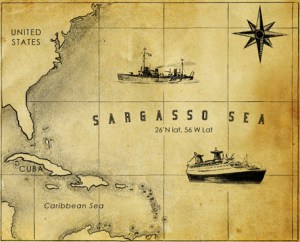
If you have not read Jean Rhys’s brilliant Wide Sargasso Sea, I urge you to to do so. It is the prequel (don’t care for that word, I must admit) to the story of Jane Eyre. I wrote a little something about it, below….
                                   Featured image
In Jean Rhys’s Wide Sargasso Sea, Antoinette is recast as Bertha by her new husband. It is a name with which he feels more comfortable. From a tic in her sleep, all shifts and his Bertha – with a name which is not her colour and is an insult to her pride – shifts to a private world where  shapes are lurid and vivid and where she has no sense of being loved. Instead, she is sold like a chattel, exchanged as currency for land. Like cargo, as ballast, she goes on her journey to the attic in the old great house where she is, to generations of school students, the prime example of the mad woman in the attic: Mr Rochester’s first wife. But what if that is not who she really is? What if she were a victim, radiant, then cruelly displaced and raving?
Sometimes at night, Antoinette – for that, of course, is who she really is – runs through the quiet corridors of the great house. Sometimes, Jane Eyre hears her. But no-one visits Antoinette; she has only a drunken jailer. Now, Antoinette is insane, lost to that private world in which nothing makes sense. The lurid, vivid shapes form, again, at night.
One day, she takes a candle and she runs. It is time to flee her dull, sublunary world. She makes fire, maybe by intent, maybe through her own special brand of lunacy. If you’ve read Jane Eyre, this part of the story is known to you. But if you’ve read the other story, then the mad woman in the attic is something else to you. She is a woman treated cruelly; beautiful, turned savage and formed in the heat beyond the wide Sargasso sea.
For her last few moments, she is free and I imagine that she stands, face to the cool, foreign English air, high up on the walls somewhere. Round and about – there in the countryside or beyond in the towns – there will be English ladies, in subdued colours of slate grey and cream or charcoal, with maybe an ornament of pearl or a pretty cameo. But high up on the house, Antoinette stands, in her long red dress – the dress which she had hauled from the Caribbean, all secretly smouldering  in its trunk. And now she is aflame. She will rise. And she is beautiful.

Killing Hapless Annie – here’s the synopsis again!

THIS BOOK WILL BE PUBLISHED IN 2016. I AM SO EXCITED

Killing Hapless Annie – a synopsis

This is a tale of an individual grappling for sanity and identity; a black comedy in which we discover how Annie, its curious protagonist, conceived in childhood an alter ego called ‘Hapless Annie’ in order to present a different, more palatable version of herself to her family and to the world beyond. She carried on acting this role until very recently, in adulthood, when she was able to slough her off and be plain old Annie, who had always been trying to break through. Ominously, the alter ego had even begun to develop autonomy: you learn how Annie had to deal with that. It is not very pretty. But perhaps it isingenious.

‘Hapless’ comes into the world because Annie, from earliest memories, has always been told by her mother, the blessed pillar of the community Santa Maria, that she should have been left in a bucket at birth: this child is a superfluous and unlovely thing. So, Annie creates a bouncy, funny, accident-prone lively little girl who might, she hopes, survive, be loved and thrive. To maintain this act over four decades is painful, confusing and psychologically costly; such a peculiar person, though, takes you on a roller coaster ride of bizarre comedy, unusual observation and journeys in the risible hinterland of socially lauded but cruelly dysfunctional families – all while she tries to keep her head straight. Annie possesses two further troubling things: a little black thought that nuzzles in her palm and then periodically grows exponentially and an embolus of fear – always there, waiting to dissect.

The death of the title does not come quickly in a satisfying epiphany and a great big shove; instead, demise begins gradually: there are adventures with psychologists and psychiatrists, long hard thought and a myriad medication. Process completed, however, you are promised a flourish and a very real stifling. Annie’s goal is, ultimately, to be free. All she had ever wanted was to, ‘go out, other than apologetically, or in disguise, hurry-scurry along the wall.’

The book is about serious matters: fear, confusion, dark days of depression and breakdowns. But it is a book intended to be darkly funny: madness and its environs are. Annie recounts the stories of relatives whose lives and actions are stranger than fiction, such as the eerie folk who live at The Hill, Terry the Fat Controller and morphine-dazzled Hazel, love affairs with an impressive range of men and some really terrible strange deaths of a skewering and squishing sort. She takes you on some truly, terrifically horrible holidays with a most odd family, such as sojourns in The Fucking Caravan; offers you trysts with hot, sooty, French blacksmiths, a seat at comical funerals, a spot on a sofa with Pentecostalists, the true horror of boiled cabbage and spotted dick and very dead aunts opining, ‘Thou Shalt Not’ from a wall. Moreover, Annie has alwayshad a great range of imaginary friends with whom to talk, survive, laugh and learn. There’s Frieda (the brunette one) from Abba, John Keats, Mary Anning the fossil collector, Sylvia Plath, Shirley Bassey, Dolly Parton, W.A. Bentley (the farmer who photographed snow crystals for forty winters and became known as The Snowflake Man) and, for comfort, erotic adventures and a first orgasm, there’s the French writer, philosopher and critic, Albert Camus: her ‘Godfather’. Annie has a busy time and a busy head.

The book is inspired by how an individual copes, imaginatively, with bonkers; in this way it is based on personal experience and its pages populated by people its author has encountered or with whom she has lived. But how does it all end? The protagonist’s approach to survival has been unorthodox, but at the end of the book she is still standing, – now just plain old Annie, laughing and taking a bow for Albert Camus. Ultimately, the tale, while it might make you laugh, wince, shudder or even tut at its inappropriate social comedy, also carries with it a timely message to anyone poleaxed by mental illness and its attendant discomforts – or any reader interested in the windings of such things: you can, like Annie, survive and prevail. Ah: but how would you do it? Now that is an interesting question.

Sea poems – a submission

Just occasionally, I write poems. I have always loved reading poetry and, as a teacher, working with it, but it’s only recently that I’ve tried to write myself. This week, I wrote three poems, all based on experiences, of which I have told in both literal and rather more allegorical terms, in Pembrokeshire, which is where my family is from.

These poems were for a submission to an anthology of poems on ‘The Sea’. I was thinking, in the first, about  how landscape, water and journeys can rejuvenate a tired soul; the first line recalls both The Odyssey and Louis MacNeice’s poem ‘Thalassa’, which is a favourite of mine.

In the second poem, I was thinking of forbidden journeys and how one person’s adventure is not another person’s; also, about how the sea is both dangerous and beautiful and how it calls to one. (The title recalls a phrase of Dylan Thomas and, more broadly, is a nod to his syntax – which I love and feel in my bones.)

The third poem looks at a particular place, my grandmother’s house, on the Cleddau estuary. I was thinking about how I wanted things and people back, about the multiple bereavements I have experienced, how I wished I could have shown her more of the world, gone out to sea with her (and she was, I remember, not one for the sea, preferring the creek and the estuary and the waves from a distance) and how I sometimes feel sad that places I have known all my life get their rougher edges polished off and prettied up, just so.

Sea Poems 
‘Cast out, my broken comrades’
St Justinian at dawn; the boat,
Its clenched hull scowling,
As braced against the swell,
Collected errant figures – all
Adrift, so lost on land, and sad.
We reached out, emptied souls,
To Ramsey Sound; the island
Siren-called us, brought us home
To sea: to stay afloat a while
And find our shipwrecked selves.
It wasn’t in the landing of our craft,
Against the crashing deck of shore,
But somewhere in between the rock
And rock, that melancholy came to rest –
And tumbled down through navy depths
And we were free, unbroken: still.
‘My heart unbroken, then, by fish- frozen sea.’
‘Oh never fill your heart with trawlermen’:
My Nanny told, then told: ‘You want
A man with both feet on the ground –
A man with roughened nails, from
Dirt and labour on the land,
Not brined and drenched through by the Sea.’
But Nanny never knew the sound
Of oilskin slipped on clover bank;
Of danger in the stolen hull,
Of silver, limned above your head,
While thwart hands toiled through the night,
And washed me up and brought me home.
I wouldn’t learn: I dreamed of pearls, full fathom five;
I sang of gales, the tang of salt,
The storied depths of sea and sea –
Limb-frozen journeys, far from home
With yellow light on midnight crests.
But Nanny told, then told, ‘You want
A man with bone-dry shoes, inland;
Your sailors leave you high and dry,
They catch and throw and pack in ice
The keenist heart that you can toss.’
But Nanny never knew the song
Of siren journeys way out there,
Of labour stoked by heat and loss –
She didn’t feel the azure pull,
The mermaid kiss, the tongues that spoke;
She died a desiccated death, in clod
That choked, while primrose mocked.
Still, out at sea, I rocked and bobbed:
We drew the finest catch that day.


 ‘My grandmother: the Madonna of the Cleddau’

The sea coast was too far for you;
To keep inland was your advice,
Away from Jack Tar, foreign folk:
Stay cloistered on this estuary.
Madonna of the Cleddau, come:
Square jaw, dark eyes and, counterpoint,
Retroussé  nose and powdered cheeks:
And born of earth, not briny downs.
You birthed eleven, stood back up,
With apron on and sleeves rolled high,
Delivered livestock, lipstick on,
With plaintive songs of field delight.
But, round the wall, the sea began,
Spoke not to you: you had no thought
To jump and best a warmer wave;
A voyage out was lost on you.
What did you care for them or theirs?
Madonna’s night world of the quay
Had supernatural force: the owls,
The rustle of the hawk, black elms,
The screech and call and elsewhere sound.
Such pale wings drew on navy sky
As you looked out across the flats
And thought that this was world enough,
The kelp, the wrack was only stench.
I’ve seen it now, your home; your hearth:
The summer quay was bunting dressed,
The village pub all polished up,
No gossip, snarling by the bar.
A ‘Country Living’ August snap,
All cleansed of snuff or pewter cup,
Sent gentry, as you might have said.
And rag and bone man, gone to dust.
Madonna of the Cleddau, mine:
I sing to you from farther shores:
I wish that you had gone to sea –
We could have basked there, you and I.
It never changed, waves’ thunderous moods
Could not be altered, made anew.
I look at Cresswell now and wish
The sea would roar and cry and break
The tidy walls, the altered beds,
Bring wrack and shells to grace the walls
Where mortar tidily restrains.

A Tale of Tripe (in honour of Elizabeth David)

Originally, Elizabeth David was a character in Killing Hapless Annie. If you’ve read the post which contains its synopsis you’ll see that the help of ‘head friends’ as well as ‘room friends’ was essential to survival. However, I have another idea for ED later on – and anyway Killing Hapless Annie had too many characters; they didn’t all have enough of a story in the book – and I recalled the advice from Ebury Books at the Bath Literature Festival: ‘every character should have a story.’ So, ED, the finest food writer EVER, is someone I want to write about later.

Blimey, this is quite an outpouring of snowflakes (see previous post) and hors d’oeuvre in one day. But here’s a short story I wrote: ED saves someone, you know. Actually, she saved me from the nightmares engendered by my paternal grandmother’s self-styled culinary genre: cooking for spite.  (Part of which, that of ‘Evil Pickles’, you may wish to avoid in Killing Hapless Annie.) ED probably saved everyone I ever cooked for, too: she came into my kitchen with a splash of colour, a joyous lumpen tomato or two, olive oil and a glass of wine. And I said, ‘May Bacchus and the Good Lord bless you.’ (Or something like that.)

Note: the chapter heading at the end is, like the foods mentioned throughout, from my favourite cookery book: Elizabeth David’s French Provincial Cooking.

A TALE OF TRIPE

Waking in the violet early morning, bathed in sweat and troubled by a night both eerie and vivid, Catherine searched her thoughts: ‘What must I have been dreaming about?’

It didn’t take long, of course: it was the tripe – that and the matriarchs who washed it, handled it with such vigour and presented it with an expectant, nasty gleam in their eyes. Such sweet, creative fiends: mother and grandmother. In mother’s case, just dressing the tripe would have exhausted her for the day; sent her desperate to the fainting couch. In grandmother’s, such dressing was simply a prompt to her killing another cow with the large-knuckled hands that terrified the grandchild so much.

Catherine winced: ‘Grandmother and her man hands; downy arms – all wicked with a rolling pin and guarding the old stove with a vicious possessiveness.’ Thus,

‘Let no man come near my domain: I will slaughter them – smother them under the blanket of the beautiful tripe.’

That was it. That was the most disquieting image in the nightmare: grandmother like Moloch waiting for a sacrifice over the fire; mother’s eyes dancing approval.

‘Yes, yes, yes! Feed it to her! Now, now, now!’

‘I’m so ashamed. I want a normal family and not to feel like this – waking, tripe-terrified.’

Mother and grandmother were dead, but they found that no excuse. So they visited Catherine regularly, sleeves rolled up, ready to boil.

To rid herself of the present dreamscape, there was nothing for it: go downstairs and find a better image. Tea in a favourite mug was a good start, but Catherine found that her thoughts were leaping from vivid hue – the reddest of pickled cabbage – to dull, cloudy jars in which might have been preserved the innards of an unwanted relative. In grandmother’s pantry there was a hecatomb of conserves; the fruits of the season, incongruously presented in a chamber of horrors. There were pots of umber sludge, eyeball pickled eggs in heavily sedimented liquor; damp flagstones underfoot: a perturbing smell of sour, crawling mould. There were aprons hanging up, the prettiness of their floral decoration gone to hell in this place of condiments, good housekeeping and no hope. This was a room revisited on other troubled nights for Catherine; she could not let its scents and shapes leave her head and the argot of this poky grey room whispered, ‘Grandmother knows – just as we all know – and she and mother will come for you.’

Here was a place of extinction – of annihilation, the meaning of such things terrifying in a dream but still only faintly, inchoately understood.

‘This must be the worst combination: to know that someone is coming for you, but not to understand why, when or how. Or really what that has to do with pickles. Or tripe!’

Ah: the tripe – huge winding sheets of it. It smelled like death. When Catherine’s nights were not punctuated by morbid pickles, siren-calling her to embrace their victim in death, she had nightmares of being cosseted in its velvet crushing embrace. The silky surface was puckered and hollowed. Somewhere else and in some other time, it might have been pretty; like a creamy-white mosaic you would want to touch. But in the nights, and when grandmother or mother served it up as punishment so triumphantly, the tripe blinked at her and writhed in its nasty pool of white sauce, encircled by effulgent lumps of onion. On its surface – its face or was it its back? – were sucker pads like those on the arms of an octopus or  some kind of strange sea plant that would caress and then swallow you whole, whispering of a lifetime of sin to you – just to compound the unpleasantness of this particular way to go.

Matriarchs hovering, the tripe came billowing clouds of vapour; it was cooked in a milky broth, all one at first, before you realised the unpleasantness of the discrete parts and sucky stomach-feet turned your (own) stomach. Between the two women, the silent challenge between mother and grandmother, it was a point of honour to make sure that the flour was never properly cooked off; thus, it lurked congealed in tiny mounds – but you didn’t see it in the unmapped viscosity of the sauce. Didn’t see the horrid little tumescence until you began to ingest it. Powder scattered in your mouth when the lump dissected. In a way, this was the worst horror:

And the dust in my mouth as I sat between Scylla and Charybdis. Oh, a fine supper.’

Catherine had always blamed herself for the meals – for why they fed her so. For the spiteful sheets of tripe, served up like victory in chintz.

‘My childhood looked so tidy from the outside; mother and grandmother were pillars of the community: first for cake in the village show; outstanding for a lemon curd; doyennes of the church flower rota. They prayed hard at the altar, shark eyes squeezed shut. I always thought it was me – it had to be me.’

‘Send her out to the pantry, in the semi darkness. Those eggs will frighten her a treat – make her more obedient. The mould on her hands! Ha!’

‘Mother – that’s the way to do it.’

‘But say these homes must have been full of spite, hurt and venom to make mother and grandmother cook like that? Say it was THEM and I didn’t deserve the tripe? Say it was wrong to shut me in there when I gagged on the tripe and onions and spat out the floury lumps without meaning to and they put me in the pantry like Jane Eyre in the Red Room?’

Catherine was not usually so bold: what was happening now that was different?

Something was coming from the bookshelf.

A small, dry but nonetheless beguiling voice: ‘Come here and open me up, Catherine.’

Now, Catherine was used to having a litter of imaginary friends. When your strange landlocked, emptied-out family greedily surrounds you; when your nearest and dearest seem to close in on you with, “Bad, bad, bad – everyone knows about you” then don’t you need to tell someone? You can’t tell real people because no-one else seems to have a family as peculiar as yours.

‘And then how would I ever explain cooking as a way of throttling or suffocating an unwanted child?’

In the bad dreams, Catherine saw her relatives, mother and grandmother predominant, amassed, like the preserves, in a hecatomb. They tumbled out curses at home; were aligned in neat rows and pretty as pie when out in the cold world which welcomed their jam making, their manners and determined smiles. Who would believe Catherine about mother and grandmother? And how would she explain the chamber of soused horrors or the tripe?

But here came a friend now; you might know her? To Catherine, she was ED; to the outside world, Elizabeth David.

ED wasn’t the warmest sort, but her books smelled of spice and sunshine; of lemons and emerald parsley. Catherine took French Provincial Cooking from her shelf; it was from this that ED had been speaking to her. Catherine adored ED and all her books; could tell you about the “pale rose pinks of the langoustines” which their author enjoyed, with a fresh and sparkling appetite, alongside a bottle of Muscadet by the Seine. ED relished good butter, radishes with their leaves left on as God had made them; saw the poetry and potency of a flat plate of Arles sausage and black olives.

‘And the colour, ED: look at the colour of the things you ate and knew how to make! See the lovely creams and greys of shrimp; sunset-glow carrots. For you, even the dark things – the winkles and the cork stuck with pins; things that were muted or pebbly – those things became beautiful. Beautiful – flanking the colour; like a gentle relief. I want to eat like that and I’d like to live like that. Embracing the darkness, yet knowing of its loving, numinous companion.’

ED, not one for a hug, and not particularly fond of metaphor, said,

‘Well, do you have a sharp knife, a hot grill and a will of your own? I’m assuming you have a mandoline, some good bowls – and I will not share my kitchen with a garlic press: I must be firm about that.’

‘Of course not; I know your feelings on garlic presses. I’m not sure I have a mandoline, I do have plenty of bowls, but some of them are chipped.’ Catherine began to cry.

ED prodded her firmly in the back, coughed demonstratively and said, ‘Chipped is fine, as long as we have at least a few white-lined brown dishes.’

‘Why do we need these dishes – why must they be as you describe?’

Silence. A sigh. Then:

Fresh contrast. Now, it’s time you stopped thinking about tripe. We are going shopping.’

‘ED, please: I am dog tired.’

‘That is no excuse. Not when we are going to compose hors-d’œuvre.’

Hurrying to dress, Catherine sighed disappointedly at the drawn face and sad clothes; shuddered at the lingering dreams. Still, ED at least knew about the tripe, so they wouldn’t be cooking that. They would grace a table with red tomatoes, yellow mayonnaise, sea salt and olive oil; a beautiful salad of grated carrot. And could it be celeriac that ED meant for the mandoline – all cut into the thinnest strips and highly seasoned with mustard, plenty of vinegar and a voluptuous thick mayonnaise?

Out they went, Catherine chatting silently to ED and now lighter of foot on their way to the wonderful market. But two shadowy figures watched her, curses dribbling from their lips with the last lappings of morning tea and vulgar gulps of toast with ochre marmalade. And inside Catherine’s house, gently, timorously now, was a faint smell of the sea, a distant grating of nutmeg and a fresh twist of black pepper.

Sacrilege. I smell no wash day smell! I hear no slap of tripe against the pot!’ cursed drear grandmother and mother.

Afloat, through thought, in Catherine’s house now was the peaceful aroma of potage bonne femme: of cream, chervil, softly cooked potatoes and leeks, bathed in sweet butter. The shadowy figures cursed more, spitting unkind crumbs.

Pain grillé aux anchois? Salade au chapon? Get the little bitch. Boil up the tripe, mother. And bring out the ammunition from the pantry.’

Catherine and ED, silently communing over their purchases, bought a mandoline and the requisite dishes, great bunches of green things for the salade de saison, dimpled lemons, celery, celeriac, lumpy tomatoes – things that promised succour. And life.

But on returning to the house, dull wafts of tripe waited for her, as the shadowy figures took their joyful and vindictive hold of the kitchen. Garish red cabbage with a sweet, cloying smell sat with the cruel eggs on the worktop. Amuse-bouches of the sort you serve if you hate your guests; starters gussied up a little with hard bread, sea-foam milky tea and a cucumber cut into behemoth chunks. And the boiling tripe hissed milky sap.

‘No matter’ said ED, walking briskly right through the shadowy figures, rolling up her sleeves and assembling a work station next to the eyeball eggs.

The eggs leered as ED tasked Catherine with slicing the celeriac on the mandoline, concocting a highly seasoned dressing for its matchstick strips; Arles sausage was laid out on a large flat white plate, its fat coin slices overlapping; in the centre, a carefully built mound of black olives. Both glistened and invited. The tripe spat on, onions twisting and squirming round it, as ED and Catherine cut tomatoes and sprinkled them with gently snipped chervil – the dressing to be added ‘absolutely’ said ED ‘only when the diner wants to eat.’

Catherine could feel on her pulse the metallic, penny-tasting lure of a fine misshapen tomato; she tasted a tentative joy as they grated carrots almost, ‘Almost I said!’ to a purée, seasoning them carefully. A pleasing, wobbling heap of mayonnaise with fresh eggs and olive oil from the first pressing flanked the crackling-crust loaf, butter and some best quality anchovies.

‘It is no shame to leave them in their tins if they are high class brands’, barked ED. Catherine hurried to place back those she had already decanted.

The table of hors-d’œuvre, for a twelve o’ clock lunch, was almost set. Almost. ED revealed a surprise. Out from a white plastic bag, secreted in the depths of ED’s basket, came a single slithering sheet of tripe: ‘For you.’

Tears pricked Catherine’s eyes. ‘No, not you too – please not you Elizabeth. Don’t make me cook it!’

From the room and the world all around came the laughter; the delighted hoary shapes of mother and grandmother.

‘Boil up the tripe, there’s a good girl! Choke, choke, choke on the nuggets of flour!’

So ED was one with them, then.

‘It had to be me, didn’t it? I deserved what I got: a lock up in the pantry; a stifling sheet of tripe and the unlovely curlicues of onions; gallons of white sauce and curses.’

The spectres grinned; the jarred eggs hummed, if ever a jarred egg could.

‘Now do be quiet. Our lunch à deux first, then I shall teach you something new. You will have to boil the tripe briefly, but then you will grill it to a sizzling crispness, with a coating of egg and breadcrumbs and serve it with a sauce tartare. A revelation, I think. It is called tablier de sapeur – or fireman’s apron.’

‘I can’t.’

‘You will.’

Lunch. The fierce, seductive rasp of the anchovy, crunch of good bread and the delicacy of finely cut celeriac. There were draughts of wine; ED passed knife and salad servers through the ghouls of matriarchs: it was a furious celebration. Then lost sleep came and took her pupil. On waking, ED had gone, but Catherine obligingly boiled the slice of tripe, eviscerating it with a certain passion to form a neater rectangle. She basted it with egg, coated it with crumbs and grilled it until it was golden and the edges had caught on the flame. She ate the robust little apron with the sauce tartare that ED must have made for her, left with an uncommonly sweet note nearby:

‘See off the spectres; try something new – tablier de sapeur: adieu; adieu.’

Hmmm. She almost liked this novel dish.

‘It’s not my favourite thing, but then neither is it the stuff of nightmares, thrust back to the sound of laughter into the sinister pantry.  Ha! “Grill to a sizzling crispness” ED had said. A dynamic phrase; a confident one.’

Catherine threw wide the curtains, welcomed in the vestiges of the day and scattered the grey tripe boilers and pickle hoarders into pieces.

‘Try something new. Mother; grandmother. Keep being dead now. Adieu; adieu!’

That night, Catherine dreamed only of the next chapters in her life: ‘Soups’ and ‘Eggs, Cheese Dishes and Hot Hors-d’œuvre.

The Snowflake Man

Although I am currently working on Killing Hapless Annie, I do have something else simmering away. I am not yet sure if this is something which will – or, in fact, should – come to fruition, but I am enjoying thinking about it. To start me off, I wrote a draft – very DRAFT – synopsis of what it was I thought I wanted to write; then, to begin exploring its subject, I wrote a handful of poems. I’m sure this is an unorthodox method, but think of it as scribbling. Much of it will get crossed out. The thing that is so very different from Killing Hapless Annie is that, there, I wrote about what I knew; here, I am writing about what I want to know. Does that make sense?

Anyway, may I introduce one of my heroes? He appears in Killing Hapless Annie (he’s one of Annie’s, the protagonist’s, imaginary friends), but because he’s shy and apologetic that he’s not a man of letters or for company, he gets a room of his own.

The Snowflake Man

In 1898, a young boy called Wilson Alric Bentley began watching the snow fall around the family farm in Jericho, Vermont; he watched it with an unusually rapt attention. He thought about its composition, about where it came from – about its auspices in both meteorological terms (although he was likely unaware of that word just yet) and those more divine: how could it be that something so pretty should fall so casually? Was it part of a conversation with God and creator – a dialogue which we could not translate and construe? The young Bentley also watched rainwater, seeing it composed in rivulets and torrents, looked at dew as it settled in exquisite beads and watched as frost formation drew delicate shapes across windows of ferns and feathers on the windows of his farm. But it was with the snow that Bentley was most in love: he wanted to understand how and what it was and to look at it more closely. That journey of discovery, separate and loving, is the story of The Snowflake Man. Times came and went; others laughed, but Bentley kept on watching the snow – and he remained the devout watcher of the skies until just before his death.

Bentley’s mother understood her boy’s fascination; his father thought him foolish and possibly unmanly for finding some diversions when, on the farm, there was much practical work to be done. That boy wrote, fifty five years later, that everything he was and had ever done, he owed to her – because she saved and showed considerable devious acumen in presenting her son, aged seventeen, with a microscope and then a camera. Over the next few years, Bentley, working alone in the woodshed, developed the science of photomicrography as he learned to connect the camera to the microscope and photograph the tiny snow crystals on his slides. The results were exquisite and remain, to this day, the fullest and most extraordinary collection of stunning snow crystals – of a myriad filigree stars, strange tiny pillars with hexagons at either end; things possessed of an inchoate beauty and, as Bentley wrote, ‘no two snowflakes are alike.’

When Bentley wasn’t photographing and cataloguing the snow crystals, he made fine studies of the frost formations and patterns of dew – looking at its beads strung along spiders’ webs; tying down a grasshopper atop a blossom overnight so that he could photograph the creature bejewelled with the dew. All this he did while remaining a farmer, playing his trumpet, providing holidays to city folk of slender means: he quietly became a world authority on snow crystal formation and, through his articles and published copies of his photomicrographs, became known as ‘Snowflake Bentley’ – or sometimes just ‘The Snowflake Man’. He saw and entertained worlds others merely glanced at: he was a humble, absorbed genius.

In The Snowflake Man, the reader is made an offer: we have the extraordinary images of the snow crystals he recorded; we have some letters and the transcripts of some interviews and the texts of articles he wrote for meteorological journals as his work became known. But here is the story that remains to be told, because we do not, yet, really know him. The Snowflake Man offers you a story of his life as he sat for fifty winters, alone, in silent thought and study. It explores intriguing questions: who were the three impressive women in his life – one ‘Mina,’ for whom he once scratched ‘Window frost monogram, Mina’, a beautiful but timid declaration of love to the girl the neighbours called ‘sassy’? The story ponders how does an individual can sustain, over a lifetime, a brilliant interest in something others – even his own father – called foolish? Bentley saw in the snow crystals a numinous, spiritual quality: he saw them as a metaphor for heavenly life. The book unfurls a tale of a boy mocked, an interest passionately abided by, of loneliness and love lost and found and celebrates in its story that it is Bentley who is also a metaphor – for those who were laughed at, chided or mocked for what they believed: the Snowflake Man never gave up and the book that is named after him seeks to introduce a greater number of readers to him for the first time. For his is an extraordinary story.

Four poems for Wilson A Bentley (1865-1931)

Horae

How beautiful it is to see

The eye trained on a telling shape –

Which seems to say, “I am the first

You are the last, to see me in my perfect form,

The only man to sit and wait

For what this moment must become.”

The snowflake falls; he catches it

On worsted cloth of deepest black:

It takes a place – but not alone,

For, ferried from beloved sky,

The crystal specimens collude

To give a pattern to a world

Through Vermont’s still and patient man.

For fifty years he sits and holds

The architecture through his glass:

Dendritic crystal, needle fine,

A bullet, hexagon or flower.

He does not mind if they should laugh

At Sisyphus in snow and ice.

So all is well, but glances ask:

The man with camera, microscope –

With evanescence in his heart,

Is he lonely, sat out there,

With slide and board for hours and hours?

A splint of broom to hold each one –

The snowflake man who gathers up

Each tiny plan to hold it dear:

It will not come again to us.

The horae, hours of prayer or joy,

But not with words, this silent man:

His goddesses the six point stars:

He sits and worships, reverent still,

A lucent world and what it tells.

He checks the hoar frost and the glass

To see the curlicues of line –

The ivy leaf or comfrey stem,

The miracles of build that come.

He  does not care to go, for now,

Beyond the cloth, the hands that serve

To show us all a myriad frames

Which coalesce within his grasp.

How beautiful it is to see

The eye trained on a telling shape

Which seems to say “I am the first,

You are the best to see me in my perfect form.”

“Window frost monogram Mina”

Mina, as you were: bay window, a side light and a black background.

Then as you were again: middle room – direct front light. I was specific.

Mina – I was precise; exacting with the fall of dark and bright: I wrote it down.

Mina, as I hoped you were. But you smiled and went away, sassy girl.

I sat for hours as the shadows fell, knowing what night must still portend: my craft.

I drew a nail across a pane and scratched your name, invisible to others as

The evening settled in. I knew that morning brought a monogram in window frost

For you to see and I to know: I showed you how its feathered lines and confidence

Spoke truth to us – that you could stay.  The frost had crept along the span

To show you how this foolish man had said the most that he could say. And then

I spoke – and ruined all. A foolish joke:  my love; my one;

My word –oh mono gramma, mina gramma. Hush – a clumsy, unschooled man.

When I essayed another length to keep you here – pellucid worlds for us to share,

Yet how I knew what I had done. You cared not yet for crystal casts,

The shapes recorded day by day. The metaphor for heavenly plan

Was lost for you in my thwart hands – and so I scratched and tried to show

A simple script, its blazon – you. I fell and fell and no-one knew.

Oh sassy girl, why should you stay or want an artless snowflake man?


In Jericho

If I should fall, then say to me the reason clouds form as they are,

Why ice should seed along a scratch, why I should love my six point star.

I do not know or care to see the smiles that fall in brazen line,

But innocence and clearest eye embolden me to make her mine.

I speak of love and quiet worlds, of Jericho on winter nights:

The sweets of patient maple taps, a sugar house and amber lights

Of unctuous syrup mixed with snow, auroras made of rosy glow,

My borealis blood red sheen – if I should fall, then make me know.

When I am not and you are here, beholden to this dusty room,

Be gentle with the tenuous forms; please do not break the splint of broom,

But hold the snowflakes page by page, arranged as I have left them now;

Consider this – why should they be, ephemeral and urgent? How?

In nature’s fragile crystal frame I see a world beyond the hill,

Beyond the log pile, brook and shed; behind our eyes when we lie still.

And when I fall, then say to me you read its language, pure and keen –

And set my records on my desk and light my lamp: make them be seen.

Mother: snow queen

My mother in her housecoat grey;

Her deep set eyes and sunburned face

Were set against the world that day:

A year of  stringent, creeping grace –

She would provide by hook or crook

A camera for her foolish boy

By winter next. If all forsook,

That should not vex her, seeing his joy.

My father laughed and thought me weak

To study crystals, quite unmanned;

My brother saw me fey and meek:

We must provide and work the land.

But Simple, gifted with such hope,

Sought fine connection, lens to slide –

With camera and microscope

The flake and image to elide.

The photomicrograph crept through:

I tweaked its edges; sharpened; limned.

Arranged it with five thousand new

And held my breath as beauty dimmed.

Still father mocked, but mother saw

The useless craft would last a life;

She saw her boy as metaphor

For human spirit; outpaced strife.

And she could see the shapes I held –

My inscapes in that freezing cage;

And she could know the transient meld

I had transported to the page.

So inchoately grasp the words

Formed by the boy who took her name,

Let us release them – free as birds:

No two snowflakes are the same.

Editing

An issue presents itself, as I suspected it would: that it might be better to start Killing Hapless Annie in the second chapter as the first chapter starts at the end – or near the end – of the story. It’s a device I tend to like in books and I really don’t mind if, at the beginning, I know the end. Or rather, some of the end, because I don’t yet know what happened on the journey or how I got there! I will, of course, bow to my expert editor and publisher, because they have a much clearer idea of market and also – of course – how it reads for someone else.

So, it might be the difference, then, between these two first paragraphs:

‘Shall we start at the end? Friend; sympathiser; co-conspirator: read on.’

And,

‘The girl is standing on a soft bank in a spring breeze as the laundry blows high above her there in the orchard. The breeze blows cold, but there are currents of warmth about her legs as the day decides whether it will whip or kiss.’

I like the semi colons in the first line; I like its relative economy and the direct address to the reader – which is an important part of its construct; Mr Vaught prefers the third person placing of the second option; he likes the setting and the slight frisson of alarm in the whip or kiss bit. I suspect he also feels that I use too many semi colons. It will be interesting to see what my book group thinks next week. What I learn about editing I will use with all the writing I do now.

Already, the title of the book has been truncated; the chapter headings, rather long and deliberately, ironically formal and slightly archaic, have been snipped. For example, chapter three is currently sitting under, ‘The Fucking Caravan’ where before it had languished under, ‘In which there are scary ordinary things. And a Fucking Caravan.’ I had in mind, all along, the terrifying in the everyday, but I don’t need to exhaust readers with a long chapter heading. And they can work out that the everyday things in the book – the dentist; a ballet teacher; grandmother’s cooking; terminally ill Hazel upstairs on Tyneside with the sound of Countdown piping up the stairs – ‘Please get me some more morphine Terry!’ ‘Hang on pet; I’m trying to decide between vowel and consonant at the minute’ – were terrifying. Well, they might not be everyday for all – but this is how I saw them and how the narrator sees them. The fact that the caravan is ‘Fucking’ also hints quite enough at the horrors within: caravans, as well as places where reside monsters and vampire ladies, can be (quoting the late Angela Carter – on a vampire queen, not a caravan) ‘the place of annihilation.’

So I am snipping and following sensible advice. It’s a bit painful sometimes, but it has to be done.

If you love him

I wrote this quickly a little while ago: it was my answer, in a short story and in allegory, to a friend’s deliberations: ‘I am not ready.’ ‘How do I know if he’s The One.’ You get the picture. I said before that I see metaphor in everything; I’ve noticed I have a habit of using allegory when problem solving. I’d better add that ‘he’ didn’t look like a duck. And he didn’t waddle. But if he had, the same rule applies…..
                                                      IF YOU LOVE HIM
Walter looked a little like a duck. His nose was beaky, he had an unattractive gait which was more of a waddle really. For a man, he was short, but he compensated for it with good cheer. Always good cheer. In Walter, there was not a whiff of arrogance or the slight bitterness one sometimes sees in those who have a chip on their shoulder due to perceived misfortune. He woke, comfortable in his own skin. Mostly.
And there was one more thing: Walter was very, very funny. He had the sort of timing which would cause his friends – and he had many- to double up; to have painful sides. He was also articulate, without being showy, for Walter loved words: he felt them in in his mouth like something smooth and minty (a humbug) or experienced them as something rough and to be handled carefully; with a firm, dexterous hand: he kept his words in his word hoard. He visualised it like that: a compartment containing treasures set on an orient carpet of etymology and variant. Just occasionally the words made tenebrous sounds; he couldn’t shake them off. Because sometimes they said,
 ‘You are lonely, Walter: you are lonely.’
Walter’s mother loved him dearly; to his father, he had always been a bit of disappointment: he wasn’t a man’s man, but a boy who fell in the scrum. A boy who didn’t. Walter was flatfoot clumsy and, in a person who did not know him, he might cause giggling – or perhaps the the foolish scorn of those who really should know better but don’t. Walter, also, had never had a girlfriend – but he lived in hope. Waddling on through and making people laugh, but seeing the eyes of the women pass to another man.
That day, on his way to work  – Walter restored fine musical instruments and his hands were a beautiful picture as he worked in detail, where nothing fell or was broken  – he had an odd sensation that today was different; an inchoate feeling – not of dread, but of a sort of warmth spreading up through him. One might say a new kind of happiness. There was a woman waiting for him at the shop; she carried a cello and was tall and willowy, with the gentle flush of the English rose and strawberry blonde hair; she wore a white coat. Almost, he dared say, a little like a swan. Walter didn’t mean to look a little too intently, but then she was, to his eyes, heart-meltingly lovely. The words became entangled and he said, in a rush,
‘Yes, yes, of course. I can restore your cello to health. It will take this long; these are the procedures I am likely to follow and yes – it is a truly fine instrument which you’re so right – so so, ah, so right to treat with reverence and want to bring back to its former glory.’
He was avoiding her eyes for fear of blushing, but, when he looked up, she was staring intently at him. There was an awkward silence. Now or never. He wouldn’t die if she laughed in his face. Of course she would laugh in his face. He was the boy who fell in the scrum; the boy who didn’t. But she said,
‘I have a break at about 11. I wonder if you would like to come and have coffee with me. At the new shop over the road?’
Well now. They were both blushing. Later they drank their coffee and talked and talked and the next day, too. Like him, she loved to play with words; to handle them and feel their heft. And Walter worked on the cello until he had brought it back to clear, resonant notes and a burnished beauty; she struck some notes right there in the shop and he almost cried. But the willowy creature stopped him, right there, with a kiss and the world around went silent. And he was the boy who did.
Yes, they do make a funny-looking couple, the swan and the duck. But they laugh constantly and make the kind of music that reverberates long. They hear – and, I should say, feel –  the grace notes: those notes between notes which are taken in on a visceral level. There are three little ducks or swans. They have their mother’s grace and their father’s waddle – a curious combination, but a good one.
So, my friend, if he looks like a duck, but he makes you double up laughing. If he can nurse something tired and jaded back to life. If he talks and his words do not enervate but buoy you up. If he smiles at everyone and there is no tiring bitterness about the man, and if, together, you hear and feel the grace notes, then kiss him and be transported. You know I’m right.

The title of the new book and some snow crystals.

Looks like the title of the novel is going to be Killing Hapless Annie. For various reasons – but mostly those of style and aesthetics.

Killing? Who got killed? Well, I can’t tell you: you’ll have to read the book, but it wasn’t, I can tell you, a tidy and easy process. And there were other people there, too. And in the room there were a flip chart, a desk and an efflorescence of artificial flowers in fake water. Come read  my book – next year, that is.

I have started planning the next one, in the full knowledge that I may start, scrap and try something else. But it’s called The Snowflake Man and it is based on one of my heroes: W A Bentley, the Vermont Farmer who watched the snow fall all the winters of his life and concluded that it was exquisite: he took photomicrographs of the snow crystals for forty four years. And no two snowflakes are alike. You will have heard that phrase. It’s his.

Here: https://www.google.co.uk/search?q=william+bentley+snowflake+pictures&espv=2&biw=1024&bih=677&tbm=isch&tbo=u&source=univ&sa=X&ei=oK5kVeWhG4GwUdDcgKgO&ved=0CCAQsAQ

I am going to tell his story. Dolly Parton is not in this one.