Ten Tips For Getting It Out There

Thoughts based on my own experience of editing, being edited, reading full and partial manuscripts and synopses for free reads and as a beta reader, my submissions which went horribly wrong, those which went right and stuff which I regard as probably true. Feel free to write and tell me I have this all wrong. Here’s the thing: you have a manuscript you want to place and submissions you want to do and I have quickly put together twenty thoughts on this because I know your work matters a lot to you. Therefore, it does to me.

Anna x

Photo by Pedro Sandrini on Pexels.com
  1. Read your work aloud. Only then will you hear and feel the sentences that have gone awry and the rhythm and weight that feel off. You will begin to hear and feel what your reader does. This is not an optional add on, but an essential. It also helps if you print it off and read, but I truly find reading aloud is key.
  2. Always use CTRL 4 to identify which words you overuse. These may be particular adjectives or you might surprise yourself here – quirks you had of which you were unaware. (See point 1.)
  3. I am not an expert, but I think a major issue – and one which I know I have cocked up myself – is not advancing the plot quickly enough. Pah, you say. I want a prologue and stacks of description. I love that too. I mean, I’d happily roll around in words all day like a pig in clover (or shit – forgive me), but it can grate. You’ve got to hook your reader and there are many ways to do that. A good way to reflect is by looking at the first pages of books you admire – and ideally cross genre. Reading is your finest teacher anyway!
  4. Linked to 3 and hooking them. A superb first sentence. Paragraph. Spend ages polishing and refining. Read, read, read for ideas and training.
  5. The show don’t tell maxim…I am not sure I am the person to comment on this because I want both, so mix it up. Don’t bore your reader into submission or the recycling bin. Or trash file. Harsh, but I am sure I have been there. Don’t bury your reader in detail and scene setting.
  6. Tough love. You CANNOT send out work with spelling errors or sentences that don’t…make sense. Is is clear to which thing your pronouns refer? Can you handle speech punctuation? Again, reading it aloud will help here. Have you misspelt the agent’s name? Or got their gender wrong? God: check. It would be awful if your work didn’t even get a look because you cocked this up. But I do believe that would be fair enough. It’s a tough business.
  7. Your synopsis always contains spoilers.
  8. Choose your verbs with infinite wisdom.
  9. Learn to use a variety of punctuation because it’s gorgeous. I will tell you now, though, that I have to be taken firmly in hand about my very long sentences and over-use of the lovely semi- colon. Take advice because while it’s your book, just as, when you get a publisher, your book is maybe half-way there when it goes to the editor, at submissions stage your writing has to be shit hot. Or close enough. Otherwise I bet you’re going to get knocked out of the water by the other folks who were more attentive.
  10. Always take advice. You are up very close to this manuscript. Fresh eyes will be needed.
  11. Why are YOU the person to write this book? Strikes me that this is a helpful thing to think about when (well obviously before) sending your pitch – and telling them.
  12. Show awareness of your indie press or agent. It’s polite, respectful and shows you mean business and have done the groundwork; that you might be a fit. This is part of the work. Reading their titles is part of the work. I think of it like this: they put in the work and now you have to.
  13. My day job is as an English teacher. I am coming at this from two angles now: it is harder to write with economy and precision than it is to write prose larded with adverbs and metaphors. Sometimes (takes a deep breath) learning to write a book may involve relearning (or unlearning) things you have been taught at an earlier stage. Like using lots of exciting metaphors and similes and lots of ‘wow words’. Make the language work; think how you could unpack it and use it judiciously and inventively. Cut. Choose wisely, padwan.
  14. Learn to accept rejection and that plenty of people don’t ever reply even though they ought to. Learn that if you make spelling mistakes in your submission and on your submissions letter, arguably you asked for it anyway. Rejection is part of it all and it hurts; the key is to keep going and not to feel persecuted. Sometimes, you cannot learn anything about your manuscript from rejection because you don’t learn anything from a form letter. But review what you have written and also review you. Feeling persecuted is going to stymie your creativity.
  15. Back to the manuscript. Ask someone online if they could be a beta reader and offer to read their work, too.
  16. If you ask someone to look at your work or you ask for opinion and criticism, reflect and listen. It is too easy to assume it is a difference in taste if they suggest changes. Use this time to reflect on what’s been said instead.
  17. Don’t panic about what you should be writing. Write what you want to write, but keep your ideas lively on genre and on who your influences are and, perhaps, on whose work you see yours being like. Because you might be asked.
  18. If you are submitting a book – this in on errors again – there’s no excuse for not being able to use an apostrophe. Also, you cannot rely 100% on spellcheck – and I notice this is a particular issue for homophones. Check, check and check again. And. like I said before, read your work aloud because this will also help you to notice spelling errors as spellcheck is not intuitive and cannot master context.
  19. Take breaks: between submissions, put your manuscript away for a bit and reflect. New things may pop out.
  20. And finally – I appreciate this is not what everyone does – why not work on something else for a while if your work is not getting accepted? For a start it’s refreshing but also, you might find that this new thing is better and furthermore, should your initial manuscript get a look in you can tell the agent or the publisher that you have something else up your sleeve. People like amazing creativity, but graft is cool, too – and it needs to go hand in hand with all that artistry because writing and books are also commerce and best to get one’s head round that early on.
Photo by Steve Johnson on Pexels.com

Newsletter

Hello. At some point I will start a regular newsletter, I hope, but in the meantime I will do a few updates here. Let me know if you find any of it interesting. I am off twitter for the time being – with ‘The Team’ (my older sons) in charge of things there. Writing – mainly in terms of getting work out there and prepared to publication standard – relies partly on teamwork. I’d say most if not all things do. Now, we have had a lot of upheaval at home; difficult situations to navigate, some of them complex and some a bit triggering for me. I need to keep a clear head and some things that I have seen on twitter recently have done me no good at all. But we are working together as a family – including my youngest who’s 8. He very sweetly just told me that even if everyone in the world totally hated everything I ever wrote, he would probably still think it was all great. So there we are.

So this week…we have been doing a second round of edits on Famished, which is my first short story collection. This is published by Influx Press in September and is my second book of this year. Influx has a great subscription service for the 2020 titles and you can pre-order Famished there already. Some wonderful events coming up soon, including Adam Scovell with Deborah Levy next week. I am so hoping to get to this! All events are on the website.

OOOH I love my cover for Influx.

Here’s a subscription link: https://www.influxpress.com/subscriptions

In addition to the second round of edits, I have written a new story for the text this week. It’s about potatoes, sex and death. Here’s information on Famished:

https://www.influxpress.com/famished

Something else new and of which I am extremely proud is that, for 2020, I have given a bursary to Birkbeck at the University of London for a Creative Writing Student. This is to help someone flourish who might be struggling with financial constraints. I am told it’s most likely it would go to a postgraduate MA or MFA student, but otherwise an undergraduate. In time, I hope to fund someone completely. Information will be up soon! I did not do an MA or MFA in Creative Writing. It wasn’t the route for me. I am, however, highly aware of how much an excellent period of study has meant to people. It isn’t just the teaching and reading; it’s the community, discipline and encouragement. Also, someone really brilliant may not have had a great deal of formal education post-16. I am a secondary English teacher, tutor and mentor. Writing is not actually my day job. I know a little bit about this. I also know how I felt as a carer, managing multiple bereavement and mental health problems when I was at university. Looking back, I am not sure how I coped. I was mindful of this when working out if I could offer some money to make life a bit easier for someone else. OOH: look http://www.bbk.ac.uk/study/2020/postgraduate/programmes/TMFCWRIT_C here’s just one example.

Also this week, I have written and presented an interview to the wonderful Lin Webb, who has been my editor at Bluemoose for my forthcoming novel, Saving Lucia. When a book goes to the editor, I suppose I would think of it as about half-way there. You may have different ideas about how finished your work would be, but in all cases the work of an editor is vital. I have learned a lot from Lin about style and structure; things I thought I would be able to see but somehow could not. But also Lin’s warmth, kindness and sense of humour have been one of the best things to happen to me since I started writing a few years ago (I am still a newbie, you know). Publishing is, I have learned, a tough old business. But I tell you there are plenty of absolute diamonds around too – so fear not if you are moving in this direction. I asked Lin about editing generally and also to share a few thoughts on how we worked on Saving Lucia. This will be up after approval from the Head Moosefolk (teamwork thing again). I think the interview might be also be useful for those preparing their work for submission – but you can tell me later on, if you like.

Something else I am working on this week is for a collection edited by Dan Coxon. It’s for Mental Health UK and is a fund raiser; to be published in the autumn by Unsung Stories. http://www.unsungstories.co.uk/ (I am not sure if I am supposed to give the title yet so better not.) This is unusual and, I think, rather special. Because it is using spooky, eerie stories and employing Weird Fiction to explore mental health themes, with a sense of uplift and possible recovery. I know a lot about this because of my own mental health history. Largely as a result of extended and complex trauma, I have managed generalised anxiety, depression, OCD, flashbacks and dissociative episodes. I mean, I am still managing those things. All a bit colourful. But there’s something in Saving Lucia about…about how you need not be entirely fixed or better in order to go out into the world and flourish. If you are managing mental health problems, are reading this, and think that you cannot make things, please let me encourage you to know that this is not the case.

I am spending a little time on the only free read I will have time for this year. It is a full mansucript of a novel – and I do this for those who would not otherwise be able to stretch to editorial or a report from a literary consultancy before they submit. I hope I am able to provide help, clarity and encouragement.

I am keeping in touch with my agent this week about plans and then, between the end of February and September, I am going to rewrite the novel I have been working on for my literary agency. It’s called (I think I am allowed to say), The Zebra and Lord Jones. There’s expansion needed and I wanted to say that I have been incredibly lucky with Kate my agent, because she’s kind, ambitious for me (with me?) about my work, understands the constraints I work under and is really skilled at editorial. So this is great. I have a lot of work to do – but onward: I’ve got great notes.

In June, I have a piece out in a book by Dodo Ink. Here: blimey – look who’s on it. I feel properly shy. http://www.dodoink.com/blog It’s called Trauma: Art as a Response to Mental Health and I just learned my story, ‘In Order to Live’, which is a memoir piece about how I rebuilt my mind with reading, is being edited at the moment. So I wonder what I will need to do? It’s really interesting getting work back. I absolutely love editorial and, although this might be a bit sad, responding to comments and tracking changes really appeals to the nerdy, box ticking, fixing up and list making side of me.

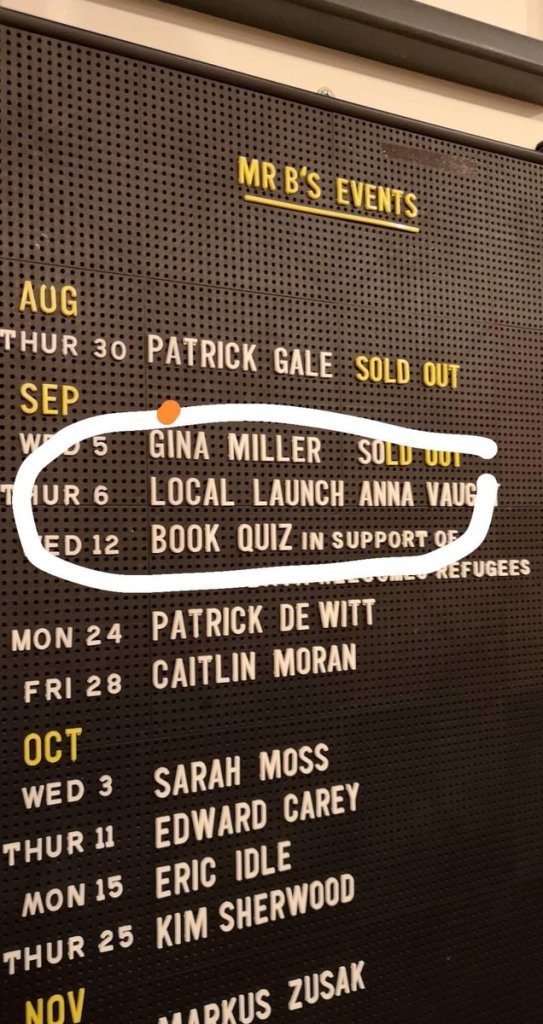
AND FINALLY I understand that information will soon be up about the launch of Saving Lucia. Bluemoose has noted it for you already on twitter, but it is at Mr B’s Emporium in John Street, Bath and on Thursday the 30th of April. This is a wonderful independent bookshop which has recently expanded and the place is a joy. I will share information when I have it.

Anna x

Loving Your Weird

I wrote this earlier in the year and offer it again, now, as comfort if, in isolation, you are thinking too much in a way that’s not, you know, very supportive of you; or maybe, although we are all frightened and stressed, there are elements of the quiet and seclusion of the current situation which are helpful to you and you think you’re a bit odd; or anything, really. Uncomfortable feelings about yourself, your strange little traits and perhaps also where and how your life intersects with others’ lives. Well now. I have been called weirdo, crazy person, an eccentric, nutter and many things my entire life. I am very friendly, but struggle with a great deal of social contact and have to go and lie down in a darkened room (or something like that). I love being with people but have never liked parties and I’ve been called a social reject for that (as well as being called a weirdo for various things like engaging in a conversation that’s too in-depth, or off-beam); I chat to pigeons on a walk. I like pigeons. Some pigeons seem to like me. I hope you get the idea.

You are bloody marvellous. I just know it. Read on. Here is the original blog post…

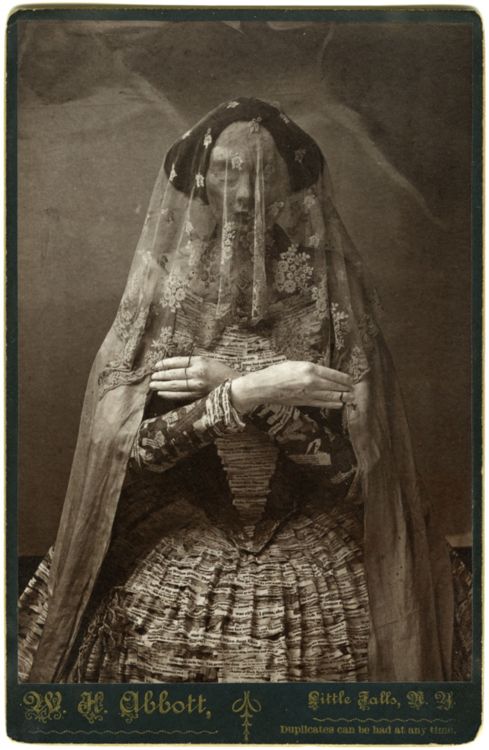
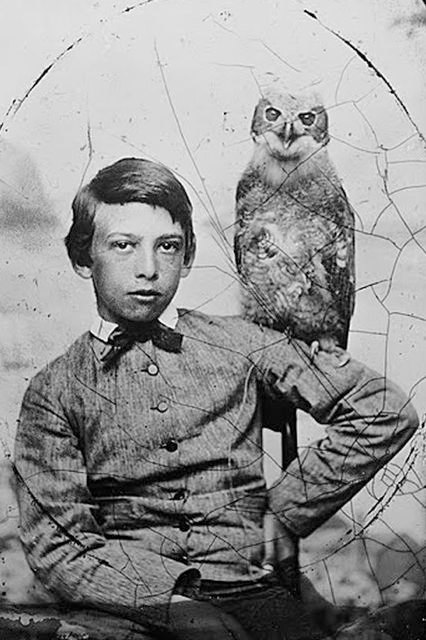
A quick but, I hope, bolstering post. (With some help from marvellous Victorian photographs – some edited later.)

I am just back from the primary school run. Ah, it’s a conservative place. I have, over many years’ parenting (my boys are 8-18 but also, at various times, there’s been partial care of others’ children), been introduced as ‘the crazy one’, ‘the mad one,’ ‘the nutter’ and, best of all, ‘the weird one (I was telling you about’ – thereby revealing that they’ve been talking about your particular weird behind your back). I used to get very upset about this. It’s because I have been described in this way my entire life and, despite parts of my brain wanting just to be me, weirdo, the other parts yearned for acceptance. This is not a comfortable thing. However, what does fitting in mean? If it means suppressing your character, oddities, imagination, beliefs and those things that make you you, then this is sad. You should be you. Certainly, you ought to reflect on others’ responses and needs; check your language and outlook are broad and inclusive – and you ought to self reflect because from that stems greater kindness to others. However, if you have earnestly done those things, then come as you are.

Because, other than that attention to kindness, detail and community, FUCK OFF, basically. Weird is great.

So, I am thinking I have grown into my weird a bit better. I think I might have raised slightly weird children. Actually, one of my offspring was described critically as ‘weird’ by a teacher and it was not meant in a positive way. So I quietly said, ‘And with that I am going to leave and maybe we can talk again at a later time while we consider what might be positive about weird?’

Woo. I was being that tough, but of course I cried all the way home.

Come off it, though; we are all weird. And I like the weirder end of weird. Here are some facts about me:

  1. I had a catalogue of imaginary friends well into my teens. This is (forgive me – but you see weird is also a response to trauma so we are going a bit dark suddenly) because I was beaten and scared and gaslit. I made myself into Frida from ABBA because I liked her red hair – my parents had ABBA albums – and my best friend was Agneta who had awesome counselling skills.
  2. When I was 16 my best friend was 88. She got me. She was weird too and liked bird skulls, tarot and Irish myths and legends. She was a storyteller, God rest her soul.
  3. I am really into Jesus but I swear a lot. Though not in church. Or when I am reading Mother Julian of Norwich because I can’t sleep and need a revelation of divine love.
  4. I am shit at mum groups. Always have been, but it took me a long time to admit it and see that this didn’t mean I was a social maladept, a bit boring or a bit of a wanker. I get restless and I don’t know how to keep it going. After 18 years of parenting I haven’t learned. The last one I attended, we somehow got onto sex and who was gay or not – and I ended up saying, ‘Well I’d identify as queer but I haven’t mentioned it because I’ve been married to a man for twenty years so it’s as relevant as fuck in that way. I married a man because that’s who I was in love with.’ There was an awkward silence. Then, ‘OH MY GOD YOU ARE EVEN WEIRDER THAN I THOUGHT’. To which I said, ‘I SAID QUEER AND QUEER IS NOT WEIRD, BABY.’ Whatsapp dismissal.
  5. I am an introvert but I just sang songs from Annie on the KS2 field at the top of my voice to make it easier for some reluctant pupils to go in. They were embarrassed. But they were happy. A child in KS1 recently said to me, ‘My mum says you’re weird but I really like you.’ Think about that sentence. There was another time when someone said to me (I remember it; I was outside the school office, attempting to partially conceal myself behind the bin while trying to hoick my tights up), ‘You are clinically insane.’ That was someone’s ma too. I was dumbfounded on this occasion because she was smiling and I was a bit stuck on the word ‘clinically’ because as far as I knew she was an interior designer. It might have been the fact I was partially concealed behind the bin that prompted the comment, but more likely a sense, after having made various observations and tours of me, of having to express a dislike of something…off; odd; eldritch. To spit it out; like, if you thought you’d put a Minstrel in your mouth and realised it was a rock or some poo.
  6. I dress in a funny mixture of Victoriana and sports kit and my tattoo is in Latin.
  7. I carry my chickens about, crooning to them. They are totally into it. I can’t wait to start a conversation with the man who whispers and gurgles to his rooks, the lady who has a tiny glittering altar outside her house or the man who crosses the road every time he sees the local priest. I have a theory, which is that maybe, if you’re a bit odd, you notice more. And maybe – even more radically – you notice people who might be a bit marginalised but with whom you could have a great chat and suddenly everyone there is having a better day. What do you think?
  8. My thinking goes rat a tat rat a tat all day long; allusive; solving problems with quotations; snatches of song if need be. It is how I manage things but also I am always making stories and seeing links. I wish I had had the confidence to write books earlier – but it’s all coming out now. That’s because of the weird, you see. It’s liberated.
  9. I am fascinated by all things morbid and moribund and always have been. I have day trips to see particularly fetching memento mori. I am really fascinated by undertakers and embalming. It keeps coming up as a theme. In fact, the fascination just created a whole second volume of stories (we will see about that!)
  10. Here’s the thing: we are all a patchwork of oddities and everyone really is an outsider in their questing and difficult experience. It is natural to stick with a herd – and I am not rejecting being in groups of people – but I do think we could question such if we stick because we are scared of being on our own or because we are suppressing our oddities in favour of something that makes us more socially palatable.

So find your weird. Explore it in writing, as I have done and will continue to do. Ultimately, just be you: perfect and as you were meant to be, memento mori, spoon collecting, fancy dress you.

The launch of Saving Lucia

My publisher, Bluemoose, has just announced that the launch for my new novel, Saving Lucia, will be at Mr B’s bookshop in Bath, on the evening of Thursday the 30th of April.

Details soon, but save the date now! Books, drinks, cake, chat and hosted by my dear friend, the brilliant novelist and short fiction writer Lucie McKnight Hardy. Mr B’s is a wonderful independent bookshop. Here: https://mrbsemporium.com/ This will be a ticketed event so do remember to book in advance. If you cannot get to this, there will be plenty more to come and we will announce events about the country all in good time.

‘Violet Albina Gibson, the Honourable, was behind bars, wearing an immaculate black crepe dress, clasping her finest manners and a lovely lacquered pen for letters to Churchill and others…’

Creativity in a hard place

How are you? I am mostly okay and that is because I am doing fairly well in thinking of the day only in increments, pausing and limiting stress as best as I can, sitting with and observing tricky things and seeing them, mostly, pass.

I am an English teacher, young people’s mentor, writer and mother. Mental health problems are part of my history and of who I am. I am very open about this in order to make it easier for the next person. But I am autonomous and they do not define me. They may in others’ eyes sometimes, but not in mine: don’t let yourself define YOU if you manage these pesky things too. That makes it easier to tolerate and thus you can begin to ignore anything from others. And don’t ever let anyone persuade you that you cannot write because you have difficulty in corralling your thoughts or emotional life. The industry has its demands, that’s for sure, so go easy on yourself and curate some sturdy self-belief if you possibly can. When rejected, be cross, but don’t brew that awful feeling of persecution that will stymie all creativity – speaking from experience there!
I have written elsewhere about mental health problems. I have a history of them: generalised anxiety, major depression and then OCD in late childhood and adolescence. I have dissociative episodes, which are scary and unpleasant and, from time to time, I wake at night with vivid dreams and flashbacks. That happened at the weekend. Sunday was spent in a jumble of senses and feelings; things become much more acute: words burn – but then so does beauty. I have had some wonderful care, but I am not sure I will ever be entirely better – but that’s okay. I make this point in my next book, Saving Lucia: that you can go out into the world and be creative and do things, though fragile, faltering, imperfect and not entirely well. Human beings are messy and absolute brilliant at failure anyway! I still have to say, lest someone who is really struggling is reading this and thinking that they cannot do this and what a failure they are, that I have had all areas of my working and creative life curtailed by mental health problems. But we carry on – and help each other to. I imagine that if I had been supported and appropriate help found for me in earlier years, things would have been different and could be different now. That’s a bit sad, so I turn it outwards and imagine that perhaps my not being fixable has helped me to be a better teacher or writer – or perhaps better able to help others, especially, young people, in need and distress, or just a tangle. What is more, I distill from problems and from mental health crises some colourful material, a character or two and even a book (my first one).

Now, my situation has recently got a little more complex because one of my older two has not been able to complete school study and another of mine has SEN needs that have been unmet: both are in exam years, so I have additional caring and teaching needs at a busy time. I am just raising from my head from a fog of exhaustion because some of those needs were met during the night for months, and even when I was not needed, well I have been in a state of hyper-vigilance for the best part of a year with little respite. In addition to this, I have lately experienced what is euphemistically described as unhelpful behaviour across my extended family and it had cut to the heart of who I am. Some of it was also triggering because it reminded me on a visceral level of my mother’s worst excesses. My reaction was physical; I was doubled over – my body unable to process what I was hearing and seeing, and finding myself swatted back to an earlier pathology and, with my worries about my older kids who were rather caught up in it all, experiencing grief.

It’s good to keep busy though! How about you? What if you are managing other needs and your own are rattling round and you want to make something, or at least feel better? This is what I do. This is specifically about writing, but maybe some thoughts here are helpful for anything!

  1. I have two books out this year and various other short pieces; I have two more things being read and I am rewriting a book for my agent to be handed in in September. Some comments were made last week by a handful of people that I should not be mentioning this level of activity, because it is unrealistic for most people. Well, this is my reality and the thing is, for most of my adult life, I have not had the confidence to do it. I’ve seen things go down the drain and I – I want to say this because I have previously been ashamed – I have twice, because of mental illness, not finished a PhD. TWICE. So any comment I make about what I am doing is in the context of a skipload of failure. Ah – I might have lost you: point 1 is to share your success, whatever it is, and to be proud of it because you’ve done it in extremis. I don’t mean brag, I mean share.
  2. That nagging voice in your head that says you can’t write because…YES: there are things in the writing business that quite clearly to change. Obviously there are. But for all else, is the voice in your head yours? Are you putting yourself down all the time? I do it, but have learned to listen and say stop. Challenge that voice because it’s trying it on, frankly. For me, a voice comes in which I think is mostly my ma telling me what a worthless little creature I am. Listen and escort out. Now try telling yourself something different with the voice. When I do that, my shoulders go back and I feel a lift in my energy levels.
  3. Write. Just do it. It will probably be awful but that’s because, as I have often said, it’s your Frankendraft; your shit first draft. Your crappy first paragraphs. But this is how a short story or a novel gets started. You are going to cross most of it out but no part of this process is wasted. If you are having a tough day, try to do this. If not, read a bit, think a bit, research a bit. It’s all work.
  4. If you are a carer in some capacity, really try to box up a bit of attention just for yourself. Also, if your child is in a hole, do NOT get in the hole with them because you will make yourself ill. I know this because I have. Creativity is one release for you here and I have found, perhaps counter-intuitively, that the fact I don’t have much time forces the words out. Don’t wait for ideal conditions. Just reminding you of point 3 here.
  5. Exercise. Step it up. If you can’t afford membership or a class, do it at home and do at least some of it outside if you possibly can. For me, the breathing and discipline of pilates is great and it makes me stronger and better able to deal with difficulty, Loads of free resources online.
  6. Find a tribe. That might be online and twitter is a great resource for writers (not the only one; it’s my preferred route), though don’t think any evidence suggests that a lot of twitter activity will shift books – unless you do non-fiction and your social media is all about that, for a platform. So don’t feel under pressure: engage on your own terms, mute and curate as you need to.
  7. Don’t feel bad if you don’t write every day. You are still a proper writer and enough of this tyranny already.
  8. Observe detail. It’s soothing and stimulating. I take pictures too. Leaves; an interesting hat; the shift of a tree in the breeze to an unusual angle. Buildings, stone, walls, streetscapes, faces, overheard conversations. Be observant and, I do believe that, as well as feeling better, you will find that stories rise up to meet you. Be ready for them.
  9. Don’t assume that those who don’t have your problems don’t have any problems. Some people’s lives are easier, maybe. But yours is the only one you have and look at you: you’re a stone cold miracle there. Don’t assume that other people have it sussed. And when you see writing types who seem particularly confident and want some of that, it is likely that they are blagging it or…just maybe…they are a bit cocky and I will wager that this is not the best for writing or the careful lifting up of others.
  10. Read. Lose yourself in a book. Read different books. I have built and rebuilt my mind with reading and I hope fervently that it can be this way for you too, if you need it. I wish you love and courage, Anna x

A New Year Newsletter

Here is what I am up to next year. Or rather, here is what I can tell you so far. Now look, readers and writers: things have got most tricky at Bookworm Towers. It happens. But, you see, never feel that if life is difficult, if you experience illness or are bereft, your creativity will wither alongside. Take heart; nurture it and believe in it. Make things. That is what I am continuing to do. In the midst of sadness I am writing another book.

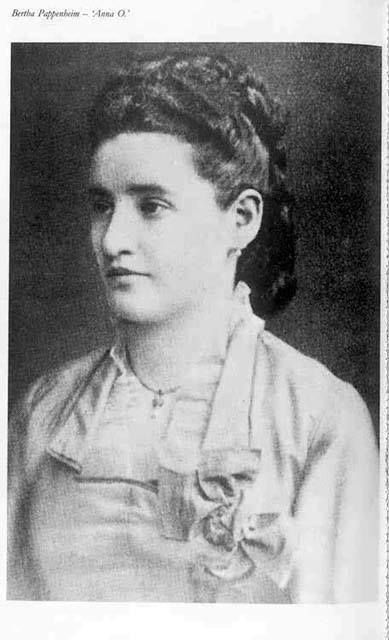
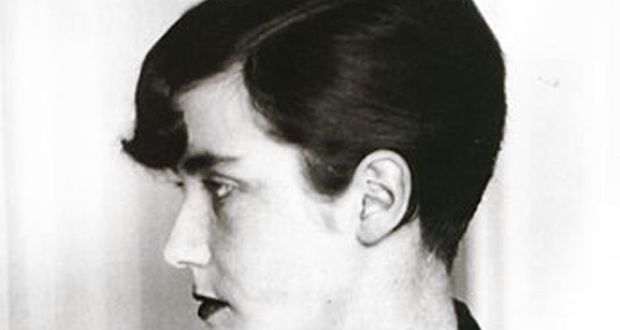
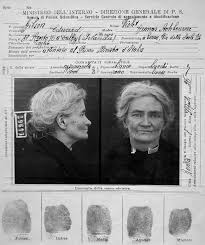
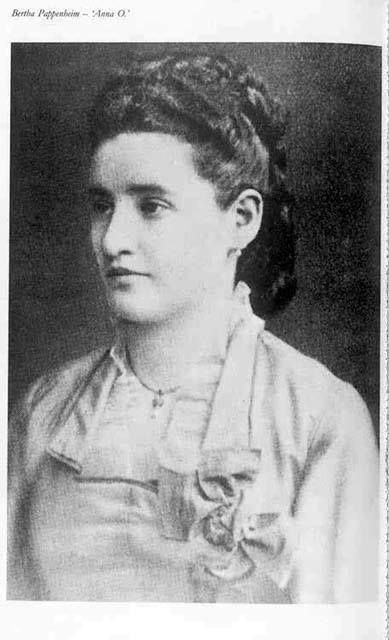
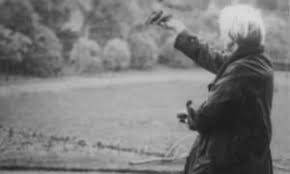
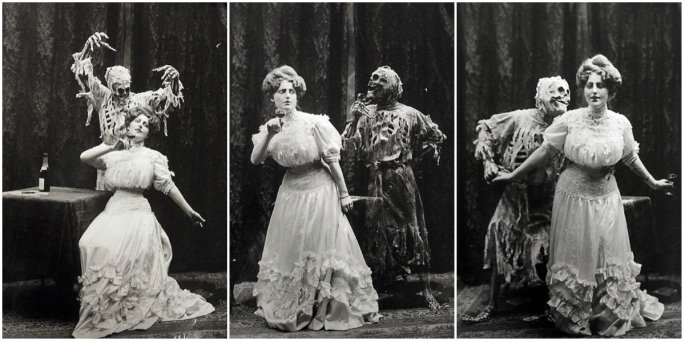
What’s coming? In April, you can read my new novel, Saving Lucia. Here she is above. The book that started with a chance sighting of that photo above – the one where the elderly lady is feeding the birds, so very tenderly. She was the Honourable Violet Gibson and, in April 1926, she went to Rome and tried to kill Mussolini, She shot him in the nose. She got closer than anyone else. Lady Gibson was knocked to the ground, put in prison and, eventually, deported; thereafter, she was certified insane and spent the rest of her life in St Andrew’s Hospital, Northampton. Later, a fellow patient was Lucia Joyce, daughter of James Joyce. What if…and do you see the other women above? That’s Blanche, Queen of the Hysterics at the Salpetriere and that’s Monsieur Charcot demonstrating what happens under hypnosis. She is most remarkably responsive. To her right is Bertha Pappenheim, a prominent Jewish social worker, whose institute was razed by the Nazis. It was not until twenty years after her death that she was also revealed to be ‘Anna O’, in Freud and Breuer’s On Hysteria. These women have an extraordinary story to tell you, so stick around. The book is published on April the 24th, but Bluemoose Books is starting a subscription service, where it will be available to subscribers from (I gather) late February. Follow all news here: https://bluemoosebooks.com/ Saving Lucia is part of Bluemoose’s all women catalogue for 2020.

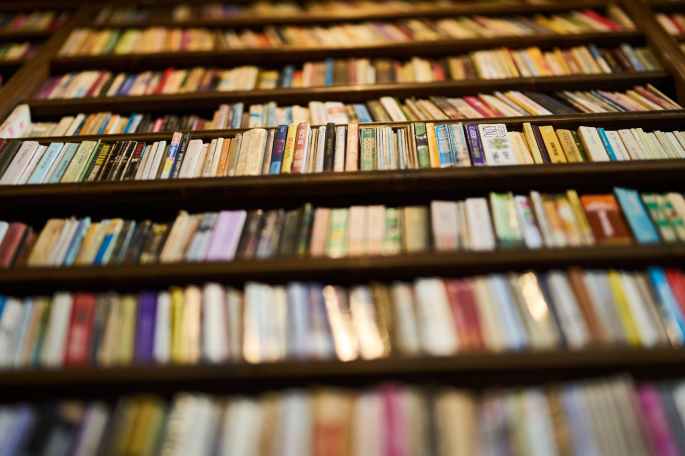
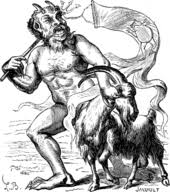
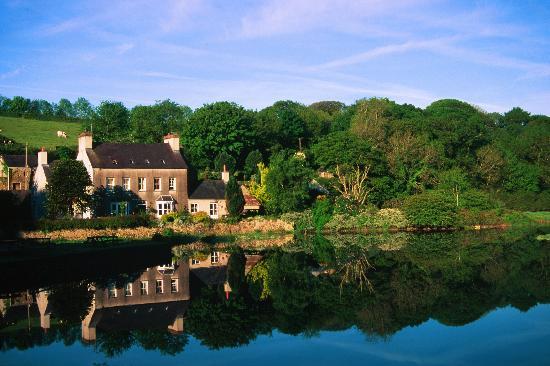
Below is a gallery of images pertinent to what I have been writing about; from a bookshop of towering shelves, an old asylum window, Victorian portraits (the first one has a memento mori which has been added subsequently, but I liked it!), a devil, a baptism in 17th century Virginia, shades of grief, my late grandmother’s house on the Cleddau in Pembrokeshire (the setting for two books now), the holy well of St Non’s near St David’s and Walton West church on St Brides’ Bay in Pembrokeshire, fictionalised in the book I have just sent to my agent…(see below)…

In June, I have an essay in Dodo Ink’s Trauma: Art as a Response to Mental Health; it’s called ‘In Order to Live’ and is about reading and the imagination in my life, kid up, in the face of trauma. Reading as survival, in fact. http://www.dodoink.com/blog and – details when they are up – I also have some weird fiction in a new anthology by Unsung Stories; it’s a really interesting concept and one very important to me: weird fiction exploring mental health themes but also hopeful uplift on these themes. You will see!

In September, my first short story collection is out. Here.

famished cover-c (1)

This is already available for pre-order as part of Influx Press’s subscription service. https://www.influxpress.com/famished Hit the subscription button.

‘In this dark and toothsome collection, Anna Vaught enters a strange world of apocryphal feasts and disturbing banquets. Famished explores the perils of selfish sensuality and trifle while child rearing, phantom sweetshop owners, the revolting use of sherbet in occult rituals, homicide by seaside rock, and the perversion of Thai Tapas. Once, that is, you’ve been bled dry from fluted cups by pretty incorporeals and learned about consuming pride in the hungriest of stately homes. Famished: eighteen stories to whet your appetite and ruin your dinner.’ Oooh and ugh.

Ah but that is not all my bravehearts. I have also, thus is the way these things work, submitted a second novel – witchery in mid 17th-century Somerset and Virginia called The Revelations of Celia Masters – and a second short story collection called Ravished. And if there is news, you will be the first to hear it.

AND

I have written my first magical realism and handed my work in to the literary agency who this year signed me: Mackenzie Wolf, NYC and one of the best girls in the world, my agent Kate Johnson. I think I am allowed to say that this is called The Zebra and Lord Jones. I have been asked by a few people why I am with an American agency. This is partly because we are an Anglo-American crew at Bookworm Towers and I try to split my time as much as I can, partly because they also have a presence here and partly because of my literary interests and ambitions and where. And because of Kate. The best girl. I am desperate to tell you more about this book, set in Wales, London and Ethiopia during WWII – but I cannot. x

When we have had a meeting about it, I will tell you more about a thing which I am over the moon to be able to do: for September 2020 I am offering at least partial fee remission for an MFA (in creative writing) for a student from a disadvantaged background. I have asked if there can be a focus on someone whose life has been circumscribed by mental illness. This is because mine has been – and that’s really why I wrote a novel, Saving Lucia (back to top) about this theme, too. And I am building a writing retreat and teaching room in my garden. I do mean I am building it. With a bit of help, When I am up and running, I will tell you all.

Oh, there will be a lot to share. We will bring you events and news on Saving Lucia – here she is again and note the four windows and the bird on this beautiful cover, below – and I shall share them here and on social media and tell you about everything else that is happening. Saving Lucia is my third book, with the first two Killing Hapless Ally and The Life of Almost no longer with their original publisher and on the move. We will bring you news on this all in good time; you can find copies floating about though!

I have chosen my FREE READ for 2020. I usually do four a year, but 2020 sees all this work on top of my day job (I am an English teacher, tutor and mentor for young people) and extra care for my two eldest boys who are in exam years and have additional needs. This is going to be a rollercoaster year, isn’t it?

I hope we get to meet and I wish you a Happy 2020 and much wonderful reading, perhaps writing. Oh – and I mentioned that I was writing a new book. Here is how it started. The image is of me with the two Shirley Jackson books which are the biggest influence on what I am writing at the moment. It’s called We All Live in a House on Fire -and have a Welsh cake for knowing that the title comes from Tennessee Williams’s The Milk Train Doesn’t Stop Here Anymore. And I can’t tell you anything about what I am writing either. Except that I am a third of the way through and very excited. It’s strange how ideas bubble up. I was upset one night and couldn’t sleep. I started re-reading We Have Always Lived in the Castle and there we were. By 4.a.m. I had started writing chapter 2. I anticipate that I will have finished this new novel by the end of March. I write quickly; it’s just how I roll. I have written all my books in 3-4 months, but I wrote my two short story collections in three crazy weeks a pop. Everyone is different and, anyway, I’d say it’s not the writing that takes the time, it’s the editing. Imagine that, when your book goes to your editor – aside of what you have done yourself – it’s about half-way there. But you may feel differently!

But for now, it’s all about Saving Lucia. I hope you like it xxx

For those who are confined have the best imaginations.

savingluciaCOVER

‘But what do you know, who has not been mad?’

So, rather wonderfully, the proofs of my new book, Saving Lucia, are out and about. Bluemoose will be putting its new subscription service into action soon too; do watch out for that because, if you have liked the sound of Saving Lucia so far, as a subscriber, you’d get to read it two months early; in February, rather than April.

There is something I thought I would share with you today, though. As I have said elsewhere, the idea for Saving Lucia came from a chance sighting of this photograph. violetfeedingthebirds

Who was this? Elderly and (perhaps?) frail-looking; facing away from the camera; arms in a beautiful pose and look how she is covered with birds! It caught my eye. This lady was a Lady. She was The Honourable Violet Albina Gibson, an Irish aristocrat, and she loved the birds of the air. I found out that there were pouches sewn into her clothes and that these were to be filled with birdseed. Actually, I interviewed one of the nurses (now in her nineties) who cared for her – again because of a chance sighting of an article on psychiatric nursing – and gradually a book took shape. In 1926 Violet Gibson went to Rome and shot Mussolini. She missed, grazing across his nose – but she came closer than anyone else. Imprisoned, then deported, she was certified mad in Harley Street and sent to St Andrew’s Hospital in Northampton where she remained for the rest of her life.

standrews

I will not say more of her story now, because we, as a team, will reveal and discuss things over the coming months – and of course I hope you will read the book.

But here is the thing I mentioned I wanted to share with you.

The book is about sanity. About madness. Our shifting definitions of what this is.

The book is about the imagination.

About its power and ability to sustain and transform a world. Yes, in the books we read which have sprung like fresh miracle from others’ imaginations, but also in that landscape inside our heads. The stories we tell ourselves and our reveries and daydreams and also the detailed imaginative freewheeling that may occur when circumstances press in on us and circumscribe our physical and psychological freedom. The latter is something I learned in very early childhood and have written about elsewhere: because I did not feel safe in the world I inhabited, I invented a lot of imaginary friends with whom I would have dialogue. This was not madness, but survival and company – and in essence it lasted into adolescence because the impact  of early and sustained experience had catastrophic effects on my sense of identity, coping skills, resilience, responses to stress and on my mental health broadly. So, I have coped with OCD, depression, generalised anxiety, insomnia, flashbacks and dissociative episodes for large parts of my life. These seemed to grow from complex trauma. I feel like I would not have survived these things – and sometimes it has been a close thing; those of you have received crisis care from our mental health teams will know what I mean – without all the worlds inside my head. Stories, reams of poetry, landscapes I would invent and populate.

So you see, Saving Lucia sprang from a chance sighting of a photo. Then I realised that Lucia Joyce, daughter of the novelist James Joyce, was a co-patient of Violet Gibson. And that was someone whose well-explored – and circumscribed, thanks (I am sorry if this is too harsh) to the efforts of the keeper of the Joyce estate – life and truths I longed to ponder. And there were other women, too. And poets, dictators, theosophists, priests, neurologists – and many more I wished to think about.

But there was something else that it sprang from, and this was my feeling about the power of the imagination to provide for us when we are laid low; when we are, in one way or another, confined. That is partly the reason why I have Violet, who has extraordinary adventures in the book, say,  ‘For those who are confined have the best imaginations.’ I didn’t mean it lightly.

Ah well, I hope we can talk a lot more about this book in the coming months. In the meantime, here is the beginning of an essay I have coming out also in April. It’s a book about art and mental health and my focus here, as you see, is on the imagination and very specifically about reading, without which I doubt I would have survived. Trauma: Art as Response to Mental Health, from Dodo Ink edited by Thom Cuell and Sam Mills. I hope you will read that, too.

Anna x


‘Do not read, as children do, for the sake of entertainment, or, like the ambitious, for the purpose of instruction. No, read in order to live.

Flaubert

And read, read, read in order to build and rebuild. Listen, too, to stories; to new words and worlds. This is how it was for me, reading to set the darkness echoing and to know that I was not alone. You may think (as Flaubert) that young children do not feel this way about books, but even as a young child, I read both for entertainment and safety, because I could find spaces with characters, or just linger with the feelings that words gave me when I ate them or jumbled them about in my mouth. I would talk to the characters in books and ask their advice; tell them how I felt. Or read passages again and again for security; they were as a private talisman to me. I think, looking back, that I savoured scansion or the weight of a line for its mnemonic qualities and the comfort that afforded.

In bed, as a kid, I would hear shouting or groaning; diffuse sounds. Arguments. Later, my father whimpering and screaming, because he went mad before he died, though no-one spoke about it. I would hear stertorous breathing and feel frightened, but there was no-one to tell. And I think that the sounds outside my room got mixed up with the sounds in my head. When I was very young, I also began a series of rebarbative and ruminating thoughts, the roots of obsessive compulsive patterns I suppose, in which I imagined that if I thought something bad, then it would happen to something. That if I thought something unkind or even allowed the words egress into my mind, then those words will billow out and do things. This was, I knew even then, because my mother had instilled in me an idea that I was bringing of bad things. Looking back, I don’t know why she did this; I don’t know why she wasn’t prevented. Even now, if I am not careful, I slip into this position if someone is particularly caustic to me because I may struggle to believe, despite the pressing of my rational mind, that it could be them, and not me. I turn to reading. Every time.’


What I am up to!

I thought, as I am about to go into hiding for a bit, that I ought to update my writing news. This isn’t my day job, but my goodness there’s a lot happening with me, books and writing.

Before Christmas, we hope to give you information on events for the launch of my new novel, Saving Lucia. This is an extraordinary adventure, starring Violet Gibson, the Irish Aristocrat who tried to assassinate Mussolini in 1926…Isn’t this a beautiful cover? Note the bird. It’s a passerine. Note the four lit windows. I LOVE IT and pretty soon will tell you why it has this design and whose windows they are.

savingluciaCOVER

We have been working on final edits and book has now gone to proof. I hope that I might see you at London or Bath launches in April and there will be events during the year.

This is a very busy year for me. In addition to teaching, tutoring and mentoring young people, I am also a volunteer and I need to see my two eldest boys through exam years and also…in September…my first volume of short stories is out. You can even pre-order now as part of the subscription service from Influx: https://www.influxpress.com/famished

It’s wonderful to see such different cover styles; this brilliant edible plate that gets weirder the more you look at it. 18 stories: weird fiction, bit punky, lots of Welsh, terrible feasts, gothic pop shops, killer sweets and some funny bits of consumption. It’s very different to Saving Lucia, but I will be so interested to see people make comparisons and find links. Because, there are some. To discuss later, I hope. And next year, we will bring you details of launches and maybe lascivious lunches and oooh.

famished cover-c (1)

I have an essay – a memoir piece – called ‘In Order to Live’ in April’s Dodo Ink Anthology, Trauma: Art as a Response to Mental Health and towards summer, you can see my weird fiction, ‘House’, in a new anthology from Unsung Stories. I hope that, during the year, I will have the opportunity to write further pieces connected with the two books I have out next year.

Alongside all this, I have a further short story collection on submission – ‘Ravished’ – and another novel, The Revelations of Celia Masters, which is historical fiction, waiting to be read. And I am working with my agent, Kate Johnson of Mackenzie Wolf http://www.mwlit.com/ on other things. She is in actual fact the best agent in the world. You might have noticed me tweeting questions about all kinds of things from zebra feet to The Holy Grail. I tell you no more about why. But I can say that what I am working on is Magical Realism and I was lucky enough to have a brilliant beta reader for this that I’d love to name…but will embarrass at a later date. I am small fry compared to the folk this chap has worked with!

As to my first two books, Killing Hapless Ally and The Life of Almost, these are on the move so not with their original publisher and we will give you news on these all in good time.

You know, I have only been writing for four years and next week I am going to be handing in my seventh book. I just rocked up, daft and loud as I am; I assumed that I could not do this, though I have spent my life around books. Reader, writer, doubter: I was wrong. Publishing and writing have, I know, got a way to go in terms of access and possibility. We hear about gatekeepers and you have to understand why. But I also want to say, consider this: is the gatekeeper YOU, mired in so much self doubt that you cannot move? Doubt is normal and healthy and proves you are self-reflective. You will be a better writer because of it.

If, over the coming years, I can encourage you to get the books you want to write out into the world, then you tell me, okay?

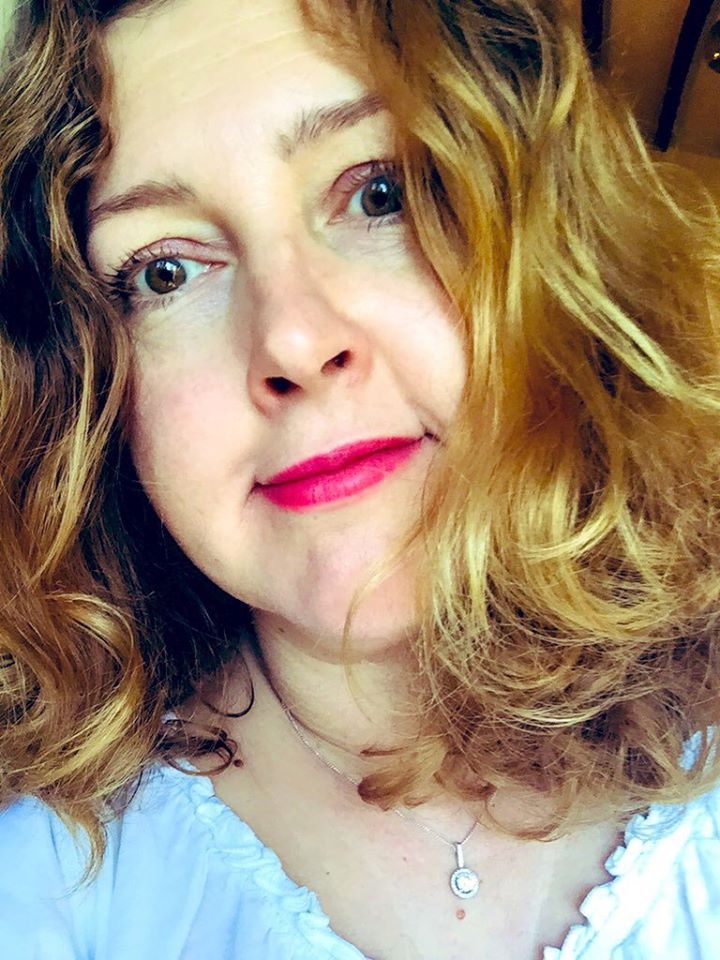
Here’s a picture of me so you recognise me. One of my kids took it; no filters; nothing fancy.

Hello.

annapic

Anna. x

My compendium of failure and on beating the odds (an updated piece)

In the past few weeks I’ve been paying particular attention to people’s comments on twitter (mainly) about the impossible odds of getting a publisher for a book, or of getting an agent. I also see writers frustrated not only at rejection but at not getting a reply. Moreover, about perceived barriers to finding an agent or publisher and about not being listed for competitions. I thought I would write in response to this because I have launched and had to relaunch. Let me know if you have found this in any way helpful. Oh – and when it comes to competitions and applying for things, I’m going all out here. I BET I HAVE FAILED* MORE THAN YOU.

*TRIED; STUCK MY NECK OUT; WAS NERVOUS BUT DID IT ANYWAY….

road closed signage
Photo by Pedro Sandrini on Pexels.com

  1. I started writing long-form in late 2014 and wrote a memoir. I can’t quite remember whether it was this year or the following but I submitted it in the Mslexia memoir competition and it was not longlisted. I remember being gutted and crying a lot. I wouldn’t now, but at the time….
  2. In early 2015 I completely rewrote the book and changed it into autobiographical fiction. I submitted it to six agents and three replied with a no; one didn’t reply (with a clear statement that if no reply in…however long it was…it was a no) and the other two didn’t reply at all, even after chasing.
  3. I decided I would send it to an independent publisher and there it was accepted. This memoir went on to be my first book, Killing Hapless Ally, published in 2016 and, although, there were some bright spots and I had many lovely responses because it was about mental illness and resonated with people, was profiled and used as a teaching resource (still is), this book was otherwise pretty invisible. Somehow I hadn’t quite banked on this; probably because I was still really ignorant of how book publishing and marketing worked. And also, I do tend to be wildly optimistic about things!
  4. I wrote a novella right after that, The Life of Almost, and I had two full requests from agents. One never wrote back at full, the other, who had seemed extremely keen, rejected it but asked for my next book. Because I was completely naive, I wrote that to time for them and they then rejected it with a form rejection and I never heard from them again. My previous publisher then took it and it sank pretty much without trace, mood lightened by some wonderfully supportive booksellers and reviewers and readers. This was tough. On my release and book launch day I was crying and feeling wretched, pulled up by a lovely bookshop and some truly great people in the publishing industry, including a really nice agent who had rejected my work but was just a good egg. BUT
  5. …do you know what you do when you finish a book, or it’s out and about? Or when your book sinks? You get off your sorry arse and you write another one! This was my third book, Saving Lucia. I did have an agent meeting (we are now in the summer of 2018) about this one, but I want to tell you – and I am not going to name any names in any of this – that particular agent is someone whom I am proud to keep in touch with because they are so blinking nice and supportive and ethical and that is something to bear in mind. Someone may not be a good fit for you, but that doesn’t mean you cannot maintain really wonderful links with them. This is friendship and community, but it is also commerce. Where was I? For this past year or two I had been reading more and more books from the indies presses in the UK and beyond and it changed my life. It was so exciting. I got to know them, and their work and tried to develop an understanding of their vision; I sent Saving Lucia to seven independent publishers; two were a no with nice comments and I had three requests for fulls. Two didn’t reply at all. Still haven’t, you little buggers. But let’s say there was a fair bit of interest there. Saving Lucia is being published by the awesome Bluemoose Books next April. YAY. And did I say that while I was waiting I wrote another book, a work of historical fiction? It would be wrong to tell you any details now because all in good time…generally publishers will want first refusal on your next book so… (should I get rid of this bit? No, I think it’s ok.) I also met the person who was, in future, to become my agent around this time; just chatting through things, even though I had nothing to offer them right then. Because DO YOU KNOW WHAT? This doesn’t always work how you think it will work. Actually, we talked about hats and reading and what was the best kind of cake and America and Britain and ranging between the two (as we both do). But mostly about reading. And a bit about writing and what I might be up to.
  6. Well, so…I have done another book, I have now got a wonderful yes on Saving Lucia and I seem to have sort of got ahead. It was at this point that I started tinkering and ended up writing two short story collections. This was in very late 2018 and early 2019. I did this for stimulation and pleasure and it made me so happy. Again, this didn’t happen how I thought it would. I hit upon the idea of two themed books: the first with the theme of food and feasts and consumption (as in consuming, not TB) and that is Famished, out with Influx Press next September and while I was hanging around on that – request for full very quickly – and just after I had a decision – YAY – I wrote the other collection, and I am not telling you much about that other than to say it’s positively macabre but I hope you will find it funny too, one day. Oh – and I am also now agented. WHOAH.
  7. Right. So that’s books three and four coming to you in one year (2020) and that means that, in under five years, I have written 7 books (I have just finished number 7 now; it’s another novel and this time, magical realism, currently hanging out with a beta reader the pedigree of whom…well…maybe I can tell you about that if he doesn’t hate my book) and I am not entirely sure how this has been done with the kids hollering and my teaching and dusting and looking after chickens and cats (and see below) and volunteer work and physical and mental health challenges (you get the picture), but I think I took so long to start that once I had, well I was not going to give up. Plus I loved it.
  8. There have been some properly shit bits. The rejections; the no-replies. There are going to be more I expect when someone hates one of my books. Or lots of people do; it’s part of the business. But you MUST move on rather than feeling persecuted as well as rejected because your creativity will, I think, dwindle. That has happened a couple of times. Also, I mentioned relaunching. My first two books are now, as they say, between publishers. It wouldn’t be kind to comment on any of that because sometimes things go wrong, of course they do, but it is sad. Suck it up though because I have a new notebook. And on no replies – especially after a request for a full – not good enough, I feel. Plus, it causes people real upset.
  9. I have not mentioned an absolutely key thing. During this period, first word to page when I knew absolutely nothing about the writing and publishing industry, I have worked my tits off to make sure that I do know things. Maybe that’s how you beat the odds. Clearly the writing has to be there and you MUST listen to constructive criticism and advice and at least give it the time of day, but while you are working away, learn about the industry. Network. Well I didn’t know I was networking, because I call it HAVING A CHAT and I LOVE A CHAT. Expand your reading. Read as much as you can and diversely. Challenge yourself. When you submit, you really should know plenty about those to whom you are submitting. It has been bloody marvellous to do anyway, but I had read lots of books by Bluemoose and Influx and others I submitted to. That’s one example. Put the work in, because they did. Also, meet people and talk to them (HAVING A CHAT AGAIN); engage on social media if funds or your health or caring commitments mean you cannot get about; take an interest in others’ work – it is so life-giving and rewarding. Learn what an agent is, a publisher, and indie publisher, an editor (and the different types of editing); learn about book publicity and marketing, bookshops -especially our wonderful independent booksellers – and book marketing. And I was doing all this while I was writing; I also submitted various poems, short stories, creative non-fiction and short memoir, most of it, to my surprise, was published, though mostly not for money: for that reason, it had to be work I could do in pockets of time. I edited a couple of books and reviewed various books for online journals. I wrote a poetry collection which I submitted for Mslexia’s poetry anthology competition with Seren books and it didn’t get anywhere. You can tell I’ve been busy because I only just remembered about that. I also put together a comical parenting book based on diaries and blog posts I had done for various sites and submitted that to Unbound, where it was a no. Yep. I worked my tits off. I also tried, surmising I might be starting to look at least a bit credible, to help others forward. I have managed complex mental health stuff for a long time and I’ve got a couple of wacky health problems which aren’t always much fun, but that’s NOTHING compared with what many suffer; add to that the structural inequality which means that funds and resources preclude someone from writing. This is why I do four free manuscript reads a year: I think that life revolves, or ought to, around community and love. And chatting to people. Some people are twats, usually because they are (argue as you please) experiencing pain or threat in some way.
  10. Here is my summary catalogue of additional failure, because I see people getting upset that they do not make lists for competitions. I BET I HAVE FAILED MORE THAN YOU. I have never (other than Not the Booker) been longlisted. For anything? Let’s break this down. I didn’t make the Mslexia memoir list, my books were not longlisted for Rubery (that cost me £37!!!), Wellcome, Bath novel (twice!), Goldsmiths, Ondaatje, Exeter or Yeovil prizes; my complete poetry anthology didn’t make the Seren Books/Mslexia anthology; my short fiction and single poems have not made Fish, Costa or Bridport  and WHAT IS MORE I didn’t get a Gladstone Fellowship or Society of Authors Funding; because I didn’t, I a. got up at 4 in the morning to write and b. taught more and it was tough. But what are you going to do? Do you want to do this or not? Are reading and writing your lifeblood? Then there’s your answer.
  11. AND MAYBE THAT IS HOW YOU BEAT THE ODDS. You ignore them. You just write good stuff, as good as you can, keep talking to and meeting people; none of this has happened as I thought it would. A lot of things have happened because I met people and before anyone interprets that as schmoozing in inner circles, no: I mean I like chatting to people (apologies for the HAVING A CHAT repetition) and seeing what they do, asking them about their reading and so on. I am quite shy. but I love to talk to people (if that makes sense) and I think this has held me in good stead. When things go wrong, feel sad and let them go. Yes, there are clearly real things that need to change. Speaking as mum and English teacher, for example (there are other areas and fantastic people shining a light on access and unacceptable dead ends), it’s pretty clear that the industry needs to up its game on BAME books (and you too, exam boards!!!) – but for lots of other things, be sure it’s not a self-fulfilling prophecy; avoid feeling resentful and persecuted because that’ll stymie your creativity. Women: I won’t even engage with this stuff about ageism because, as I have been saying this week, unless I am about to get a horrid shock – my eldest son is nearly 18 so clearly I am 318 – I think we need to crack on and I have never experienced it and am not at all keen on its being used as positive marketing tool on the whole, because it’s reductive and I’d be lying. I’d say, ‘I’ll get my coat’, but I wrote that only to encourage and maybe make just one person less fearful.                                                                                                                                               AND I HOPE THAT, OVERALL, YOU’VE FOUND THIS LITTLE POST HAS MADE YOU FEEL BRAVER.

    toys letters pay play
    Photo by Pixabay on Pexels.com

    Love, Anna.

On estrangement

You may have seen news today on Meghan Markle’s decision to tale action against a British newspaper and Prince Harry’s rush to defend her. I am not a fan of the royal family at all, but I dislike the way the press has treated her and I might also understand his response. No-one has any right to pass judgement on estrangement and the prurient interest in it here, plus a tabloid rush to pass judgement, seems to have led to what has happened. You simply do not know what someone’s actions have cost someone else and you do not know what that former relationship has effected in terms of psychological damage. I don’t know the ins and outs of what has happened here, but I certainly think it is a private matter in public people. And, more to the point, I know about estrangement and why we might choose to make decisions to sever ties. And I simply do not agree that blood is thicker than water though I have heard this all my life. Family is beautiful, but if elements of it hurt you badly, you should not feel you need to maintain contact with those elements. In my case, it was a calamitous nervous breakdown when my youngest was eight months old that clarified a decision and a better process; when things came to a head again shortly before I was discharged from long-term therapeutic support, I thought that my need to stay away and our need to keep our boys away would be fully understood, but it was not.

Let me tell you a bit about that.

I should like to write very freely in this post, but I can only do so to a certain point. This, in itself, speaks volumes. It’s because I grew up with a lie. And it wasn’t even entirely a lie. Some bits of it were true and beautiful and kind. And the bits that were not true and beautiful and kind spun me into dissociation, sent me mad or provided, latterly – and God knows why I didn’t see, hadn’t grasped it before – some dark materials for writing. And through that, I came to see that I might have made my way through some things with a pretty sturdy imagination, plus I had the utter blessing of reading – because it was my escape and how I found my way through a world I did not understand.

And the reason I can only write freely to a certain point is that the lie was and is upheld by others. Sometimes they should do better and have done better; not entirely fail to believe someone because they didn’t see it with their own eyes. But a lot of the time the lie is upheld because it’s only a lie to the person who was on the receiving end of it. All they saw were the bits that were beautiful and true and kind.

When a person or people are systematically cruel to you in such a way as you are short-circuited in some manner so that your brain doesn’t work properly; when you flick awake, posed and ready for action as others groggily come to; when you have repeated nightmares, dissociative episodes, panic attacks and when you develop severe depression and an OCD which is predicated on atoning in ritualistic ways for some terrible crimes you believe you have committed and to atone in some small way for the terrible person you think you are; when all this happens and you know in your bones, the taste in your mouth, what you hear and the very colours behind your eyes, what is behind it, then this is a response – and baby I get the multi-sensory version and very tiring it is too – that is not normal. And it didn’t come from nowhere. This is a sustained and complex trauma and it has informed everything that has come after it. My shaky decisions, perilous lack of self belief, running away from rather than to something – the opportunities I have missed and denied myself because I thought I was not good enough or, frankly because I was too crazy to cope.

And yet the sources of this trauma may have been good parents, friends, colleagues, siblings, members of the community and all those things because people don’t tend to be one thing. Unfortunately, as a young child, if you see those you are frightened of routinely praised, loved and respected by others, then you believe the problem must be you.

For me, the problems were upheld – I suppose it was like an accidental gaslighting really – through my adult life and it is only comparatively recently that I have distanced myself from those who still praised and upheld those I was scared of and who reduced me, in my head, to nothing. I found I simply couldn’t listen any more. From the person who decided it would be a good idea to tell me on my wedding day what a disappointment I was, to those who, again and again, urged me to allow my three sons to have relationships with certain people when I knew, Mr Bookworm and I knew, that they meant them no good. It should have been radically obvious and yet, somehow, it was not.

So, when you hear about those who choose to estrange themselves from people, don’t make assumptions as it’s not generally a decision borne lightly. I doubt very much that it will have been this way with Meghan Markle. A latter day intense privilege must not cauterise your nerve endings; surely it cannot remove troubling memory or pain. So treat someone who has chosen to estrange themselves with compassion and don’t intrude on their decision. And also, if it is something you need to do, and you go ahead, I wish you all the love in the world. Anna x


x