A new piece on anxiety and some suggestions for managing your world….

https://brizzlelass.co.uk/2016/05/12/guest-post-anxiety-where-it-came-from-and-how-i-manage-it/


Here is a guest blog piece I wrote for this rather lovely blog (above).

ANXIETY. WHERE IT CAME FROM, WHAT IT DID AND HOW I MANAGE IT

I just wrote a cheerful book about things that suck. In it, I drew on episodes in my own life, early childhood onwards. It was a carnival of anxiety.

I came from a middle class and well connected family, with both parents paragons of the community and I had a substantially older brother who was, by turns, angel and devil. When he was devil, I thought it must be me. Because the thing was that within this socially lauded family, there was risible dysfunction. Don’t laugh: I am aware that there will always be dysfunction to some extent because we humans are inconsistent and not one thing; we are flawed and wanting. So let’s say this is only a question of degree. If you, as a child, are repeatedly told that you were lucky to have been kept at all – that you are an aberration, dreadful, responsible for terrible things and – more to the point – that this is a view held by your entire family and that everyone out there in the chilly old world can see who or what you are, then I am not sure it is easy to rebound and feel at ease. If, to others, your immediate family is praised and if, say, your mother is referred to as if she were a saint by people she worked with, or people that you would meet, sometimes family, sometimes just passers by coming to receive benediction from the blessed lady, then what do you do? It HAS to be you you you. It cannot be her or them, can it? When your sibling repeatedly tells you weren’t wanted and are a burden, the bringer of illness and the harbinger of death, you think that’s about right. And you cannot tell anyone because, on the occasions you tried, you were told, ‘Who would believe YOU? Everyone knows what you are like!’ That is the sort of dysfunction I am thinking of. If they think you’re that appalling, then you must be.

So, as a young kid, I did this.

I packed it down tightly.

I invented an alter ego (partly to have someone else to confess to and partly to provide a more palatable version of my horrid child-self to provide in company) and gradually began elaborate conversations with imaginary friends from books (and their writers) and songs (and their singers), because I had to tell someone otherwise the anxiety and sadness were so bad that I knew I was going to explode.

I kept up the imaginary friends for years; my first was Frida (the brunette one) from Abba. She was cool and complimented me a lot and always told me how pretty I was and that I was really a good kid and that even if I ended up in prison, she would visit me. And I was a reader; a devourer of books. I still am. So I used lines from them as a talisman (which went awry at several points when such lines became incorporated into elaborate and frightening OCD ritual) or as a place to find people to have conversations with, which is how, as I got older, I came to speak to Keats and Yeats and Dickens and Dante and Charlotte Bronte and Albert Camus. Despite these early strategies, however, I needed, in the end, to know others – other ways to cope – because life as an adult was awash with shame for me and could not be corralled just by speaking to Mary Lennox from The Secret Garden. My mother had been ill most of my life and died when I was twenty. I thought that I had contributed to her illness and was told that I had ushered in her early death; one of her closest friends told me I had begun the ushering with my very birth. My father (who went not long before her) had been fit and strong all his life and was diagnosed with serious illness, all too late. He refused most treatment, as far as I could ascertain, and in his final year he entered a startling decrepitude, shuffling around the house and refusing to speak to me. His last words were ‘You have let me down’ and when I went to see him, toes up and surrounded by the lilies he had loathed in life, my thoughts were confused, jarring, terrifying: I thought I had killed him. I had nightmares about it for years, lilies and all. Also, a childhood friend that I had used to play with when we were in reception class died around the same time as my father and my mind was in such a maelstrom by this point that I thought I might be implicated – things I had done aged five, when rough and tumbling. It didn’t matter how little logical sense this made, to me I was scared that this bad little girl had hurt a good little girl and fourteen years later had caused her death. I think I lived on my nerves constantly by this point. I was leaving university; both parents had now died; I felt ill, scared and confused, but thought that I had deserved it all and out I went into the adult world and made a fist of it. In the adult world, I had to keep up the cheery voices because inside my head were the cackling voices of my late parents and their assumed entourage.

‘Look at you. You should never have been born!’

What gave? I established a teaching career, did some pretty adventurous travelling and some satisfying volunteer work, but it would all come crashing down periodically and the self-harming of childhood took up: what gave? I did. Twice in my teens I had tried to take my own life; periodically in my twenties and early thirties things would come crashing down and I was given various courses of anti-depressant as my anxiety was linked to low mood and some more serious periods of depression. I had disabling and regular panic attacks, frequent insomnia and horrible nightmares, where I would wake up shaking and crying. The same recurrent dreams and their pointing, screeching, accusatory phantoms. I was offered CBT and, for me, it didn’t touch the sides; then, when I was ill after my first baby I was sent for psychotherapy, which achieved very little and when I had my third child, my whole world came crashing down and I was temporarily unable to function at all.

I remember sitting, paralysed, in the front room. I was frightened of everything and thought that I had broken irretrievably. Even looking at my shoes or bag made me anxious. But this is where things shifted. Now, for the first time, I began to let people in. I told more people of how I was feeling. Friends rallied and advocated for me and, dear reader, after thirty odd years I got the help I needed partly because of them. CAT – cognitive analytic therapy – delivered by a hugely skilled psychologist and long-term support. It was life-changing to be with this clever, kind lady. We unpicked patterns of thought and found new pathways; I did homework and wrote letters; she wrote to me and I wrote back. Very gradually, I got rid of the nagging voices in my head and became more sure and more dependent on my own voice and my own judgement, because it was as if I were a sort of composite person, arranged of other people’s motley opinions and condemnations. I gradually looked at the whole picture; at how I couldn’t have caused the things that I thought I had: it was as if someone had finally given me permission to let go. I began to look at my world more clearly and understand that there were some people (especially dead ones!) I could say goodbye to and that I could disentangle myself from past situations by freeing myself from blame for terrible things that had happened to others. I think that I had been incapacitated by shame and fear for so long and these things were at the heart of the anxiety I felt: I was perpetually at the point of annihilation, if that makes sense. I had always wanted to explore faith properly. I would try to pray. But I thought I was beyond redemption. Appropriate support meant I could begin to do this. I do believe that in therapy we could do well to explore our attitudes to faith (or not) and to end of life and what comes next. We all think about it. But that is a story for another day (although the Dorothy Rowe book I mention below tackles this).

I wasn’t totally fixed at the end of this year of CAT but now, these days, I am very different. To celebrate this and, I suppose, acknowledge the bedding down of new ideas, I based my novel, Killing Hapless Ally, on my experiences. It got picked up by a publisher and, while, it’s billed as literary fiction, I hope that there is much in it to guide and give hope to those suffering from severe anxiety, or other mental health problems. If you read the book, I should love to know what you think. But in the meantime, for what it’s worth, here are my coping strategies. I’d say for anxiety, but we need to remember that anxiety, in mental health terms or in terms of mental illness, may be a complex thing and bound up with a myriad mental health disorders – so it is not a case of one size fits all here. So much rubbish is peddled about mental health; there is so much sloppy vocabulary around it. Please accept what follows only as a list of what helped me and of what I have to remind myself pretty frequently. So…

1. Accept that just because you feel something does not mean it is real. Sounds simple, but having that expressed to me, in therapy (or by my favourite psychologist writer, Dorothy Rowe, in Depression. The Way out of your prison) was revelatory and revolutionary. Unpick a situation. Tweak it. Look at in a different way. When I tell you that at one point I fell from my chair with relief and that at another I thought I could see colours as brighter and truer…well, I know that sounds excessive or hallucinatory, but to me it was as if I had entered a new world. One in which I could be at ease and which I didn’t experience only through a glass darkly.

2. Be kind to yourself. No-one has ever treated me as unkindly as I have treated myself and I would never judge anyone as harshly as I do myself. Nope. That doesn’t work, so practise getting rid of it.

3. Be aware of your triggers, but laugh at them, reason with them and don’t run away. Face them down because, in my experience, anxiety amplifies if you don’t look it in the face. Know that you CAN do this.

4. Bad day? Overwhelmed by conflict and to do lists and things you’ve screwed up? I think ‘tomorrow is another day’ sounds trite and twee, so I say ‘Keep it in the day’ otherwise you shift today’s concerns and start tomorrow burdened.

5. Think, the past is a different country and that tomorrow is up ahead, where you cannot be or live. Focus, therefore, on the present, the hour, the minute, In other words, mindfulness.

6. Frankly, don’t give up on finding the appropriate MHRA help for you. If your GP is not understanding, ask to see a different GP. If questioning your treatment feels too daunting to you, ask someone to come with you, if you can.

7. Decent food; fresh air; self care. Reading to refresh and renew and help you see and entertain new ways of doing things; of building or re-building your mind. I do not say this lightly. I would not have survived without my books. And relax. If the pace of modern life and tirade of information and stimulation through social media make you feel overloaded, then give yourself permission to take a break. Pressing the ‘off ‘ button does not make you a total Luddite or a social outcast. (But see below*)

8. Friendship or familial relationships. Keep at it. BUT I have had to learn to be ruthless, though. If someone puts you down constantly or if they are workaday cruel to you, ditch them. I hope that doesn’t sound too harsh. And maybe remember something I have learned: family is a flexible construct – both internally in terms of roles and externally in that friendships may provide you with a warmth or love you never had in your family. Also *know that there is a great deal of support out there on social media; I find twitter a source of such – for example, through @mhchat every Wednesday night

9. Focus on others. Look at what they need. I have found that if I am taken out of myself because I am absorbed by the needs of others, then I can help them and, as a side effect, it is healthful for me, too.

10. Accept yourself. Compare and despair. No-one else can be you; don’t try to be someone else. Also, accept difficulty as normal. Failure is part of life. In a way, when we continually ramp up expectations, we raise the stakes and find ourselves feeling anxious and got at. I am not saying that I don’t look forward to things. Just that, for me, I find I am regularly delighted because I have let go of such weighty expectations.

I cannot promise you this is easy and I am realistic that MH treatment varies around the country; to say ‘help is out there’ is trite and all too glib. But, as I have learned, all the answers, for me, really lay, after all, within myself. These days I experience anxiety, but it is not the terrifying, all-encompassing thing it was for a long time. I teach; I write; I do volunteer work; I am raising three young sons and I have had over thirty years of depressive episodes, self harming, OCD, Generalised anxiety disorder and two suicide attempts.

But things are different now. I am well and I am happy and so I am sending you love and encouragement as I type this and I am crying a little bit now because I have just realised that I have never written the words ‘I am happy’ before.

Anna xxx

http://www.annavaughtwrites.com Follow on twitter /bookwormvaught

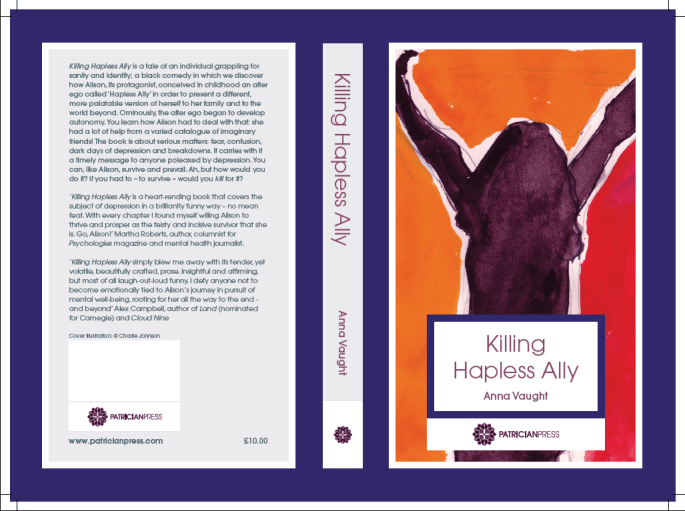
Killing Hapless Ally is published by Patrician Press (2016) and available to order from bookshops, on Amazon and Waterstones online and from http://www.patricianpress.com Latest review here: https://thecontemporarysmallpress.com/2016/05/04/darkly-funny-and-courageous-killing-hapless-ally/

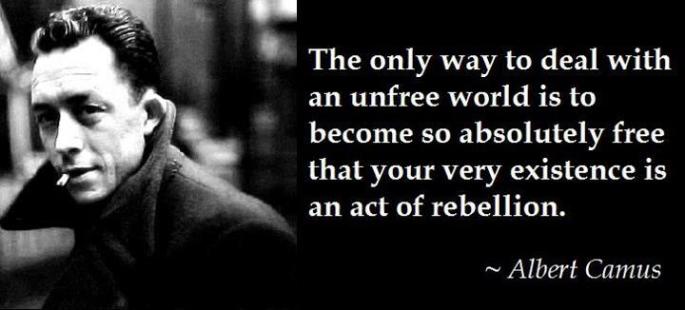
For help with anxiety or other problems: Mind, Saneline and The Samaritans have all helped me. For young people Healthy Minds is a great resource and @respectyourself is of great encouragement on twitter. Also there, @MHChat is for everyone, every Wednesday night; it is used by a diverse group of people. My favourite book about mental health: Depression. The Way Out Of Your Prison by Dorothy Rowe (Routledge, 2003). And, by the way, that’s Albert Camus in the picture. He was there, in my head, all the way through. x


Darkly Funny and Courageous: Killing Hapless Ally

This bold, unique novel is a first-rate example of the innovative and original approach exemplifying the contemporary small press scene.

Source: Darkly Funny and Courageous: Killing Hapless Ally

Talking to your children about mental health; helping your children cope with your mental health problems


TALKING TO YOUR CHILDREN ABOUT MENTAL HEALTH; HELPING YOUR CHILDREN COPE WITH YOUR MENTAL HEALTH PROBLEMS.

This text contains some frank descriptions, a swear word and a hint of humour in unsettling places.

Here is an extract from my new novel, Killing Hapless Ally. And in it, I drew very much on my own experience of managing my mental health problems as a mother. In this bit, there are three sons to be cared for and this is how it went when I was once quite unwell and my husband and I struggled to manage until — because for the first time in my life I really opened up — a community of friends swept in. It was this — the honesty of it all, I think — that was a key element in my getting better. Here, in the novel, when the protagonist struggles to hold herself up and doesn’t entirely know what day it is, are three young men, seasoned by fire and the determination of their parents’ love.

‘There was no choice but to let the exigencies of motherhood force Alison to cope. But today, everything was back to front and the wrong colours; clothes were in the incorrect place; there were two packed lunches in one bag and she was crying and her knees were buckling as she came apart. It is a testament to these children that they went off and out, knowing that they were loved. And knowing you are loved is all, perhaps. Not feeling guilty; dirty; too responsible too soon, or with a head full of macabre images and angels howling.

“Bye Mum.”

The boys’ eyes were like saucers.’

The ‘boys’ here recall what I remember, just a few years back, of seeing my two boys go out into the world, with their mother very distressed at home (the third was six months old and so I partly fictionalised the text because he was pre-verbal!). Like anyone who has had mental health problems, I have worried about how seeing their mother so upset and so poorly has affected the boys. But I want to say something about this. It’s not that knowing — and seeing — I am being frank; my boys have seen some pretty raw things — a parent at rock bottom is exactly ideal, but you see they have watched me get better, too. They have a sense, they tell me, that I am strong because they have seen me battle and seen me get better. Of the two, it’s the battle they respect the most, apparently. On Mother’s Day this year my eldest, who is nearly fifteen, made me a home-made card listing the reasons I was ‘Greatest Mum in the World’, and he noted that I always ‘took on’ illness and the problems I had had and that he thought this was amazing. No cupcakes; spendy holidays; kit. Just, ‘Mum. You are amazing. You have had all these problems and you have never given up.’ If you are a mum, reading this, worrying, let it be known that I am giving you a HUGE virtual hug RIGHT NOW. And also commenting that sometimes I feel I learn more from my kids than they do from me. Ever feel that way?

We have given the boys information so that they are informed without being over-burdened with facts, answered questions and told them things about mental health and about how and why (insofar as we know) things can go wrong. Certainly, the older two, who are at secondary now, will learn a bit about moods and feelings and where to ask for help in PSHE, but (as well as being their mum and an author I have always worked with secondary age students and also been a PSHE teacher) mental health is still not addressed fully, I would say, in the national curriculum. In our daily lives, it still attracts some pretty horrid vocabulary and whispered voices. Sometimes — I think of ‘Daily Mail’ headlines and the careless lexis of all kinds of people (including teachers) about ‘psychos’, ‘nutters’ and, most recently, ‘going schiz’ to describe a child’s misbehaviour in class, all of which infuriate me — and I wonder if there is still a hefty element of wishing the crazy people ’round the bend’. That screened place, which, in years gone by, was eclipsed from view after the straight drive swept off in its bend to the psychiatric hospital. And by the way, I am not suggesting that we should be, forever, sharing and emoting left, right and centre; emotional continence and discipline have their place; on the other hand, by demonising ‘bad’ emotions we teach nothing of any real value to our offspring. And when people – or when we – need help and support because things have gone wrong with our minds, moods and emotions, we need to be able to have open dialogue about it just as we might about our physical health; I know that we can create a context for that as we speak to our children.

As parents we have a responsibility to talk to children so that they are not frightened if they know someone — and I want to say that one in four people will have a mental health problem — who is experiencing difficulty and so that they are properly compassionate to others and to themselves. I would want my boys to see the reality of who people who have mental health problems or mental illness actually are: they are us; they are you; they are me. Shame and stigma are destructive and while they obfuscate, they cause more problems and more misunderstanding and, perhaps, cause people not to seek the help they need. Because there isn’t really a they; there’s only an us.

Let me tell you what happened to me.

When I was a child, I knew that, in sections of my large family, things had gone awry. Strange things happened and I had glimpsed into them and listened in, furtively, on private, grown-up conversations. I was forever thinking about some terrible things that might be happening behind the silent screens, behind the whispers, but being entirely kept in the dark about them made them more terrible for me, because my imagination and limited knowledge built them into things of gargantuan proportions. For example, I had an aunt who hadn’t got out of bed for some years and her condition was referred to as overwork, yet I caught snatches of conversation about ‘nervous breakdowns’ and heard one of the neighbours say she was a ‘mental case’; sometimes I heard screaming and then recalled it in nightmares; I knew that at least two of my cousins had disappeared and was hastily told they had brain tumours (I know — a strange things to be saying to a young kid; but you see this must have been considered a better explanation than the real trauma); again, earwigging, I came to understand that they had taken their own lives, and sort of wondered where they had put them. It was my family’s epic-fail mythology, on both sides, but particularly in my late father’s, that all was well and that you didn’t tell for shame. A mythology that the sadness wasn’t, anyway, palpable. Because, of course, it was. As a child I sucked it up and felt sick; it was there on the table with bangers and mash when no-one spoke but sat, as Auden had it, ‘in a place beyond glum.’

No-one spoke about what was going on; I had to over-hear the accounts of wife-beating, of a gold-digger marrying the terminally ill aunt who was the person I loved most in the world; of why another aunt had to be sedated for the vast journey across Somerset; of why the aunt who didn’t get out of bed occasionally threw furniture at visitors. Even as a young kid, I knew she must have been so distressed because I was left in the car outside willing myself to think of something else. ‘Bang!’ That’ll be the bedside table. I was told to shut up when I asked. Because everyone was so dead keen on stifling things, it almost killed me when my father cried at said married-to-a-gold-digger aunt’s funeral. And he was furious with me that I had seen it and belted me for it because his shame was so great. I am aware that my family was dysfunctional, but because they were such pillars of the community — and had apparently joined the middle classes now — there was no-one to tell because, as I wrote in my novel, ‘Who would believe you?’ Ah, keeping up appearances does a lot of damage, does it not?

I could also witness, within my own home, familial mood swings that, to me, were terrifying and I do believe that the secrecy and lack of articulation made me into a frightened child and probably adult, too. Because my family (albeit ineptly) covered it up, it felt worse; moreover I was always taught that moods, and PMT and adolescence and passion and crying apart from alone were signs of the most hideous weakness; at least two of my cousins suffered from eating disorders: no-one called them that; despite the fact that they appeared to be wasting away and there was one cousin whose scratches from self-harming I could clearly see. I feel and see this all so clearly now and I know that I desperately wanted to talk to someone about it all.  When you become a parent, maybe you feel more acutely for your child self? And this child self needed to be told that she was okay and coping and she wishes that there had been someone to say, ‘It isn’t you, kid’ or ‘Mental health problems and mental illness are not weakness’ or ‘Your family’s suppression of anything that looks shameful is actually the unhealthy part and totally sucks because the problems are so clearly there.’ And I needed that talk about it because also, as a small child, I began to develop problems myself, in my topsy-turvy, back-to-front world.

My black comedy, sort of bildungsroman of a novel explores the ways in which a child develops problems of some dimensions, has not a soul to tell, is traumatised by many key events in her childhood and is very fearful and full of self-loathing; she scratches and pounds upon herself and uses her imagination to populate a world which, to her, makes no sense. This kid also develops an alter ego who turns nasty. What can I say? I was a funny little girl, but I survived with my unorthodox means. Unfortunately, I also had years of mental health problems — OCD, panic attacks, generalised anxiety disorder, self-harming, extremely poor coping skills in the face of stress, periods of depression — and I thought that I was a ghastly person who had brought terrible things upon her family and, possibly, on others too; an individual whose presence was always deleterious to those around her.  I believe that, at the heart of depression (I am with the Australian psychologist Dorothy Rowe on this one),there is a sense one is a bad person, a wicked person; this, unsurprisingly, colours all events that happen to one, making a person feel responsible for things they were not, finding pattens of failure and let-downs and things they can’t do and shouldn’t have entertained. That was me and it took me a long time and many false starts to get better; it was a combination of culling a few people, dead and alive, I am afraid (you’ll have to read the book!), surrounding myself with a good community of friends and getting the appropriate therapeutic support after other systems didn’t work. It was CAT (cognitive analytic therapy) delivered with stupendous skill and compassion that did it and when this worked I want to tell you that things were a different colour and that I fell on the floor, cataleptic with relief. THAT is what skilled support delivered for me and my heart bleeds to think that others cannot access it because they do not have a supportive GP, because they feel they cannot advocate for themselves, because funding is such that the help is sparse — which is the reality in the UK — or because they have always harboured a sense of shame (thus cannot tell anyone) or never received any useful knowledge or information and find themselves stymied by fear: what is happening?  Had I been able to ask and tell as a child, would things have been different? I think it likely, although I am no health professional, that they would.

Let me return to that quotation from the beginning of this article.

‘It is a testament to these children that they went off and out, knowing that they were loved. And knowing you are loved is all, perhaps. Not feeling guilty; dirty; too responsible too soon, or with a head full of macabre images and angels howling.’

If children feel loved and if they have some knowledge, but not too much, of what is happening, I think the situation is more manageable for them. I would say that we need to speak frankly and answer all questions — and find out some answers when we don’t — because mental health is still not given the focus it needs. I should like to think that things are changing gradually. Recent books and the excellent work of mental health campaigners and advocates, many of whom are prolific on twitter, and groups with a good presence on social media, such as ‘Respect Yourself’ and ‘Young Minds’ are resources for younger people in distress themselves or trying to cope with that of a parent. Mind and Saneline are terrific and I think Matt Haig’s recent book, Reasons to Stay Alive was a sensible and gentle resource which will, in its way, and for a broad age demographic, help to comfort and de-stigmatise; I am a huge fan of everything that Dorothy Rowe (see above) ever writes and I think that Juno Dawson’s recent book Mind Your Head is an excellent guide to mental health for young people. And there’s us — the parents, many of whom, like me, will have suffered or be suffering from mental health problems or perhaps a thoroughly debilitating mental illness.

Something I do is to make sure — and I will always do this for as long as I can — that I give top priority to those people who have given my children a sense of safety and fun and in whom they can trust; for me, this has also meant those who knew how hard things had been for me sometimes and who didn’t walk away. I have been very careful to ensure the children can go and talk to some of my friends because, as I like to say, family is a flexible construct and sometimes, as I have learned over and over, family cripples you if it can’t look something scary in the face or if its sense of shame is so heavy as to weigh down your very soul and the world you walk through. And sometimes family fucks off in a crisis because it doesn’t like unpleasantness. So I’ve been practical and I hope our boys feel they have a loving community around them and that a shorthand exists because these friends don’t judge and know that people are people and that we can talk and break through problems with open arms and through open conversations. And, yes, that it’s an us.

The open conversation and the consoling warmth of an extended hand: they would be good for everyone, wouldn’t they?

Please feel free to comment on what you have read. x

Book Groups and Killing Hapless Ally

As far as I know, five local (and local-ish) book groups are currently looking at the novel. That is very nice of them. I’ve said that, if I am free and not too far away, I’d love to come and answer questions if a book group would like that. It dawned on me, too, that when I am out and about I should offer to do groups further afield and have also been writing to some wonderful bookshops to that end in mid Wales, Pembrokeshire, Virginia and New York. Oh, what do I sound like?  Wales – all over: that’s where my family’s from; the US South is my husband’s patch and NYC isn’t so far from VA where I’ll be visiting mom in the fall. If you’re with a small press – and perhaps anyway – you have to think laterally to get the book out there! But most of all, I just want to reach readers with the book and, where I can, build meaningful encounters and discussions.

So, here are some book group starter questions you could use, if you like. Anna x

    Questions for

     book groups

Who is Alison and who is Hapless Ally? Are they the same person or two separate people?

Would you describe Hapless Ally as real?

What is your opinion of Santa Maria?

Who is the most horrible person in the book and to whom do you warm most?

What genre do you think the book sits in? Do you call it literary fiction, or does it read as memoir or even, partly, self-help to you? Is it a hybrid?

Did you guess the ending?

What’s the significance of the book’s title? Is it simple and straightforward, or something more complex and nuanced?

Did you like the names for people and places in the book?

Did you take offence to any of the descriptions – for example, of the f…… caravan, the funerals, dying?

There are many literary references shot through the narrative. Some are obvious and documented explicitly in the text (and thus you will see them on the acknowledgements page) but some are harder to spot. So get spotting!

Did you feel that you learned more about mental health from the book?

Did you think that the book gives us insights into therapeutic practice and the sort of help available (although I feel I must add, not routinely available) through our National Health Service in the UK?

Did the book help you? By which I mean, did it make you feel better about your own problems or state of mind? Did it give you a nudge to tackle things that are holding you back and making you unhappy?

Were you able to read it as entertainment, despite some of the themes it addresses?

If you know me, were you able to separate it from me? (This has been an interesting discussion with friends…)

Was the book shocking? If so, why?

Is it a happy ending? Is it over – in a good way?

Who was your favourite imaginary friend – and why? Dolly, Shirley, Albert, JK….

Did you feel sympathy for Santa Maria? For Dad? For Brother who Might as well be Dead? For Terry?

What do you think of Dixie Delicious?

What makes you laugh in the book? Is it the pickled egg murder/horrible deaths/caravan of evil/revenge on the tutus…?

What does the book show us about the power of literature and, more broadly, of the written word? What of the spoken – the “curses ringing”?

I am a mother of three boys, four to fourteen. Some people have asked, ‘Aren’t you worried about what your kids will think?’ Should an author be? Should I, as this author, be?

Why do you think there’s a shift in narrative from first to third person between the prologue and chapter one? Do you think it’s successful?

What’s the significance of the foreword to the rest of the book?

Is Alison strong, or is she weak?

What do you think of having a bibliography in the book? It’s far from a standard feature!

Did all this really happen? Do you believe it did? Why? 

Now that last one is, I think, the most interesting question of the lot!

A Film I made for AXA PPP and Healthizmo


Watch my little film by clicking on that nice green W.

I made this short film a few weeks ago. It is difficult for me to watch, but I would love to know if what I said – which is entirely me, not scripted – helped you or made you feel comforted. Maybe that you could get better; not feel your days and memories are compromised or scuppered. What I describe in the film is only a little of my experience – but it was important to deliver insight and practical notion here. I hope I have done that.

Anna x

Today’s new review of Killing Hapless Ally


Format: Kindle Edition

A new review showing on Amazon this morning.
There are so many things that I like about ‘Killing Hapless Ally’; here are just a few of them:

i The supreme confidence and natural flow of the writing. It was so good to be able to relax almost straightaway and know that I was in the hands of an exceptional writer, who wasn’t going to irritate or pull me up short with sloppy workmanship.

ii The humour, which as the author clearly knows, helps make the parallel tragedy even more palatable and poignant.

iii The intelligence – this is a constant, and very welcome, presence throughout the narrative.

iv Quirkiness: I like this not only because it’s hugely refreshing but also because it feels so spontaneous.

v Subject matter: Whilst an individual’s breakdown is so damaging in its own way, I was most definitely with Alison in her car by the White Horse. Vaught describes the cacophony of the disintegration of the mind superbly.

vi The bravery of the writing: Vaught manages to convey the subject of overwhelming, constant fear with such paradoxical fearlessness.

A Life of Almost and Living with Ally

If you were to look at the  frontispiece to Killing Hapless Ally, you’d see the disclaimer: it’s a work of fiction; no-one real in it and so on. However, there is also a statement that the book is based on episodes in my own life. More is true than a reader might suppose, because you never can tell what occurs in the interior life of another person or within the hidden confines of home. The key thing, though, is that ‘Ally’, Alison, the protagonist’s alter ego, was pretty much real for me. I heard her as a voice, glimpsed her as a shade beside me, as part of myself; I watched myself become her in order to feel more accepted, and I saw her both as myself and as yet another person to hate and pour scorn. It was complicated, the notion of my allegory coming to life.

I have had people write to me and ask whether I thought I was schizophrenic or had a personality disorder and I suppose I can see why the question might be asked, but it was more that, for me, the person I tried to be didn’t work, because it wasn’t me. She was the voice in my head; alternative me. Lots of people weld on what they think is a socially acceptable self; perhaps I just did it in a more complex way – and of course, I also had a gallery of imaginative friends and of course I had a lot of mental health problems and extremely poor coping strategies in the face of stress. But I had The Books: their authors, stories and characters to help me build and re-build. I wasn’t alone.

So, Ally, or someone like her, had been living with me for over thirty years until….well, you’ll have to see what happens in the book! When I wrote it, I gave her a more detailed life and a more delineated character and so she got to hang around, larger than life, while I drafted and re-wrote and finished the book.

Oh – she and I had been together a long time. And I realised that this was why such a creature was a good subject for my book. I breathed life into her and wrote her more fully into being, didn’t I? I lived with her for the longest time. Now, I am doing it with someone else. He’s called ‘Almost’ and he is a lad from the sea and the estuary and the islands of Pembrokeshire. An ‘Almost, down there, kind of kid’. Except he’s not. If you have read Virginia Woolf’s Orlando, you will have a little inkling of what my fluid, adventuring soul might get up to; he isn’t constrained by mind, or time, or identity or even gender; he goes to some extraordinary places and ends up, Forrest Gump-like, in fabulous and terrible and curious places. You don’t know about mermaids called Nerys and Dilys and Elleri? You will. I’d watch out, because these girls can get out of the sea and up the Cleddau estuary and wreak havoc and the truest of love and adventure. And they are hungry for sex and blood. I want to tell you who Muffled Mfanwy (of Killing Hapless Ally) was before she was constrained, by grief, never to speak again. To show you how ‘Almost’ ends up involved in the Melanesian Cargo Cults, where they revere Prince Philip (they do) and what on earth that has to do with Pembrokeshire (okay, I might have made that bit that up). It is certainly a strange story: I am not sure I would know how to write anything that wasn’t. And did I say the book’s biggest influence is Dickens’s Great Expectations, which is probably my favourite book?

So Almost is hanging out with me. Telling me how he got his name, what he planned to do with it, what he’s seen, what he’s missed and -oh!- how he’s loved. I want to ask him if he transcended his name; if he wanted time to stop. Who was the lady from Lawrenny Quay that he could never leave – and where, Almost, did the mermaids go, and why was the sea part of you, Almost, and why did you cross each one, but always come back to the night-world of the quay and the mud and the winking yachts and the lady in the stained raggedy dress who watched from the window of the big old house and she who you loved and loved best?

Almost reassures me that he will tell me all that, but only after I have made him a second breakfast because he’s famished after his global sojourns. And when I have done just that and he has begun to speak, I can start writing his story again.


Goodreads reviews

I was just re-reading a few of the Goodreads reviews for Killing Hapless Ally. I did have my first negative review (well, a three star, accompanied only with the brief comment that the reader got muddled and couldn’t understand it – and I do see that it will have its detractors). Also this week, the book was entered for the 2016 Goldsmith’s prize  – lookee here: http://www.gold.ac.uk/goldsmiths-prize/ , I did a spot of blogging for http://www.selfishmother.com and wrote a guest feature that will go here: http://thecontemporarysmallpress.com/

So some comments:


*I have now read this wonderful book, and think it so brave, true and moving, superbly written and brilliantly funny! Thank you for such courage.

*Wow! This book is incredible.

*I identified with Alison so quickly, I frightened myself. (Mind you, what sort of mother tells their child she was a mistake?) This novel felt like going through psychotherapy. Alison’s struggle out from the depths of depression is here written so beautifully, so intricately, so real. The streams of consciousness left me breathless and the letters written by Alison have inspired me. I am going to write my way through the depths and endure. I rejoice in Alison’s survival.

*This was worth reading. It is a powerful book that gives you a peek behind the mask into a private struggle, a concealed personal experience of being someone who lives with overwhelming levels of shame and self-contempt. We use these terms a lot but in this case it is a military grade phenomenon with significant consequences. So what happens when some-one is really unwanted, really unloved and learns to assume that if some-one else knew them, they would hurt them, reject them. This is what Alison has to live with and this is her story. How she manages to survive and how when the real world becomes unbearable, there are other places to go with other people in them. It’s a demanding book, not an easy read and you have to concentrate, but it’s worth it. The content can be upsetting, the madness difficult to keep up with, but that’s the point. I’ve read loads of accounts of this kind of thing, but rarely is the author up to the task of telling a good story and keeping it up through the whole book. Anna Vaught, the author, is bold and honest. She respects the reader and doesn’t try to protect you so at times you have to put the book down and take a break, but not for long as it is a page turner and you want to know how it turns out. It’s not easy to live with this kind of stuff, the professional help has its limits and it’s a test, but you come away from the book with hope and a belief that although some people can be cruel, not everyone is and sustained kindness can really help.

*Anna Vaught’s debut novel takes us on the helter-skelter ride that is the making of Alison, a seemingly ordinary girl, growing up in ordinary village in an unsuspected, undetected ordinary family. The book spins in ever-increasing circles, starting with the very young Alison, clever, loving and seeking to be lovable, struggling to make sense of the chronic pain she feels from believing she causes others’ pain. That struggle, delivered with humour, much literary wit and visceral determination, forms the book.
Vaught gives us much more than a glimpse into the world of mental illness; how it festers in the least suspected settings, how it can taint even the most brilliant, funny and promising minds and how much strength, inward and outward, is needed for recovery. Through Alison’s misadventures we laugh, often, as she shares with us her many heroes, both imaginary and real, and are prompted to consider the ordinary heroes in our own lives. For Alison’s heroes are the thread which pulls her story together: the sexy poets and popstars, the mums bearing lemon drizzles and cleaning products, the NHS angels who wear expensive-casual to work in vomit-coloured rooms.

Alison declares, after recalling her grandfather’s recitations that ‘…here’s the thing: words can heal. They can make you soar, whether read or heard. And you cannot take them away once brought into the world. Sometimes, they are good even if a bad person said them: because the words can exist independently of the mouth that uttered them or the horrid geography that spawned them. It is magic.

Indeed, it is.

Read a sample of Killing Hapless Ally here

If you click on the link below, you can read a short sample of the book from Kindle Cloud at Amazon. I hope you go on to buy the book. Support your local bookseller, order it in – or find the book at Waterstones online or, indeed, on Amazon for both paperback and kindle copies. I am sure you already know this, but Amazon subscribers get the book for free. I’d love you to leave me a review, though (at either site or on my goodreads page) – and to be able to discuss the book with as many people and as wide a group of people as possible.

Anna.


A review from Goodreads that moved me greatly and starter questions for book groups

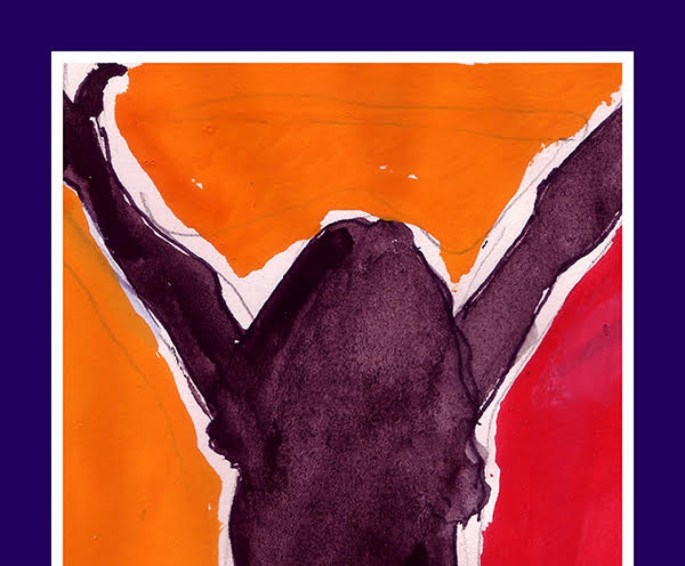
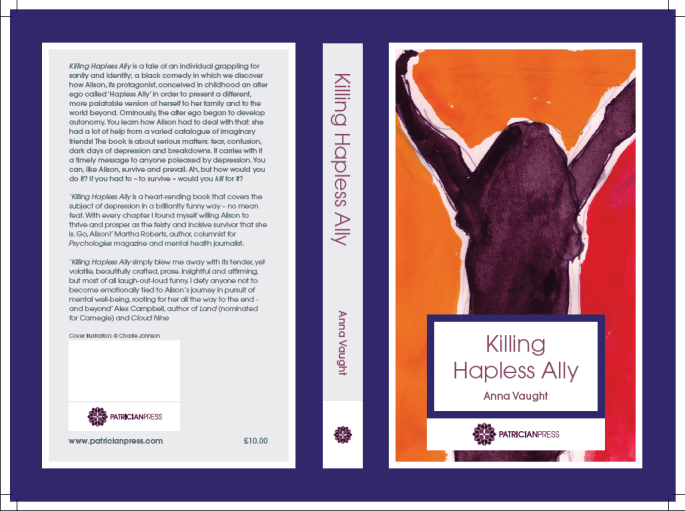
I have so been enjoying listening to feedback from readers of Killing Hapless Ally.  I know it is also being read for two local book groups, so if you fancy reading it for yours, I have added some suggested reading group questions, as given in an earlier post. The book is free on kindle to Amazon subscribers – although I must say that the paperback is a substantial, beautiful white and lilac thing with a striking cover by artist Charlie Johnson,

Here is the last review for the book, this one at http://www.goodreads.com this afternoon, followed by book group starters for you.

I received a signed copy of this book through Goodreads Giveaways – thank you very much – but this has not influenced my review. 

Wow! This book is incredible.

I identified with Alison so quickly, I frightened myself. (Mind you, what sort of mother tells their child she was a mistake?) This novel felt like going through psychotherapy. Alison’s struggle out from the depths of depression is here written so beautifully, so intricately, so real. The streams of consciousness left me breathless and the letters written by Alison have inspired me. I am going to write my way through the depths and endure. I rejoice in Alison’s survival.


Questions for book groups.

Who is Alison and who is Hapless Ally? Are the same person or two separate people?

Would you describe Hapless Ally as real?

What is your opinion of Santa Maria?

Who is the most horrible person in the book and to whom do you warm most?

Did you guess the ending?

What’s the significance of the book’s title? Is it simple and straightforward, or something more complex and nuanced?

Did you like the names for people and places in the book?

Did you take offence to any of the descriptions – for example, of the f…… caravan, the funerals, dying?

There are many literary references shot through the narrative. Some are obvious and documented explicitly in the text (and thus you will see them on the acknowledgements page) but some are harder to spot. So get spotting!

Did you feel that you learned more about mental health from the book?

Did you think that the book gives us insights into therapeutic practice and the sort of help available (although I feel I must add, not routinely available) through our National Health Service in the UK?

Did the book help you? By which I mean, did it make you feel better about your own problems or state of mind? Did it give you a nudge to tackle things that are holding you back and making you unhappy?

Was the book shocking? If so, why?

Is it a happy ending? Is it over – in a good way?

Who was your favourite imaginary friend – and why? Dolly, Shirley, Albert, JK….

Did you feel sympathy for Santa Maria? For Dad? For Brother who Might as well be Dead? For Terry?

What do you think of Dixie Delicious?

What makes you laugh in the book? Is it the pickled egg murder/horrible deaths/caravan of evil/revenge on the tutus…?

What does the book show us about the power of literature and, more broadly, of the written word? What of the spoken – the “curses ringing”?

Why do you think there’s a shift in narrative from first to third person between the prologue and chapter one? Do you think it’s successful?

What’s the significance of the foreword to the rest of the book?

Is Alison strong, or is she weak?

Did all this really happen? Do you believe it did? Why?