On the Curae Prize

Anna.

News for 2024 and 2025

Hello everyone,

Soooo I am hard at work on a PhD by Published Works at York St John University TA DA. This foregrounds my own, previously published work and I am here – well, as a distance learner – for a year. It is hoped that this September I can start HEA training which would, post doctorate, give me more options for teaching at university level.

This July, I have an essay collection out. It’s called To Melt the Stars and is all about love. Being me, it’s a bit weird and you’ll be able to pre-order from May. Catalogue and cover when we have them!

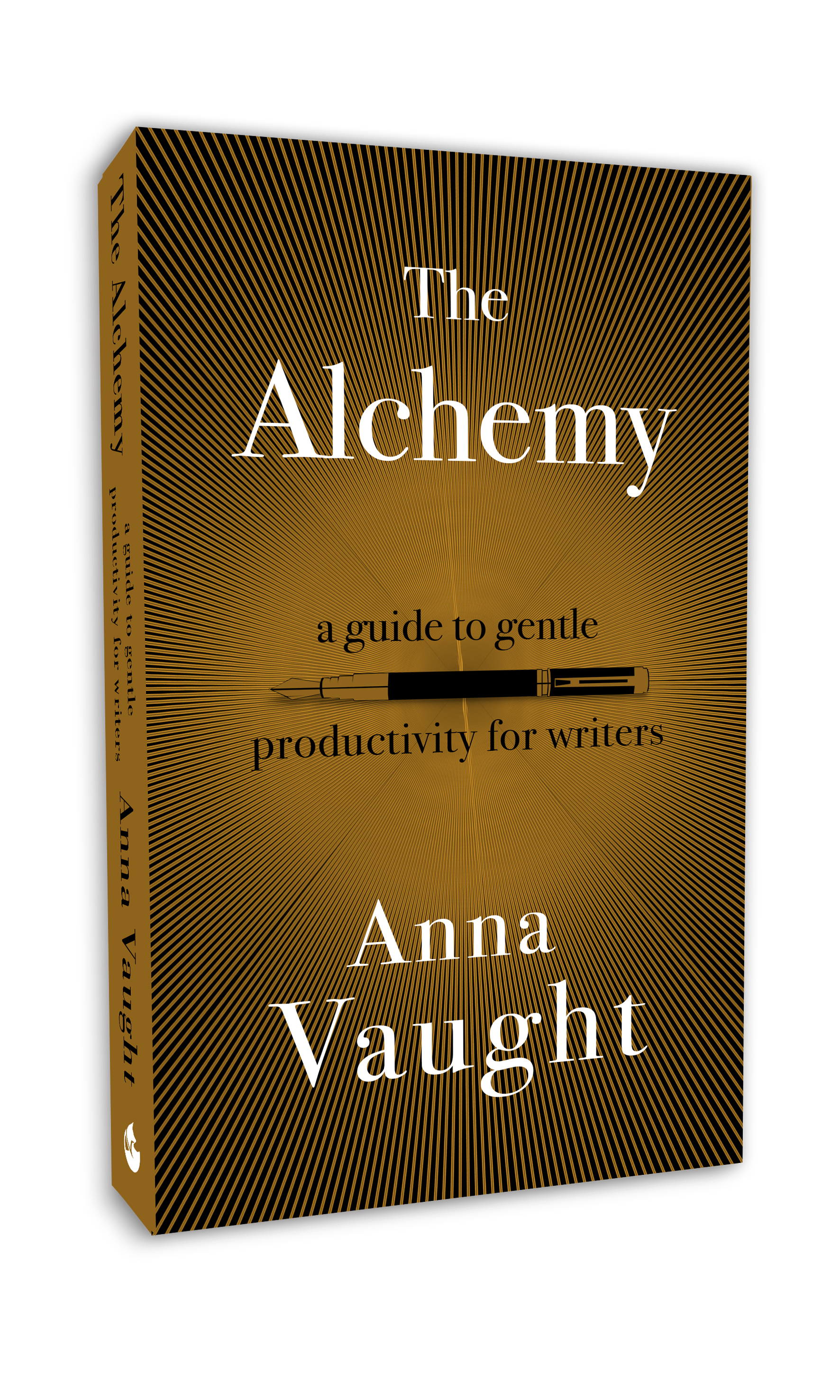
This week, we announced the follow-up to the bestselling teaching book, The Alchemy

This new book is called The Elxir and, where The Alchemy focused on getting started and working with what you have, The Elixir is more forensically about craft – and I hope you love it! October, 2025. Here’s one of the announcements in the industry press.

Think you might like to come and work with me on your novel – for a whole year? Jericho Writers is still taking applications for its spring cohort of Ultimate Novel mentees. Ta da! Applications close on the 2nd of March https://jerichowriters.com/ultimate-novel-writing-course/unwc-application-process/

I hope, whatever you are reading, and whatever you are writing, that it brings you joy

Yours, as ever, Anna x

THINGS I AM BANNING THIS CHRISTMAS

Right. Things I am banning this Christmas. Please relax my darlings. Here are some things from your Momma Book Bear.

1. Comparing yourself to others. This is totally banned.

2. Making yourself ill by pushing yourself to create a perfect tableau. Basically, everyone just wants to eat more crisps and you could consider some sort of crisp adventure; a crisps tableau.

Photo by cottonbro studio on Pexels.com

3. Assuming other people’s families live in total harmony and if they truly are pretty harmonious, remember that this is not necessarily earned, but luck. I mean, I don’t have parents, but it’s not because I killed them. (Sorry if that startled you.) So be gentle on yourself there babykins.

4. Looking at social media and seeing it as a consistent view of someone else’s experience. LOOK HOW HIDEOUS THIS PICTURE IS and note that the look in her eye is of escape and slightly sexy because she fancies the photographer, and her husband is dull as fuck and insisted on this joyless, two-tone, spendy co-ordinated tree abomination, when what she really wanted was an inflatable grinch and coloured flashing lights, camp as tits.

Photo by Elina Fairytale on Pexels.com

5. Assuming everyone else is having a brilliant time and not actually wanting to run away at some point or indulging some secret fantasy of a thing they would do just to shock people – like shagging their particularly hot neighbour

6. Your assumption that people are telling the truth about how they are feeling. EVERYONE has problems. EVERYONE. Some nurse a hideous seething morass of them; a terrible, raging, ongoing existential crisis – but they don’t articulate it other than in, maybe, unattractive moments of passive aggressiveness. Yes – even with glossy folk with what appears to be the perfect line-up. These feelings can be particularly acute at Christmas because of expectations, I always think.

7. Worrying because you don’t have a family, don’t see your family, are estranged from people. MY DARLINGS. There is a whole world of people out there just waiting for you. THEY can be your family and there’s no hurry. As I like to say, family is a flexible construct.

8. Feeling upset because you don’t have children and there’s always some twat going on about how Christmas is special because of children. Baby Jesus is special and an outlier here, and yes children, young nativity play children, can be delightful, but I can’t be the only one who was also breathing a sigh of relief when they fucked off to the park on their own instead. Also, they open their stockings at 3am and then get wired on chocolate and are hideously behaved and you’re knackered. It is ONE way. Pets are also nice. And books. And cheeseboards. Down with this bollocks.

9. I am banning any guilt or fuck me am I weird because I WANT to spend Christmas on my own. NOPE. You are being true to yourself and you can have a gold star for that. There are terrible things happening right now and the last few years have been a considerable strain. Please be true to what your body and mind are crying out for right now if you are tired – bone tired. No way are you doing this Christmas Eve box thing for kids, and you can ditch the matching Christmas pyjamas if you don’t actually want to do that and everyone needs to know that an alternative to making a cake is a massive pyramid of doughnuts from Lidl with maybe some sparklers on top. Sprig of holly if you like. More fun is generally had when expectations are lowered and you’re not too tired to do things or crying because you feel like you didn’t do ENOUGH. That you are alive is the miracle of ages; I mean, it’s amazing, and not everyone gets to be that way. Deep breaths and perspective (and crisp smorgasbord – see above).

10. Also guilt at not wanting to spend much time with family? If it’s going home (I wouldn’t know because I have no experience of being an adult with parents, but I can SEE), there can be discomfort at being swatted back to your earliest pathology. There are narratives which develop in families and sometimes, you know, you don’t feel good about that. At this stage, there may be little or nothing you can do. Have some miniatures in your handbag and don’t feel bad if an uncharitable thought creeps in – but don’t have so many miniatures you say what’s in your head during Christmas dinner. You know, like in the Eastenders Christmas special when it all goes horribly wrong

Did this help at all?

2023 – it’s a busy old year

What have we done so far and what’s still to come?

March saw my memoir – it is NOT an easy read, but call it a pretty one! I will offer links direct to publishers if you’d like to get any of these:

March also saw the translation into Italian of my 2020 novel, Saving Lucia – Bang Bang Mussolini –

Bang Bang Mussolini

https://8ttoedizioni.com/prodotto/bang-bang-mussolini-lamicizia-immaginata-tra-lucia-joyce-e-violet-gibson/

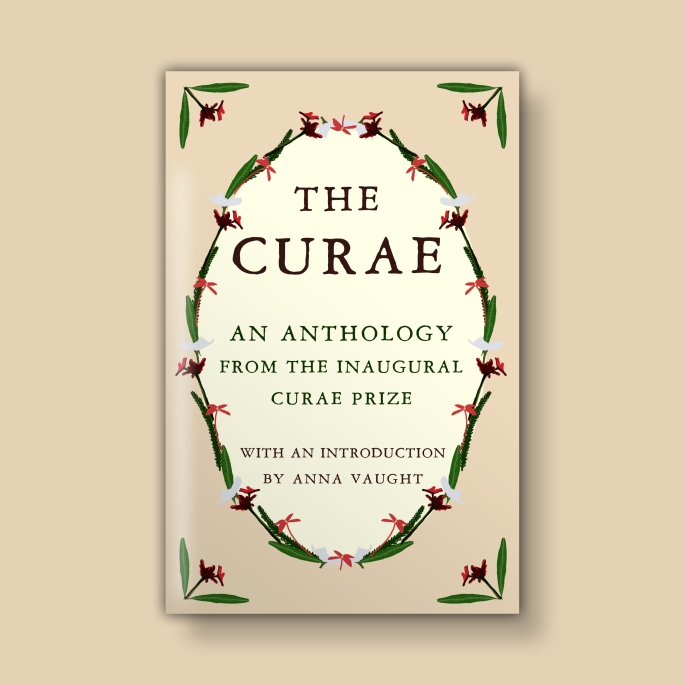
Just out, The Zebra and Lord Jones, a new novel of magical realism. As I write, we are getting ready for the release of The Alchemy, my first teaching book, which comes with its own platform, and then in November, the anthology of winning entries from the inaugural Curae prize, which I made specifically for writer and would-be writer-cares. For All three of the following books, head over to Renard Press. https://renardpress.com/https://

The book above is the result of the Curae prize for writer-carers which I launched in 2022. It had such wonderful support from across industry. If you can, come to our launch night? It’s free but you have to book.

https://www.outsavvy.com/event/16910/the-curae-online-launch-evening

In just over a week, I start a PhD by Published Works at York St John University. It is on magical realism, the imagination and trauma, and foregrounds my own These Envoys of Beauty and Saving Lucia, together with briefer focus on five other books, alongside contemporary magical realism fiction and literature on trauma across various disciplines.

I can tell you a little about my July 2024 book, To Melt the Stars, which is a collection all about love. You can read about that here! https://www.thebookseller.com/rights/broken-sleep-books-snaps-up-vital-essay-collection-from-vaught

What else? I had a strong nonfiction proposal put together, Lipstick. A Cultural and Emotional History and, in all honesty, following agent and publisher feedback, it is not going to be saleable as a book. I am not a journalist, I do not work in fashion and beauty and I am not a cultural historian. Nonfiction is a particularly hard sell at the moment, so it’s just no go. I cannot top and tail it with memoir and scholarship because I do not have a relevant platform. However…I like to think whether I can reuse and repurpose so the plan is to publish it as a monograph instead! A long essay. I am delighted to tell you that I do have an offer of publication for early 2025. News as and when I can.

I am in the process of writing a new novel, All the Days I did not Live, having put down a few other things, and as I write, I am going to be head down on that for a week. I also made the decision to seek to change literary agency – this happens a lot, if you were wondering – so I am in discussions about that at the moment. Finally, I am away from social media for a whole year: time and space. To breathe. So much has happened in the past few years in work, and books and in my personal life – it feels good so far.

More news as it happens and, this week, I am will be resurrecting my Substack newsletter. About time!

Love and books,

Anna

xxx

On mental health, mental illness and joyous, liminal living

Stigma. Shame. Embarrassing. Needs to toughen up. We just got on with it my day. We don’t have mental health problems in our family – we are really robust.

Scandal!

Shame!

SHHH!

Don’t you feel exposed?

Weakness.

Keep it to yourself will you, for Christ’s sake!

I don’t know anyone who’s needed counselling, therapy: just get over it.

Oh that’s just psychobabble. Did someone put that in your head?

EVERYONE has trauma these days.

For anyone who’s heard these things, felt them, let me tell me you no, no, no. You are you and managing, admitting, attempting to find help for or recovering from something difficult – just like one in four people, at any one time.

Here is my account of what life feels like on a day to day basis and how I manage it. Please be aware that this involves an account of a child and young person – me – but that I have kept the details minimal

First a history. I think I have been managing difficult things for a very long time. In late childhood and through my teen years I had OCD, most troubling as a child because of what were, to me, terrifying ruminations. Unfortunately, those thoughts took hold at least partly because my parents, particularly my mother, absolutely solidified in me the idea that I was a terrible kid and the bringer of harm. Imagine it like this: that the statements and name-calling and the many physical hurts, accompanied by many nice things too which radically confused me and led me to doubt my own mind, went in so deeply that it has taken me decades to unpick. Perhaps it would have been different had there been appropriate intervention, but no. I learned to manage on my own. I think about that kid, that teenager often.

Suicide attempts. Two. 13 and 17. No action taken afterwards. Hush up. I am jittery writing that. Please imagine the despair. I don’t think I had any confidence at all, a sense of myself: anything could hurt me because my identity was so fragile. And I was shamed.

Self harming. That started at about seven years old and continued right into my early thirties. Fear, shame, as a kid thinking that I were not hit, if I were not having my hair pulled, then I had better do it myself. Because I was an aberration and the bringer of harm. Also stress. I didn’t know what else to do so I did that. I tried to tell people at secondary school and was (this motivated me to teach at secondary level – to teach full stop) told that my parents were wonderful and I should not put them under too much stress. They were wonderful in many ways. They also, with others, did me immense harm. My mother mainly; an acquiescent father. I’ve parked it. Tried to be sympathetic. To understand what they may have been feeling – their hurts. And others in my immediate family. Do I forgive them? Nope. That’s too much pressure. Have I let them go? YES. That’s the goal. I’m not mired in it and anyway I am still dealing with the results.

Major depression. Hmmm. Several times

Anxiety. Yep.

Panic attacks. You bet. On the tube. Once on a beautiful beach.

Recurrent nightmares. To this day. I wake up crying. I yell out. But it’s getting better.

Breakdowns – if we want to use that term. Three. Two postnatal.

Hospital stays. Zero. Outpatients only, which I am told is pretty rare when you read my notes.

Flashbacks. Oh my. Getting better. But forever. Vivid, horrible things: the fear of someone behind me, coming into my room, physically hurting me, kicking me, handfuls of hair, everyone pointing and going YOU YOU YOU. I am in another place. I am not sure I am even Anna as many of you know me, but something else: a composite of others’ opinions? Complex PTSD – it hits all my senses and derails me.

Dissociation. The lower end, thank the Lord. It hangs out with the flashbacks or is triggered by stress, exhaustion, fear or someone being shitty; being unkind to me. I don’t know where my edges are – I don’t feel real. It’s like I look back at me.

Medication. Never done much for me, I’m afraid. I take a low dose of amytriptyline at night because my flight or fight responses have been so totally out of whack – hyper-vigilance lingering and in the last few years looking after an ill loved one and being on watch at night. Also magnesium, crystal sound bowls playlist and lavender oil. I’m really boring, aren’t I?

CBT didn’t touch the sides, CAT – CBT with bells and whistles -over a year was wonderfully helpful. I see the local mental health occasionally mainly because he’s a total dreamboat and I am currently engaged in trauma-focused therapy with EMDR. May I leave you to look any of that up? It’s not NHS obviously so that’s a budget of £200 a month to meet with some extra work. I needed to engage in new treatment because we weren’t there yet – and I needed a specialist. I’ve been lucky enough to find a wonderful person.

What does this mean on a daily basis?

That I have to be careful about who or what I see, to avoid conversations with people who speak a lot about these things without experience (crystals, babe do you live near pylons, it didn’t happen – because I would have known, you’re exaggerating). I have a flashback a couple of times a month and maybe one of those horrid scary dreams once a month and, on a daily basis, I need to regulate my breathing, diet, stretch, read and go gently on myself. I am mitigating anxiety ALL the time, horrid thoughts and memories surface regularly so I acknowledge them and hope they do one. I would say I have two to three brief dissociative episodes a month. The specialist support I have at the moment is helping to regulate and reprogramme and if you want to know what I think and feel, you could do worse than read The Body Keeps the Score. Brain, Mind and Body in the Healing of Trauma by Bessel van der Kolk.

I left teaching full time because I could not manage my health and the work’s full-time demands and I have crafted a life of books, teaching and mentoring in which I can make spaces and have some flexibility and still earn. I have been extremely stretched these last few years because of a loved one not receiving care and that has been a difficult path: you’re dealing with the pain of someone you love hand in hand with lack of resources and lack of will. Sometimes with a lack of kindness.

But I will tell you another thing.

Because I’ve seen the darkness and can never, I do not think, be as scared and lonely as the kid-Anna, I will press on. In 2016 I turned rage into my first book and I haven’t stopped. This is just me; how I am evolving, it’s not better than anything you do. Ten books, seven years, I have built a business, kept a hand in teaching, developed my creative writing teaching. I have written across genres and forms and in my books I was developing the line of enquiry – imagination, trauma, magical realism, reading, nature – that will form the basis of the PhD by Published Works I start later this year.

Mainly, though, I am amazed that I am still here.

So, if you meet someone who mocks, sensationalises or cultivates a prurient interest in mental health problems and mental illness – I tend to draw a distinction, with the latter being more serious than the former, but it’s not without problems – know their ignorance. They know few facts and a lot of fear; they pass it on and it does damage. That’s what tabloids do in this country. THAT is shameful. It drives need underground and seals up routes to getting better.

You’re not weak. You are surviving as best you can with all the resources you have. I see you and hold you in my heart. I always feel like I am in transition or living at the edges of something – hence the liminal in the title – and I think that’s because of what’s happened to me and what I manage. I am not scared, though, to propel myself into the centre – to work and do and be and say, here I am. HERE. So please remember to go out into the world, broken as you are, and remember that broken things are beautiful too.

x

On giving up; on putting hope to bed: on sunlight and shadow

Tht title doesn’t sound enormously hopeful, but don’t misunderstand me. I am having to adjust and refocus because of life’s strains and must write this without giving too much detail in order not to impinge on privacy or agency.

I don’t know why I didn’t grasp it before, but in attempting to live more carefully in the moment, I had, nonetheless, not noticed the impact of my other behaviours and modes of thought or that my hopefulness and intense optimism were, in fact, harming me. It’s not that I am saying I am going to become more pessimistic, cynical or negative, just that I have kept hoping and trying to find the positive side of things for me, for us – and all that has done is make me more exhausted and, ironically, less able to roll with it and see what is right in front of me. I think what I need to do – what I must do – is to let go of expectations and I will try and flesh that out a bit now. Please proceeed cautiously with the following, because it is sad and possibly, for some readers, enraging – even triggering because it’s been the same for you.

  1. Our family has been extensively let down by senior educational professionals, health professionals, and GPs over a long period. Yes, the past five years in particular, but for much longer than that. All that time, I have aimed to find solutions, be imaginative, LITERALLY project manage mixed groups of health and educational professionals. I’ve been told repeatedly that young people who struggle in school or who have patchy attendance struggle with the rest of life and will continue to do so. Simultaneously, I once ended up writing notes for lesson plans – by request but under the radar obviously – in order to differentiate for my dyslexic son. I have tried to talk about neurodivergence and autism and explain to academics at a university and on one occasion disability and inclusion, with the most concise information I had, that autism is not a mental health condition. I have written recommendations for WHY secondary staff ought to have at least the most basic training on understanding how autism might present. I have done the same on language and stance – how it can have a lasting effect on vulnerable young people. Ditto attendance policy, the legacy of which is disastrous for many children and young people. I have written to Primary Care Liasion and explained that ‘looking like‘ you’re not going to engage or failure to do eye contact cannot just be read as antagonism or setting up to fail, but might be attributable to other things. I’ve just kept going. Because of my background and because I am a terrier and because I just cannot bear it. You see, it is NOT just lack of funding in areas of our health and education provision; in mental health, disability and housing. No, it is also lack of will, hostility to families, and lack of willingness to examine, even for a moment, unconscious bias. Heads of Year have laughed at me behind their hand while education welfare told me, there with my newborn, that other parents managed things perfectly well. On a Sunday afternoon I received a long and startling email from a secondary Head to whom I had written a respectful letter about lack of SEN support and dissemination of profile information among teaching staff. I said I was worried and was there anything we can do? I was told everything was superb and other parents were clearly happy and perhaps the problem was me? I’ve been gaslit by all and sundry; last week, a member of Housing staff at a council told me that families needed to grasp that sometimes people just needed to sleep on the street, regardless of how vulnerable they were – what did people expect really? On and on and on. I’ve had my knowledge and parenting insulted again and again. Oh MUM is an EXPERT NOW IS SHE from highly paid professionals who have not read NICE guidelines. I cannot fight this any more. Because fighting it – and expecting for anything better, being hopeful for it – has achieved nothing. Not for me or for my family. Some of this I chose to do but most I felt I had no choice as a mum. At this stage, I feel that the best bet, at least for me, is to assume that it will just be shoddy and to stop scrapping and trying to improve things. If something or someone comes along who shows differently – of course it does happen – then THAT is and can be transcendently wonderful. I know full well writing this that at least some SEND parents, those who are chronically ill, who identify as disabled, those who are trying to be heard about their ME and CFS, will find me on familiar territory. I just don’t know what to say. What is more, I have not even been able to be an effective parent because, while I would throw myself under a speeding car for any of my kids, I am not a health professional and I don’t have a stake in the council or local authority provision. Furthermore, by battling, I now think I made it worse for my family, because it just exposed the paucity of resource even more. I don’t know now whether engagement is even possibly if good stuff does ever come up. Which brings me to the second point.
  2. Okay, so as a kid and young adult with a radically dysfunctional but unseen (somehow) background I had to teach myself some nifty techniques according to what I had. But I spent my young life being on high alert because of perceived threat. Some of you have read my books which tackle this and may have a little insight into it. I am not sure I have ever switched this off. The result is developmental damage which I have learned to manage, and chronic illness. I have had some good support – after a ten year search hand in hand with advocacy (see 1.) – and I am currently paying for trauma-centred counselling and EMDR because I have had ghastly flashbacks for decades and just learned to deal with it. It occurs to me that in doing less and being more accepting of how shoddy any number of things are and not expecting more, I can perhaps cultivate a state of rest in which I can identify patterns and manage them. My amygdala, you see, has been, as the therapist says, ‘exceptionally busy for a long time.’ Here, also, we get to an awkward truth. It is that, as a child and adolescent, I experienced such fear and such bewilderment that I almost cannot bear for my kids, or your kids, any kids, to feel pain – specifically in the context of their needs not being met or addressed because people would only look, not see. This needs time. I need time.
  3. Control. I have been trying to control things. We all have less control than we think. In writing and publishing that rested on the fact that people would answer emails and read my work. I now understand that the majority of the time, whether you are sending work out, or when your work is sent out by a literary agency, much of the time it just won’t get read because it falls off the desk. Everyone has too much to do. That impacts on me, but there is nothing I can do about it other than lower my expectations for what is possible for me in terms of profile or development because I am not going to be able to get my work seen. I’ve been pushing and pushing. Not any more. It hit me like a ton of bricks (books!) that it’s just making me unhappy. Prod here and prod here; I am working with fab people and meeting all my deadlines. I don’t get invited to festivals and bookshops don’t want to host an event with me. There are others who are more exciting, in demand or right for them and that is just the way it is. There’s nothing I can do about it. What I do is enough, I think. I’ve worked very hard.
  4. So I am talking about giving up and about being less hopeful. I am talking about lowering expectations or having no expectations at all. It has come from difficult things, but maybe there are fine things too. Small and perfect moments. I utterly relish time with students and mentees and, I would imagine, this is probably what I do best. The doctorate starting this December. Quiet focus. I am using my own work and thinking about others’ and apposite theories and neuroscientific texts I want to bring in. I will press on with it. I have no expectations for anything happening with it – like being offered academic work or my publishing stock and profile rising – but I want to do it anyway because it’s an engaging subject, I like writing and exploring and interrogating ideas. I think I might be creative and inventive. If pressed my best qualities are that I will do my best to be kind and reflect on what might be kind in any given context, and I am a very hard worker who can focus anywhere. I am not sure what else I would have to offer now, but these are enough.
  5. So yes. Don’t read this as a depressing post; understand it as a shift. I feel absolutely beaten down, I really do. I cannot foresee a time when anything would be different. But isn’t that rather the point? The carer, the poorly, the lost: I have been saying again and again that even then, if things won’t and can’t get better, there is still grace, there are moments of rushed beauty and always, always a story to unfurl. What is more, the past is a different country and you live somewhere else now and the future is up ahead – in a place where you can never be. All you have, we have, is this moment. I’m still figuring out a few things, as aren’t we all? Like, I want to find a way back to faith so it’s not just, you know, an occasional touch of my elbow, or something dark or radiant glimpsed from the corner of my eye: I want to be bathed in it, somehow. Do you know what the problem is with church? It’s not Jesus or whoever it is you pray to. It’s people. Broken and flawed like you; like me – with shabby egos, and desires, bad faith and backbiting because of their own hurts and perceived slights. Sometimes it feels like I’ve been running all my life. I want to stop. Calm, rest. No expectations.
  6. So let’s sit still together. I don’t know what I have to offer and might not say much. I am a shy person forcing myself to be something different and a bigger presence in the world. It affords little, as it turns out. But then you might like the book I slide across to you. And say we are sitting together and sunlight and shadow fall in quick succession across our faces and we feel it, in complicity. That would be enough. That would be good.
  7. Join me x

On Imposter syndrome – writing and publishing. A short, bolstering post

Now, many people feel this: writing, not to mention actually publishing your work, feels like it’s something for folks known as OTHERS. You know; the other people, for whom this is all a breeze; the people who have their stuff together and who know so much more than you. They’re better read, more connected, more clever, more everything and OBVIOUSLY better writers.

There are deep and uncomfortable reasons why you – we! – may feel this way, but I said short and bolstering, so here we go. First it is common to feel this way. Then, I suspect it is part of the human condition to feel like an outsider and it can feel scary – get in, or you will be eaten by a sabre-toothed tiger – to be on the outside of something. So learn to accept these feelings and breathe through them. Then, know that doubt about your role, life and, to stay on topic, writing, are natural. Doubt is a function of intellect because you are examining what you are doing. I’d argue it makes you a better writer. It’s also part of self-reflection, of being self-aware and, frankly, of empathy.

DO YOU KNOW WHO CAUSES ALL THE PROBLEMS INCLUDING IN PUBLISHING AND THE WRITING COMMUNITY?

Yes, it’s the arrogant twats. The people who feel like they have it all together and know what they are doing, impervious to change, prompt from others and, frankly, worse at their work for this and frequently damaging. It’s true in all walks of life, I would argue.

Fortunately, my darling, you are not an arrogant twat. Look at you there with your impostery hotness.

Plough on, tell people you feel this way, know that it is natural and, most importantly, do not let it chew you up so you cannot write. Doubt, gone a long way, can eviscerate your sense of self, of vocation. It makes dust of your creativity, so keep an eye on it and don’t let it go so far. Write through it, talk about it, talk back to it and here is a glittering merit sticker for a job well done.

Claim your spot. Yes, there is clearly work to be done in the publishing industy, but there is room for you.

On Blanche (from 2020’s Saving Lucia)

On Blanche

She was famous, too, as a sort of glamorous defective. Violet said it made her mad as hell, the way Violet got painted: blouse glossy and voluminous, like a gorgeous thing, but that she’d set this to rights, so we could hear her voice too. And I remembered: somewhere in Paris I saw a little copy of this painting of a fine woman. Blanche, on display – and even then, I understood the anger in myself that would be nursed by Violet. There she was, so pretty, buxom and velveteen, not all skew-eyed and jutting jaw like me. But she was not free: she was a subject and she was an object.’ (From Saving Lucia, chapter four, as all quotations.)

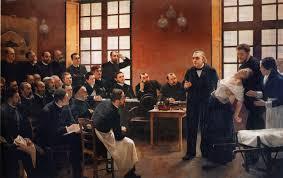
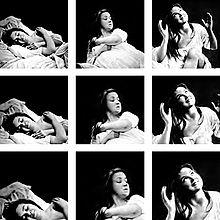
There is a painting of a woman called Blanche Wittmann by Brouillet. It’s called ‘A Clinical Lesson at the Salpêtrière’ (1887) and represents an imaginary scene of a contemporary scientific demonstration, based on real life, depicting the eminent French neurologist Jean-Martin Charcot (1825-1893) delivering a clinical lecture and demonstration at the Pitié-Salpêtrière Hospital in Paris. Blanche, the hysteric in question, is a woman alone in a room full of men and she is both subject and object. I am very uncomfortable looking at this painting and draw on this in Saving Lucia

Charcot was the foremost neurologist of late nineteenth-century France and has been called, the ‘Napoleon of the neuroses.’ His work greatly influenced the developing fields of neurology and psychology; modern psychiatry owes much to the work of Charcot and his direct followers. He was in charge of the Salpêtrière, then an asylum for those who were considered mentally ill; for hysterics. For most of Blanche’s adult life, the hospital was her home. It seems that she died there too, but we do not know where she is buried. She is at once entirely known and unknown. In the late nineteenth century, there were over eight thousand women at the Salpêtrière, and many remained there for life; post-mortem, Monsieur Charcot dissected their brains looking for discernible organic causes such as lesions. He found none. He had initially believed that hysteria was a neurological disorder for which patients were predisposed by hereditary features of their nervous system, but near the end of his life he concluded that hysteria was a psychological disease and the dissections stopped. 

Monsieur Brouillet came to paint me; I was quite the thing against the stygian black of the doctors, don’t you think? The tendrils of my hair escaping down my neck. I had poise and gravitas in the pictures: he did not paint the days I crawled and slavered like a dog from la grande hystérie


Let me tell you a little more about what we know. Marie ‘Blanche’ Wittmann lived between 1859 (possibly) and 1903 (possibly). I have written Marie as her birth name, but in going over what records there are, there appears to have been some doubt about her name and its spelling. Blanche was, however, the name she held during the famous sessions at the Salpêtrière, Paris. Blanche was known as the ‘Queen of the Hysterics’ and, while being treated at the hospital, Charcot used her as one of his ‘hysterics’ to demonstrate the effects of hypnosis. He would also apply magnets to her body and ovarian compression, both of which he believed would work on hysteria, operative upon the nerves. Freud was much influenced by the work of Charcot and observed his work, although he came earlier to different conclusions about the causes of hysteria, attributing them instead to psychiatric causes. 

Hysteria grew and grew under his hands. Do you suppose that he had created it? I worry that I helped. Made madness into a show and circus or made hysteria more, forgive me, more hysterical. When he died, it stopped. I did not think of it anymore and, obviously, neither did he.

It is my understanding that Blanche never left the Salpêtrière, but it appears that she went on to work in a radiology laboratory there while, not far away, Marie Curie carried out her pioneering work. As I researched Saving Lucia, I saw that fictional elements invented by Per Olov Enquist in The Story of Blanche and Marie were assumed to be true, by reviewers and in factual pieces upon her. Enquist makes Blanche Charcot’s lover but also turns her into Curie’s assistant and later her confidant when Curie’s husband, Pierre, is killed; he shows Blanche as having lost both legs and an arm during their work on pitchblende, continuing her work, moving about as a torso on a purpose-made trolley and gives us Blanche’s notebooks: yellow, black and red and all three encased in a brown envelope marked ‘Book of Questions,’ fascinating insight into her life and work, with Curie and Charcot. But these are fictional things. He tells you it is fiction and going through records, articles—even a more recent riposte published by a neurologist in ‘The Lancet’—gives us a clearer picture. That a gripping fiction would so readily be assumed as fact is interesting. Some might argue shaming. Was she not already fascinating enough? This much is alluded to in Saving Lucia. But please, although I include much that is real, do not assume my historical fiction all to be true, because that desecrates the memory of a real person: a person I found captivating and sought to know and respect. 

 I wonder if, in years to come, ideas and imaginings will be written down as facts and what I did not intend or become will be transfigured into untruth. 

At the Salpêtrière, Charcot had kept a vast number of photographs of patients; he also had a lasting visual record of Blanche, in Brouillet’s painting, with Blanche providing an arresting, even glamorous figure, under the mesmerism of Charcot. She is quite the spectacle, isn’t she? But so are the myriad other women captured in photographs (Blanche was also photographed.). When I first saw those photographs and when I think of the huge asylums of times past, it makes me tremble. Ah, I have been mad, not known what time of day it was or where my feet were; whose hands I was looking at or where my fingers ended. I have felt, again, tremors at night, flashbacks of shimmering visceral beauty that were death and horror to me. I have been a case; I have been treated abruptly and called indulgent; reduced to a cipher, a composite of only other people’s opinions of me, instilled in childhood when I was aberrant, an eldritch child. I have been picked up from the floor by brilliant and diligent hands and I have been cured as best I can be by a brilliant psychologist in our NHS, helped by an attentive and determined GP. But I will never be entirely free of the results of trauma, so it is that when I see, really try to see, the women in Saving Lucia; when I see the painting of Blanche and the photographs of her and the other hysterics in Charcot’s great collection, I do not see a case or even an oddity. I just meet the eyes of another woman and I want to sit with her and say, ‘Tell me about you. May I tell you about me?’ And, as for Blanche, Queen of the Hysterics (after Hippolyte, who escaped and that is another story and a point of delicious queer interest in the book), I would want to do the same, to ask her if she were complicit in what Charcot put on, once a week, and which is depicted  in the Brouillet painting; if she said yes, I would have said, ‘Well of course. You are a survivor.’ If no, we would perhaps have talked; thought how to disapprove or abrogate her hysterical responsibilities. How I might be accomplice…

Either way, I would have cleared the room of all those men.

I was a spectacle, a fine thing, under hypnosis. I convulsed, I calmed, rattled and shook at each cue…In years to come, what will they think of this? Am I a gimcrack show; a performer? What then, will they know about the workings of our minds and bodies?

***

…Everything else is the narrative you made for me and not my own legend. The one you accepted for me, not I.

Merry Christmas, Happy New Year, hopes and dreams, building and some frank admissions

Coming for 2023,

On the 6th of March, the Italian publication of 2020’s novel, Saving Lucia. Title and cover reveal in the new year, plus details of the April Italian tour, beginning in Milan. This is the UK edition, with Bluemoose books. Still time to read. Then 8tto Edizione

Then on 31st March, my memoir comes out. Trauma, survival and the imagination, kid up, explored over twelve essays on the natural world. Reflex Press.

On the 27th of September, my new novel, The Zebra and Lord Jones, is out with Renard Press as UK and Commonwealth (excluding Canada) edition. Plenty of news to come in the new year and this is currently on US submission.

Then, on the 25th of October, my first book on writing, The Alchemy is out – also awaiting cover. This is very specifically about gentle productivity and writing your book in less than ideal circumstances. This book was recently acquired, like The Zebra and Lord Jones, by Renard Press.

Through the year, you have various pieces of work from me – such as my Mslexia column!

On January 10th, join me here!

Also, in the new year, if you fancy joining me – and the fab team – come and work on your novel for a year; applications open in early 2023 and the new course starts in March. Image below is for the one I am currently teaching on.

On 1st of January, the Curae Prize opens for first submissions. This is a new literary award I have set up, with brilliant support from people across the publishing industry, for writer and would-be writer-carers.

Key dates:

Opens to subs:

1/01

Subs close

1/03

Shortlist

1/05

Two winners announced

1/06

https://thecuraeprize.uk/

THE CURAE PRIZE

A writing prize – just for writers who are also carers

It is my dream that I go on to build out from this – educational platforms and opportunities for young carers – and, ideally, for carers around the world. We have to see how well this first year goes first!

As to my hopes and dreams? I truly think, eight books published in seven years – by the end of 2023 and one in translation, plus two major columns and over forty features – well…I truly think that if I were going to be a star from my writing and have a big profile, I would have done it with this ouput. I was very sad about this, but then I reminded myself that, in order, I am teacher, reader, writer.

And before all of that, mum.

As to my hopes and dreams? I truly think, eight books published in seven years – by the end of 2023 and one in translation, plus two major columns and over forty features – well…I truly think that if I were going to be a star from my writing and have a big profile, I would have done it with this ouput. I was very sad about this, but then I reminded myself that, in order, I am teacher, reader, writer.

And before all of that, mum.

Things looked very different! I felt much more optimistic and began seeing possibilities.

There are additional needs within my family and it has become clearer to me that focus needs to adjust and I will need to be hands on and flexible, perhaps permanently. We have had no additional support and have been through significant trauma over a long period owing to this. To be frank, I have to plan and to anticipate and there are too many fluid, unpredictable bits in publishing for someone who has additional demands plus a day job – and I also manage chronic illness. I am sure you get the picture. So I am working sideways, instead. It took me months to recover from a novel being comprehensively ghosted by editors. I had not understood that ghosting – a practice of which I disapprove – went on beyond the query stage. Seeing this in action has made me reappraise my approach, partly because I do not have the bandwidth for it. I have so many ideas; so many books I want to write, but the issue is not the writing, but where I meet industry. Thus, while I have a number of books out in 2023, my focus going forward and beyond is teaching and the Curae. With the exception of sending a book of essays out on query in mid February! And unless I get a nice US deal, or someone wants to make a film – or anything which is a big splash in that way. I will be talking about moving sideways and the portfolio concept; being nimble and flexible. I aim to connect it both to The Alchemy and to the Curae. I aim to put in place for others what I needed.

With much love to you all,

Come and find me here: https://twitter.com/BookwormVaught

https://www.instagram.com/bookwormvaught6/

In the new year, you will be able to find me and mine on Booktok too.

Anna x

About the man

Summer twenty three years ago, the man asked me for directions on a flooded street. I was living and working in Kolkata at the time. November twenty three years ago, I said goodbye to the man. It seemed like, whatever we thought, it could not work. I was too broken, we lived in different countries and many other things. Twenty two years ago I married the man. He is Dixie Delicious here (he is from Georgia), Santa Maria is my late mother who, in my psychological experience was, in death, as in life, a peril to me. I am Alison. It was all broken – you can see. But it didn’t matter then and it does not now. This is an extract from my first book, now out of print, but which I will be bringing back in a different form.

The Man

There was a man on the other side of the street, wading through water happily and going in the opposite direction and he called across to her, ‘Excuse me, can you tell me the way I could get to the Blue Sky Café?’

  Alison was startled because he had chosen a sentence with  pleasing internal rhymes (though its tetrameter was imperfect) and momentarily thought she might have imagined the man. She said, ‘Go straight ahead to the corner and you’ll see it there.’ To have attempted the beckoning symmetry of meter really would have been a shade too far. Anyway, what she should have said was, ‘Turn round and go straight ahead and you’ll see it there’ because the man whirled, lost in the watery street. Thus the ability to give inaccurate directions for the simplest of journeys was a point he raised with her later that day when they met on the same side of the street. And still he followed her (with his own directions), alter ego, embolus, itch and all to Albion and the funny old house and came to visit a while and then never left. 

And she told the man, ‘I forgive you for the broken tetrameter.’ 

And he said, ‘Your directions suck and why didn’t you just point to the signpost?’ 

And she said, ‘Signposts and I have a difficult history.’ 

His name was Dixie Delicious. 

Alison met him, as if in a story, stumbling across a book by a familiar author in an unfamiliar place―and this was, truly, how it was, after the day in the flooded street in Kolkata, Eric Newby, and the very wrong directions which turned out, in a funny sort of way, to be the right ones. Dixie Delicious had a calm eye; he didn’t wake in the night, sitting bolt upright, like Alison did. He had faith: he had it in the palm of his hand and the heel of his shoe and she looked at it and saw possibility and she followed him, just as he followed her.  Sometimes, they fell over one another and laughed as they travelled on. And in another city, Alison watched him go out and imagined what he saw, single and indivisible: this was how it went. 

Benares, Varanasi, one of the world’s oldest inhabited cities. It was not his city, but she sensed he felt at home there. He sat by the river at dawn and a multitude was there, bathing and praying and offering up what they could. Look at him. Look at how still he is. How does he do that? The sun hit the water and he watched them quietly, not able to offer a libation, yet content to watch and bless vicariously. He bought tea and set it by her bed. Then, later, mangoes, limes, tomatoes, onions and some olive oil from an ayurvedic medicine shop so that he could make a dressing of sorts. He begged a small hillock of salt; his eyes said he hoped she would be proud of what he had done. On the balcony of the room, the light was dazzling. There, he assembled the breakfast for her, and called her out from her room. With his call, though, she sat at ease; he smoothed her hair, put on her hat for her and gave her what he had made. They said little as they ate and watched the sun, still in its ascent. The colour of the Ganges changed from white and gold to the more familiar muddy brown. Now, he stood up and told her that, from now on, he would stop running, stop travelling away from and start travelling to a destination. Whenever he put one foot in front of the other, it would be with her. She understood and that was that. There were smiles of complicity.

 ‘Stay with me.’ 

‘I don’t know if I can. I am broken; was never made properly—and there is more than one of me.’ 

‘And you think any of that bothers me?’ 

In the lanes below, the monkeys chattered. They could smell the food he had prepared and were ready to steal. He spoke a prayer. The heat of the day was becoming pressing already and the yoghurt sellers a little further along the street were doing a good trade from their trestles full of clay cups, filled with the cool, sour yoghurt.

‘And again and again, I don’t care who you are and if you are more than one,’ he said. 

‘What about my dead mother? Dead Santa Maria?’

 ‘We’ll ignore her.’ 

‘And Brother who Might as Well have been Dead?’

 ‘If he Might as Well have been Dead, does it matter? He’s nixed anyway, isn’t he?’

 ‘I hurt myself.’

 ‘I’ll stanch the blood or maybe just tie you up to stop you doing it.’

‘That sounds alluring,’ said Alison. Then, ‘What about God who was―or should I say is Dead if He ever Existed?’ 

And Dixie Delicious said, ‘He is alive. He was down by the river.’ 

When he was ten, Dixie Delicious happened to be in an elevator in a hotel in Dallas, Texas. In walked a tall man; the boy looked at the man’s shoes. From there, it was a long way up, but look he did. The boy saw that it was Johnny Cash. No, he must be wrong. But hang on; Johnny Cash must have had to ride in an elevator some time, so the boy looked again. He nudged his little brother, ‘Curtis: I think it’s Johnny Cash.’ Maybe the man heard him, maybe not. But he bent low and smiled a warm, wide smile and said, ‘Helllllllo boys.’

The child was star-struck and cannot remember if he said hello back; little brother was possibly unmoved, being too young and green to comprehend that Johnny Cash was not to be seen riding in an elevator with you any day of the week. Cash was, like him, a Southern man. Little links kind of went in deep: faith and difficulty and broken things and joy. And riding in that elevator. Alison noticed that Dixie Delicious would listen and feel at home; saw that Cash was flawed, powerful and weak. He had struggled with addiction and the darkest of insecurities; had gone on a journey from the Arkansas mud to a meeting with a luminary or a President. Cash had faith that was angry and brave and music that haunted even when it jangled. So our boy shared and, for a quiet moment, he picked ‘Down there by the train’ with its invocation to meet him if you had travelled the low road; if, broken and sinning, you had passed the same way. 

‘Could that be so? That my friends and I don’t have to do this alone?’ 

There are some times when the puzzles and the headaches just drift away: the meeting of the man, the thought of the young Dixie Delicious and the notion that now the man who was THE ONE—who could not be otherwise—had a faith that was flawed and wanting and made sense, now that was like moisture on Alison’s parched and callow soul and for a while it washed away her feeling of the absurdity and booted those who created it out of the door. It was temporary, but it was beautiful while it lasted: it was utterly beautiful, and she had the tiniest of notions that one day it would come back. One fine day when golden light breaks through the mist and, as in the song, Judas Iscariot, betrayer of Jesus, carries John Wilkes Booth, assassin of Abraham Lincoln; when rifts are healed and the person who hated you forgives you. 

Tear-drops fell like summer tempests and Alison, glimpsing the world through another’s eyes, (sometime while listening to Johnny Cash) sensed possibility and found it both gorgeous and painful. But we must carry on, hankie applied, and tell you that when Dixie Delicious followed Alison there was much wailing and gnashing of teeth from both families once everyone began to understand that he might be staying. For issuing from tomorrow, come today and other people, when time is no longer away. 

Dead Santa Maria was there, inviting them all out, smilingly, winningly, ‘Come and see my bitch daughter. Look what she’s done now.’ 

One of the neighbours came out from her house with Dead Santa Maria and shrieked, ‘What the fuck are you doing marrying your holiday romance?’ and there was stony silence from all members of both families, probably for the same reason. The words shotgun wedding hung heavy in the air and over in Georgia the furiously Anglophile family of Dixie Delicious went off ‘yonder’ a bit. Alison dutifully tried to win over them, despite her not being a good church-going girl from below the Mason-Dixon Line. She might by now have been Oxbridge and able to read Greek and Latin, but she was still a liability of big emotions, with a tendency to curse, an untidy Anglo-Cymric background, two dead parents and a Brother who Might as Well have been Dead. In normal families, older siblings didn’t usually leave the younger ones out in a dark and shadowy wood to be eaten by wolves, and normal people didn’t discuss violent and splashing death over tea. Did they? 

‘It’s okay,’ laughed Dixie Delicious. ‘My family is entirely dysfunctional, too.’

‘What about the way the dead are present all the time? That there’s little distinction between who’s dead and who’s not? In my case, who’s real and who’s not? Santa Maria is now Dead Santa Maria, but it hasn’t made any difference!’ 

‘Ah, maybe not that bit, although my mother insists that being dead is no excuse, but that’s because she’s a steel magnolia.’