
Here’s the link to an author page – about me. x
Category: Uncategorized
Dedication and disclaimer: Killing Hapless Annie
For Dixie Delicious. Because you loved her when she was Hapless
And you love her now she’s Annie
And for those who struggle with mental illness in its many forms, I am thinking of you x
Disclaimer: this is a work of fiction and, while real authors and musicians are characters in the book, they are in the role of imaginary friends and are the author’s interpretations only. Resemblances to anyone else living, dead or undead but still quite lively, are drawn as literary creations only. I did, however, write regularly to Tony Benn and once sent him some rock cakes.
WARNING: this book contains quite a lot of swearing and also graphic accounts of suicide attempts, self harming,funerals, deaths and brutal culinary episodes.
Killing Hapless Annie was always going to be an unusual book. Do you think this works as the bit before it starts? I can see my editor now, with a big red pen! Dixie Delicious will always be a mystery of course, but he gets the dedication because he saved my life. I was thinking: I’d written before, in my posts ‘Say Boo!’ and ‘Keeping Going’, about how easy it is to be dissuaded. Not just from writing, of course, but from opportunities, friendships, love, intimacy. If your internal narrative runs, ‘I am aberrant. I should never have been’, then it stands to reason that chit chat might be a bit harder for you too, or that, when you try, you over-compensate and know folks are looking at you in a funny way.
But here’s the thing: even if your head is full of ‘not me’ or ‘I suck’ or jangling bereavements and things gone awry, I wonder if you can learn to live with it and to get past the sense of being dislocated from the outside world. You don’t really know what anyone’s reality is, you just know what they show and tell. Also I do believe now that some terrible experience can be transmuted into something altogether less so. I said before that if one person reads Killing Hapless Annie and feels better, less alone, then I am happy. My millstone, as I wrote in the book, has become a star (would that these were my words, but they are from Patrick Kavanagh’s poem ‘Prelude’). This is a work of fiction (yeah, yeah, yeah – I keep saying); its purpose is to entertain – with considerable sauce, fellatio after evensong, in caravans of evil that smelled of bacon fat, at funerals which shouldn’t have been funny but were and at….well, you’ll just have to read it. But there is a serious purpose behind it: take my hand – you are not alone and you never were. I couldn’t have written this book before; I would have been too scared of exposure – worried what others thought.
But things are different now.
For Dixie Delicious. Because you loved her when she was Hapless
And you love her now she’s Annie.
And for those who struggle with mental illness in its many forms, I am thinking of you x
Disclaimer: this is a work of fiction and, while real authors and musicians are characters in the book, they are in the role of imaginary friends and are the author’s interpretations only. Resemblances to anyone else living, dead or undead but still quite lively, are drawn as literary creations only. I did, however, write regularly to Tony Benn and once sent him some rock cakes.
WARNING: this book contains quite a lot of swearing and also graphic accounts of suicide attempts, self harming,funerals, deaths and brutal culinary episodes.
‘Say Boo!’
This is a reworking of an earlier piece; it had been edited for an online magazine. The idea of the voices is an important one. And I’m very familiar with voices, but for the full cast, you’ll have to read Killing Hapless Annie to see what got said and by whom….
Say Boo!
‘You? You write a book. How could you do that? That is for other folk.’
Now this: this is what I learned to say, ‘Boo!’ to.
A year ago, in little gaps I carved out, I began. I’d written as a freelance journalist before and done a couple of self published texts: good practice, I suppose. But this new project was different for it held me in a hot fury. The story was based on my own life and experiences; not that I thought I was a particularly interesting individual, but I did have a notion that the story of how an individual, Annie, manages adversity and mental illness with a host of imaginary friends – including Albert Camus, Dolly Parton and Frieda from Abba – and creates an alter ego whom she later has to squish […] might provide an intriguing tale. I wondered if a number of experiences I could delineate might be unusual; diverting.
So I wrote. In a great big splurge. When everyone had gone to bed: sometimes I hid in the shed, wore earplugs and bribed the kids with refined sugar. After a few months I had 65,000 words. I thought I was writing a memoir at this stage, so I entered it for ‘Mslexia”s memoir competition and wasn’t placed. I cried, telling myself that the book was rubbish; look: here was proof. But then there was fire in this Celt, who sat up straight and re-wrote, beginning to see its flaws more clearly. Online, I read the many words of those who had been repeatedly rejected by agents; of those famous and not so: folks who sat on slush piles for years. I sent my work to three agents. One wrote back; the other two never responded. I cried again.
I heard about Cornerstones Literary Consultancy – a group of publishing, editing and writing professionals who help guide and refine your work; they looked at a sample of the ms and told me there was a lot to like. I approached my time with them as if it were an editing or creative writing course and went for a full ms review. This proved a turning point and my editor was the wonderfully supportive ‘Chick Noir’ novelist and editing specialist, Alison Taft. She was insightful and so kind to me, but she was also being frank about what didn’t work – the bits which were so complex as to be befuddling; where it was not clear who the protagonist was; those sections where there was too much passive and not enough active: she also gave me some ideas about what might work. I combined what I was learning from Alison with the self editing material from Cornerstones, studied my substantial ms report, had a long conversation and got a sense that I was getting somewhere. I did a big re-write and also tweaked it to fiction, because that allowed me to make more of the most intriguing situations in the book and, frankly, gave me a more marketable book: memoirs are extremely hard to sell as an unknown.
I entered the Bath Novel competition and wasn’t placed. First thought was, ‘That’s proof your book is rubbish.’ I was sitting in a car wash at the time. As you often are when you get email or text dumped. But I reflected on how I’d been told so often, growing up, that I was rubbish and that this was part of my internal narrative. It was connected with the periods of illness I’d had from early childhood onwards and, frankly, I’d had enough of it now. I dared, ‘By the time I get out from under the blower, I will change my mood: I’m not going to give up. This is the beginning: if I can’t place this book, I will write another.’ Whoah: with my background, telling myself what I did took everything I had, but now I was laughing, the sky hadn’t fallen in and I’d decided I needed to have another go. The car looked pretty good, though the back wiper had now been torn off by the bristles. This might have been a metaphor. I see metaphor in everything.
At home was Francine’s Prose’s Reading like a Writer. Here, said she, are your teachers. Look in these books – this is how you learn. I rewrote some more. I also got a subscription to ‘Mslexia’ magazine; it was full of ideas, such as ‘Try contacting an Independent press’. So, I wrote to Patrician Press, a vibrant publisher, which produces fine books that are also the most beautiful objects. I had written a black comedy, with some stark, potentially shocking content. I wanted to entertain, but also had a sense of vocation tied up with this book: the protagonist survived; it was unorthodox, but she did it. Could others read this book and feel consoled? Might the book be useful for a health professional, with its accounts of therapy and response? Look, here is an example of how someone has been restored by reading – by words? Patrician Press responded warmly. I knew the book didn’t sit so comfortably in a genre: so it was important, as Alison Taft had counselled me, to find the right person for this one. It felt like I had.
And so here I am. Now, I teach and run a business, I have a lot of other commitments. I’ve three young sons – and I’ve spent chunks of my life scuppered by mental illness. When would I have time? Well, I should like to say this: if you have a story you must, absolutely must tell, start writing and when you feel discouraged, get back up and scribe.
And when the voices come, don’t forget to say, ‘Boo!’
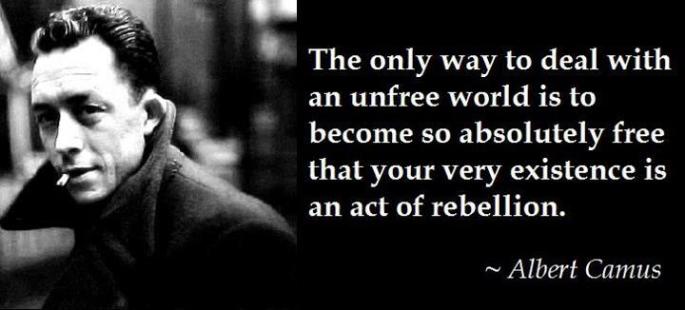
Albert Camus.
For ‘Hazel’. Because you alone said I would be the girl who did.
As a teenager, Albert Camus was, shall we say, significant. to me. I wrote this significance into being in Killing Hapless Annie. There is more than of a shred of truth in the ‘Hazel’ story. I am working on this bit this afternoon. I hated being a teenager mostly, so I’m doing it now, fuck-off unencumbered and healthy. Can’t tell you who JK is, or reveal what happened with Albert. You’ll have to buy the book! But this is hardly a revelation: you need someone – just someone – to believe in you as a kid.
Albert’s cadences were delicious: he was declaiming phrases of profound, shattering erotic power to Annie’s ear. And by God he had enough style to be vulgar, if he wanted. Albert had a history of manly pursuits, too: goalie for Algiers; a fine swimmer and athlete. She had a sense of his being a consummate man. Funny; brave; a demon in the bedroom – if you ever got that far, because what are walls, floors and furniture for? And unlike JK, he could have built a wall or changed a tyre with those strong hands. On the occasions when Annie went to other girls’ bedrooms, she saw they had pictures of The Cure, or Bono, when he was ragged, young and angry. She, meanwhile, had a picture of Albert Camus next to her desk. People said, ‘Who’s that?’ and she said, ‘My godfather. The notion seemed entirely, naughtily fitting, for the Camus books, en Français, that Annie possessed, had been bequeathed to her, as you learned earlier, by her godmother Hazel, studying Camus at The Sorbonne. Perhaps Hazel had been similarly intoxicated, which made the life of Friday pie and Monday spotted dick even more depressing. So the honorific seemed fitting. Plus it felt like Albert watched over Hapless Annie in a proprietary and manly style.
L’Étranger was inscribed with the words “Hazel Griffiths, Paris, le 19 Janviér 1962” and Annie had always hoped that, in leaving France for Terry, his mother’s pie and a new life in Tyneside, Hazel was able to say, like Camus’s protagonist “J’ai senti que j’avais êté heureux.” She hoped it was like this for Hazel especially when the morphine gave her respite from pain and the unexamined life downstairs, punctuated by the sickening puffs of air freshener from the Cyclamen Terrace plug-ins.
Now, all those years it never mattered to Annie that Camus had been dead ten years before she was born: he was there on her wall now.
Godfather. Most louche, brilliant, gorgeous godfather.
Loss (please note this non fiction piece contains some frank descriptions of pregnancy loss)
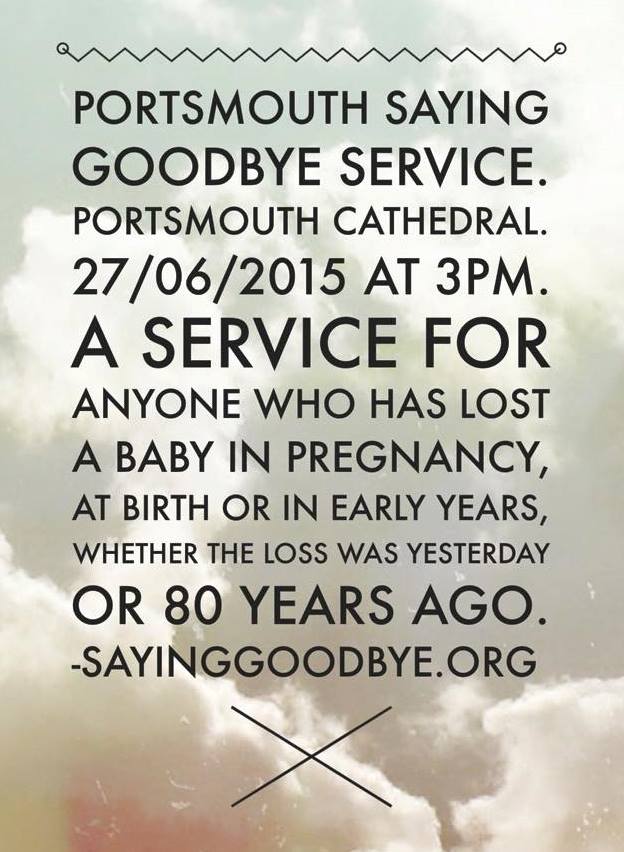
Today’s post is a little different. I’ve called it simply, ‘Loss’ and its timing was occasioned by the service shown below, the interview I did last week on recurrent miscarriage and the publication of a book. by Rachel McGrath called Finding the Rainbow, which you can buy on Amazon. I think Rachel has been very brave to write so frankly about her experience.
Anyway, it struck me that I had never said goodbye, or said something because, by and large, people encouraged me not to talk about it. Or, they were so full of anecdote – for the best possible reasons – that I thought I couldn’t or shouldn’t. So I’ll write something now. My experience was not, in any way, the worst, but if you have a lump of sadness locked away inside you; if you are going through this experience and working out what to do, know that you are not alone.
. www.themiscarriageassociation.com will provide telephone support for you, but otherwise, in my experience, the best support is other women, dads, partners who have been through it. And you might want to consider earplugs for the multitudinous unsolicited advice……
When you first start trying for a baby, perhaps it doesn’t really occur to you that it might not work out. Pregnancy is a physiological truth; something that is meant to happen, right? Often, yes. But there are many cases when this is not the case – around one in four pregnancies end. I didn’t know this when I was pregnant for the first time and sat, bewildered, unable to comprehend what was going on. It happened again, then again. By this time I was full of others’ advice: I could have told you a thousand horror stories, birth stories, infertility stories; given you plentiful anecdote: here are things not to say:
‘Oh, you’re probably not psychologically ready to have a baby’;
‘Well you are quite an anxious person, so perhaps that’s why you can’t carry a baby’
‘I think women these days are too aware of pregnancy and lots of pregnancies were lost in the past, unknowing, because women didn’t obsess so much.’
‘You could come and babysit for me instead/If you adopt, you’ll probably fall pregnant straight away’/Let me tell you my blood curdling story about a person I knew….’
Or,
‘If you think about it, years ago women just expected this to happen and got on with it.’ To which my riposte would have been, ‘I do see your point, but one of my grandmothers had ten children who survived, but did she talk about the losses she had? Yes: she told me, in her late seventies. She didn’t forget. She willed them into memory by talking about them.’ Looking at the poster for the ‘Saying goodbye’ service, at top, you’ll see they thought about that: ‘…..whether eighty years ago……’
Then there was another thing: for me, family was a flexible constuct. I did not feel – and I’ve not verbalised this publicly before – bonded with my mother. There’s something else that’s a taboo subject: that other mother figures in your life go on to carry more importance than the woman you birthed you or parented you. I won’t elucidate this further now, save to say, that I had other ways I felt I might embrace parenting. But I thought I would try a little longer to have a birth child and then think more if it didn’t work out.
So, after three miscarriages, I was referred for some tests; the results came back with something surprising. I had lupus. And I also had what is called a balanced translocation. A picture of my chromosomes showed that part of my sixth chromosome had swapped places with part of my seventeenth. If you inherit this in its ‘balanced’ form, it won’t affect you. You have all the genetic information you need to make you. But when you conceive, well, you know that the pairs of chromosomes are from each parent? One half of a pair from you; one half from him. In my case – and I am simplifying this here – that could mean a baby inheriting my ‘balanced form’ (and therefore being a carrier themselves, but otherwise healthy), or it could mean too much of chromosome seventeen and too little of six, or too much of six and not enough of seventeen. In other words, a partial ‘trisomy’ (a trisomy is an additional chromosome), or a deletion (a bit missing). One combination showed some recorded cases of extremely life-limited babies; the other combination was thought to be incompatible with life
. I feel bound to say that if you are reading this, as the one in five hundred people diagnosed with a translocation and, by some extraordinary chance are recording the same pattern as me, I urge you to look up details or ask a professional – for example a clinical genetic nurse – to find them for you; there may be newer information of which I am unaware. And also, ‘Hello.’ I have never met anyone else with a translocation, but now you know who I am. You’re not alone. x
This was my lowest point. Lupus, a balanced translocation and the recommendation of genetic testing in any future pregnancy, which carried with it the slight risk of miscarriage. Christmas. My husband and I felt very alone; I didn’t feel like I could tell anyone and, often, when I did, anecdote ensued which tended to make my head more full and make both of us feel under greater stress. Not very festive.
But then in the new year came more news: we met (not her real name) a lady I shall call PQ (P and Q are the letters given to the short and long arms of chromosomes) and she, a clinical genetic nurse, explained that my translocation was even rarer because – as the hospital had not clarified – it was a mosaicism: it wasn’t in all my cells. I had normal cells and those carrying the translocation, which in my understanding meant that it was spontaneous in me – occurring at cell mitosis, when first I began. Inside, I was like a kaleidoscope.
It also turned out I didn’t have lupus. They mixed up my records with someone else’s.
I had two further miscarriages; the fifth was further on, but it was what is termed a ‘missed abortion’. That’s where – I am speaking frankly and I so hope I don’t upset you, dear reader – the foetus dies inside you. I went off and cried, on and off, for a day, but I did not miscarry, so I had to go for a D and C: I’d never had an operation before.
I got pregnant again. I want to tell you this. PQ came round and armed us with a lot of information. And she said – I will always remember it,
‘People with translocations can and do have healthy babies.’ We also learned that, in the operation I had just had, they had identified my quirky cell line. Which way it fell, I did’t ask.
The obstetrician said gently, ‘Do you want to know the sex of the baby?’ We were stunned; I, in particular, had never used the word ‘baby’ because it seemed wrong. Wrong to use it when other women carried babies to term and lost them. I didn’t deserve to use the word. Does that make sense?
But we didn’t find out. I do think about that sometimes and I could ask, I suppose. I’m not sure.
My heart goes out to those who never know why they don’t carry a baby to term. No-one would say to us, ‘Yes – this is definitely the reason why you keep miscarrying’, but PQ did say, ‘This is a likely explanation.’ So you see, for us, it was frightening, but we weren’t so much in the dark now.
I was still pregnant. Nervous, constantly checking to see if I was bleeding; feeling every twinge.
And the obstetrician said,
‘Don’t put additional pressure on yourself. You can’t avoid being nervous after what you’ve been through. This is how it is now.’
That might not be the right advice for everyone, but it was the right information for me.I couldn’t expect pregnancy to be a rosy, romantic time. I never had that experience, but that’s no hardship.
This pregnancy continued. We had amniocentesis. I turned away as hard as a I could from the screen; couldn’t bear the thought of seeing. I fainted outside the room and PQ picked me up. I’d never fainted before in my life. Also, she was tiny: I don’t know how, the size of the prettiest borrower you ever did see, she got me on the gurney.
The wait for the cells to be cultured is excruciating, so you crack on.
PQ rang – and I am weeping, just weeping, writing this, but she said,
‘PQ here; got the results; normal chromosomes; not inherited your balanced form and do you want to know if it’s a boy or a girl?’
Baby.
Baby boy.
I want to say that PQ was the first person to see newborn baby. She said,
‘Oh, oh, oh!’ Then she said, because she was a geneticist, ‘Now do you believe what the books said about positive outcomes?’
‘Oh PQ!’ And came the tears like summer tempests. You know, I was unable to say the word, ‘son’? I tried, but was mute. It felt too precious to say, as if naming would invoke some form of divine nemesis and my blessing would be revoked. I don’t know if anyone else has had this experience. I said, instead, ‘the baby.’ My husband rehearsed me. It was important, he said, to say, ‘This is my son.’ He was right. It was an acknowledgement. We cannot say our children will always be safe; there is no life without risk: it is important to face this, without fear, and embrace what you are given and embrace – and name – that which you love.
Two years later, I was expecting again. I had miscarried three times in the meantime; it had been sad and difficult. I realise, looking back, that I didn’t really talk about it at all. It’s like it never happened. And people, as I wrote above, can be rich in anecdote. Or they are embarrassed because pregnancy loss, for whatever reason, is a taboo subject. But PQ was there again and this time I had CVS, meaning I could testing a little earlier. As with the amnio, there is a risk of miscarriage and, as with the first lot of tests, I went away and my instinct was to stay still and quiet and separate as much as was possible. Keeping still doesn’t stop a miscarriage, but it does help you to feel safe and calm.
This time, my husband wasn’t here on the day we expected the call. My friend Alexi, whom I will name because, as I said to her earlier in the week, she is clearly perfect in every way, was by the phone with me, holding my hand.
‘PQ again. Good news. All clear and no inheritance of the balanced form and do you….’
‘Yes.’
‘Another boy.’
More tempests.
We had another …..son, too. I am actually stuggling to write this word because the sensations surrounded with it do linger. I had three more miscarriages, gave up, but after a few years, we decided to try again. There was a seven year gap between second and third boy, but here was PQ again. This time, however, we found ourselves in an unexpected situation. Lying waiting for CVS, the obstetrician getting ready beside me, she suddenly stopped what she was doing and said,
‘I can’t do this. I know it’s not scientific, but I don’t feel I should perform CVS because everything looks fine to me.’
Lying prone I said,
‘But how can we say that?’
She said,
‘We can’t – I just – I can see that little figure jumping around. I just feel…’
I imagine that this was unexpected. It was a stressful situation to be in. I was crying and we held one another’s gaze and she was upset too – and I understood her dilemma and utterly respected her. So I got up and said,
‘We will go away and think.’
We did think and, knowing the risks, we went back and I had CVS. I think it was because we had two other children to consider. But it was not an easy decision; to have any invasive testing is not an easy or comfortable decision. I fainted again.
And PQ rang. And it was well. She was there again when baby number three was just a couple of hours old.
And that is my story. PQ has a family tree in the hospital where she works; our boys are on it.
********************************************
I hope that wasn’t too much information for you. Writing this is, I realise, my way of saying goodbye. Later today, I am going to plant some flowers in our garden: roses – flowers that will last and foliage that will climb and thrive. I never marked all those times – the eleven elsewheres – that didn’t. Never knew how to think of them – whether as babies, souls, as in any way sentient or feeling pain: I will probably never know or square this. But I hope that, if you have experienced loss, what I have written might make you feel less alone, although my story will be different from yours. It may be that my description of so many miscarriages gives you hope, or it may be that you already know you cannot face further loss: this I understand. I think that being a mother – and by whatever means – is not the only way to have a fulfilled and happy life. I think – and I am worrying about whether I have the wording right here; I am not sure I have the right to say what I am about to – that it is one part of one way. And should you try, yet find that it does not happen for you, then what I feel is this: you are not less woman: you are more because you had the strength and the love to try – and then to bear loss. And you are magnificent.
A ten minute write….
A little while ago, I set myself an exercise: with a slot of ten minutes maximum, plan then write the beginning of a novel. Stop writing at ten. This time, I was thinking of a middle grade or YA book. I think I understand the distinction (and I have a notion of what I might recommend to students – as my background is in secondary English teaching), but I can see that this book could go either way. It does have a title, but in case such a funny miniature project goes anywhere, I’d better not say. However, you do meet the protagonist, whose name is ‘Almost.’ Ah – but can you spot straight away which book I had thought of weaving through my story?
That day, I sat under the slowly darkening sky and I thought that no-one knew where I spent my stolen afternoons. I was dragged up, not brought up; when scrubbed or slapped, I would slip out here to the wilds by the river and contemplate what lay there.
What did? First there was the old graveyard; then there was the strange old boat; beyond that was the wide, wide sea, which siren-called me with peculiar voices that somehow I had always known. I’m lonely. I’ve got a stupid name, for a start – and it tends to put people off: Almost. It must have been my mother’s little joke. Maybe she gave it to me so that I would reach for the stars and transcend the limits of the name, but I suspect it was because she wanted to keep me down there: a not quite, just about, moreorless kind of kid. And that’s what I was.
Until that day, when the darkness fell slowly and I stayed out late.
A Tale of Tripe: because The Tripe Marketing Board is the best thing on twitter
A Tale of Tripe (in honour of Elizabeth David)
A TALE OF TRIPE
Waking in the violet early morning, bathed in sweat and troubled by a night both eerie and vivid, Catherine searched her thoughts: ‘What must I have been dreaming about?’
It didn’t take long, of course: it was the tripe – that and the matriarchs who washed it, handled it with such vigour and presented it with an expectant, nasty gleam in their eyes. Such sweet, creative fiends: mother and grandmother. In mother’s case, just dressing the tripe would have exhausted her for the day; sent her desperate to the fainting couch. In grandmother’s, such dressing was simply a prompt to her killing another cow with the large-knuckled hands that terrified the grandchild so much.
Catherine winced: ‘Grandmother and her man hands; downy arms – all wicked with a rolling pin and guarding the old stove with a vicious possessiveness.’ Thus,
‘Let no man come near my domain: I will slaughter them – smother them under the blanket of the beautiful tripe.’
That was it. That was the most disquieting image in the nightmare: grandmother like Moloch waiting for a sacrifice over the fire; mother’s eyes dancing approval.
‘Yes, yes, yes! Feed it to her! Now, now, now!’
‘I’m so ashamed. I want a normal family and not to feel like this – waking, tripe-terrified.’
Mother and grandmother were dead, but they found that no excuse. So they visited Catherine regularly, sleeves rolled up, ready to boil.
To rid herself of the present dreamscape, there was nothing for it: go downstairs and find a better image. Tea in a favourite mug was a good start, but Catherine found that her thoughts were leaping from vivid hue – the reddest of pickled cabbage – to dull, cloudy jars in which might have been preserved the innards of an unwanted relative. In grandmother’s pantry there was a hecatomb of conserves; the fruits of the season, incongruously presented in a chamber of horrors. There were pots of umber sludge, eyeball pickled eggs in heavily sedimented liquor; damp flagstones underfoot: a perturbing smell of sour, crawling mould. There were aprons hanging up, the prettiness of their floral decoration gone to hell in this place of condiments, good housekeeping and no hope. This was a room revisited on other troubled nights for Catherine; she could not let its scents and shapes leave her head and the argot of this poky grey room whispered, ‘Grandmother knows – just as we all know – and she and mother will come for you.’
Here was a place of extinction – of annihilation, the meaning of such things terrifying in a dream but still only faintly, inchoately understood.
‘This must be the worst combination: to know that someone is coming for you, but not to understand why, when or how. Or really what that has to do with pickles. Or tripe!’
Ah: the tripe – huge winding sheets of it. It smelled like death. When Catherine’s nights were not punctuated by morbid pickles, siren-calling her to embrace their victim in death, she had nightmares of being cosseted in its velvet crushing embrace. The silky surface was puckered and hollowed. Somewhere else and in some other time, it might have been pretty; like a creamy-white mosaic you would want to touch. But in the nights, and when grandmother or mother served it up as punishment so triumphantly, the tripe blinked at her and writhed in its nasty pool of white sauce, encircled by effulgent lumps of onion. On its surface – its face or was it its back? – were sucker pads like those on the arms of an octopus or some kind of strange sea plant that would caress and then swallow you whole, whispering of a lifetime of sin to you – just to compound the unpleasantness of this particular way to go.
Matriarchs hovering, the tripe came billowing clouds of vapour; it was cooked in a milky broth, all one at first, before you realised the unpleasantness of the discrete parts and sucky stomach-feet turned your (own) stomach. Between the two women, the silent challenge between mother and grandmother, it was a point of honour to make sure that the flour was never properly cooked off; thus, it lurked congealed in tiny mounds – but you didn’t see it in the unmapped viscosity of the sauce. Didn’t see the horrid little tumescence until you began to ingest it. Powder scattered in your mouth when the lump dissected. In a way, this was the worst horror:
‘And the dust in my mouth as I sat between Scylla and Charybdis. Oh, a fine supper.’
Catherine had always blamed herself for the meals – for why they fed her so. For the spiteful sheets of tripe, served up like victory in chintz.
‘My childhood looked so tidy from the outside; mother and grandmother were pillars of the community: first for cake in the village show; outstanding for a lemon curd; doyennes of the church flower rota. They prayed hard at the altar, shark eyes squeezed shut. I always thought it was me – it had to be me.’
‘Send her out to the pantry, in the semi darkness. Those eggs will frighten her a treat – make her more obedient. The mould on her hands! Ha!’
‘Mother – that’s the way to do it.’
‘But say these homes must have been full of spite, hurt and venom to make mother and grandmother cook like that? Say it was THEM and I didn’t deserve the tripe? Say it was wrong to shut me in there when I gagged on the tripe and onions and spat out the floury lumps without meaning to and they put me in the pantry like Jane Eyre in the Red Room?’
Catherine was not usually so bold: what was happening now that was different?
Something was coming from the bookshelf.
A small, dry but nonetheless beguiling voice: ‘Come here and open me up, Catherine.’
Now, Catherine was used to having a litter of imaginary friends. When your strange landlocked, emptied-out family greedily surrounds you; when your nearest and dearest seem to close in on you with, “Bad, bad, bad – everyone knows about you” then don’t you need to tell someone? You can’t tell real people because no-one else seems to have a family as peculiar as yours.
‘And then how would I ever explain cooking as a way of throttling or suffocating an unwanted child?’
In the bad dreams, Catherine saw her relatives, mother and grandmother predominant, amassed, like the preserves, in a hecatomb. They tumbled out curses at home; were aligned in neat rows and pretty as pie when out in the cold world which welcomed their jam making, their manners and determined smiles. Who would believe Catherine about mother and grandmother? And how would she explain the chamber of soused horrors or the tripe?
But here came a friend now; you might know her? To Catherine, she was ED; to the outside world, Elizabeth David.
ED wasn’t the warmest sort, but her books smelled of spice and sunshine; of lemons and emerald parsley. Catherine took French Provincial Cooking from her shelf; it was from this that ED had been speaking to her. Catherine adored ED and all her books; could tell you about the “pale rose pinks of the langoustines” which their author enjoyed, with a fresh and sparkling appetite, alongside a bottle of Muscadet by the Seine. ED relished good butter, radishes with their leaves left on as God had made them; saw the poetry and potency of a flat plate of Arles sausage and black olives.
‘And the colour, ED: look at the colour of the things you ate and knew how to make! See the lovely creams and greys of shrimp; sunset-glow carrots. For you, even the dark things – the winkles and the cork stuck with pins; things that were muted or pebbly – those things became beautiful. Beautiful – flanking the colour; like a gentle relief. I want to eat like that and I’d like to live like that. Embracing the darkness, yet knowing of its loving, numinous companion.’
ED, not one for a hug, and not particularly fond of metaphor, said,
‘Well, do you have a sharp knife, a hot grill and a will of your own? I’m assuming you have a mandoline, some good bowls – and I will not share my kitchen with a garlic press: I must be firm about that.’
‘Of course not; I know your feelings on garlic presses. I’m not sure I have a mandoline, I do have plenty of bowls, but some of them are chipped.’ Catherine began to cry.
ED prodded her firmly in the back, coughed demonstratively and said, ‘Chipped is fine, as long as we have at least a few white-lined brown dishes.’
‘Why do we need these dishes – why must they be as you describe?’
Silence. A sigh. Then:
‘Fresh contrast. Now, it’s time you stopped thinking about tripe. We are going shopping.’
‘ED, please: I am dog tired.’
‘That is no excuse. Not when we are going to compose hors-d’œuvre.’
Hurrying to dress, Catherine sighed disappointedly at the drawn face and sad clothes; shuddered at the lingering dreams. Still, ED at least knew about the tripe, so they wouldn’t be cooking that. They would grace a table with red tomatoes, yellow mayonnaise, sea salt and olive oil; a beautiful salad of grated carrot. And could it be celeriac that ED meant for the mandoline – all cut into the thinnest strips and highly seasoned with mustard, plenty of vinegar and a voluptuous thick mayonnaise?
Out they went, Catherine chatting silently to ED and now lighter of foot on their way to the wonderful market. But two shadowy figures watched her, curses dribbling from their lips with the last lappings of morning tea and vulgar gulps of toast with ochre marmalade. And inside Catherine’s house, gently, timorously now, was a faint smell of the sea, a distant grating of nutmeg and a fresh twist of black pepper.
‘Sacrilege. I smell no wash day smell! I hear no slap of tripe against the pot!’ cursed drear grandmother and mother.
Afloat, through thought, in Catherine’s house now was the peaceful aroma ofpotage bonne femme: of cream, chervil, softly cooked potatoes and leeks, bathed in sweet butter. The shadowy figures cursed more, spitting unkind crumbs.
‘Pain grillé aux anchois? Salade au chapon? Get the little bitch. Boil up the tripe, mother. And bring out the ammunition from the pantry.’
Catherine and ED, silently communing over their purchases, bought a mandoline and the requisite dishes, great bunches of green things for thesalade de saison, dimpled lemons, celery, celeriac, lumpy tomatoes – things that promised succour. And life.
But on returning to the house, dull wafts of tripe waited for her, as the shadowy figures took their joyful and vindictive hold of the kitchen. Garish red cabbage with a sweet, cloying smell sat with the cruel eggs on the worktop. Amuse-bouches of the sort you serve if you hate your guests; starters gussied up a little with hard bread, sea-foam milky tea and a cucumber cut into behemoth chunks. And the boiling tripe hissed milky sap.
‘No matter’ said ED, walking briskly right through the shadowy figures, rolling up her sleeves and assembling a work station next to the eyeball eggs.
The eggs leered as ED tasked Catherine with slicing the celeriac on the mandoline, concocting a highly seasoned dressing for its matchstick strips; Arles sausage was laid out on a large flat white plate, its fat coin slices overlapping; in the centre, a carefully built mound of black olives. Both glistened and invited. The tripe spat on, onions twisting and squirming round it, as ED and Catherine cut tomatoes and sprinkled them with gently snipped chervil – the dressing to be added ‘absolutely’ said ED ‘only when the diner wants to eat.’
Catherine could feel on her pulse the metallic, penny-tasting lure of a fine misshapen tomato; she tasted a tentative joy as they grated carrots almost, ‘Almost I said!’ to a purée, seasoning them carefully. A pleasing, wobbling heap of mayonnaise with fresh eggs and olive oil from the first pressing flanked the crackling-crust loaf, butter and some best quality anchovies.
‘It is no shame to leave them in their tins if they are high class brands’, barked ED. Catherine hurried to place back those she had already decanted.
The table of hors-d’œuvre, for a twelve o’ clock lunch, was almost set. Almost. ED revealed a surprise. Out from a white plastic bag, secreted in the depths of ED’s basket, came a single slithering sheet of tripe: ‘For you.’
Tears pricked Catherine’s eyes. ‘No, not you too – please not you Elizabeth. Don’t make me cook it!’
From the room and the world all around came the laughter; the delighted hoary shapes of mother and grandmother.
‘Boil up the tripe, there’s a good girl! Choke, choke, choke on the nuggets of flour!’
So ED was one with them, then.
‘It had to be me, didn’t it? I deserved what I got: a lock up in the pantry; a stifling sheet of tripe and the unlovely curlicues of onions; gallons of white sauce and curses.’
The spectres grinned; the jarred eggs hummed, if ever a jarred egg could.
‘Now do be quiet. Our lunch à deux first, then I shall teach you something new. You will have to boil the tripe briefly, but then you will grill it to a sizzling crispness, with a coating of egg and breadcrumbs and serve it with a sauce tartare. A revelation, I think. It is called tablier de sapeur – or fireman’s apron.’
‘I can’t.’
‘You will.’
Lunch. The fierce, seductive rasp of the anchovy, crunch of good bread and the delicacy of finely cut celeriac. There were draughts of wine; ED passed knife and salad servers through the ghouls of matriarchs: it was a furious celebration. Then lost sleep came and took her pupil. On waking, ED had gone, but Catherine obligingly boiled the slice of tripe, eviscerating it with a certain passion to form a neater rectangle. She basted it with egg, coated it with crumbs and grilled it until it was golden and the edges had caught on the flame. She ate the robust little apron with the sauce tartare that ED must have made for her, left with an uncommonly sweet note nearby:
‘See off the spectres; try something new – tablier de sapeur: adieu; adieu.’
Hmmm. She almost liked this novel dish.
‘It’s not my favourite thing, but then neither is it the stuff of nightmares, thrust back to the sound of laughter into the sinister pantry. Ha! “Grill to a sizzling crispness” ED had said. A dynamic phrase; a confident one.’
Catherine threw wide the curtains, welcomed in the vestiges of the day and scattered the grey tripe boilers and pickle hoarders into pieces.
‘Try something new. Mother; grandmother. Keep being dead now. Adieu; adieu!’
That night, Catherine dreamed only of the next chapters in her life: ‘Soups’ and ‘Eggs, Cheese Dishes and Hot Hors-d’œuvre.’
Topping and Tailing
Do these work as dedication and disclaimer? (I really don’t think I can get away with the disclaimer, but I record it for posterity!)
For Dixie Delicious. Because you loved her when she was Hapless
And you love her now she’s Annie.
Disclaimer: this is a work of fiction and, while real authors and musicians are characters in the book, they are in the role of imaginary friends and are the author’s interpretations only. Resemblances to anyone else living, dead or undead but still quite lively, are drawn as literary creations only.
One of my central characters isn’t actually alive, but is pretty frisky. Others are long dead but very much alive in Annie’s imagination and affect the way in which she marshalls ideas, thoughts and words. ‘Dixie Delicious’ is a character I hope readers will love and, of course, he nabs the dedication to the book because, if he existed (I reiterate that this is a work of fiction), I would throw myself in front of a speeding car, I would take a lightning strike and I would give my last for that man.
So then I started going over any copyright issues and sketching in a list of acknowledgements and it came out like this (incomplete; dates to add – as I’ve got to follow the MHRA Style Guide for attributions consistently……)
ACKNOWLEDGEMENTS
I have quoted in the briefest possible terms or used brief paraphrase of the following: Albert Camus: The Outsider, The Myth of Sisyphus and Selected Essays and Notebooks; Louis MacNeice: ‘Meeting Point’, ‘Thalassa’, ‘The Sunlight on the Garden’ and ‘Autumn Journal’; Simone de Beauvoir: Force of Circumstance; Sylvia Plath: Johnny Panic and the Bible of Dreams, Collected Journals, ‘Words’, ‘Lady Lazarus’, ‘Cut’ and ‘Daddy’; Patrick Kavanagh: ‘Prelude’; Philip Larkin: ‘Faith Healer’; Dylan Thomas: A Child’s Christmas in Wales; T.S.Eliot: ‘Prufrock’ and ‘The Journey of the Magi’; Michael Ondaatje: The English Patient; Dorothy Rowe: Depression: The Way Out Of Your Prison; Samuel Beckett: ‘Happy Days’,‘Waiting for Godot’ and Collected Poems; W.H. Auden: ‘Musee des Beaux Artes’; W.B Yeats: ‘The Circus Animals’ Desertion’; Dolly Parton: ‘Coat of Many Colours’ and My Life and Other Unfinished Business; Peter Hogan: Shirley Bassey. Diamond Diva (2008); John L. Williams: Miss Shirley Bassey (2010); Johnny Cash: ‘Down there by the train’; Abba:‘Waterloo’,‘Supertrouper’ and ‘Gimme Gimme a Man after Midnight’; definitions given on the NHS website for its mental health and associated medication information pages and from the DSM (The Diagnostic and Statistical Manual of Mental Disorders) 5.
If any other quotation or literary reference has piqued an interest, others texts referred to (or quoted but out of copyright) are: Dante: Inferno; Charles Dickens: Great Expectations; Derrida: Positions; Aristotle: The Poetics; Charlotte Perkins Gilman: ‘The Yellow Wallpaper’; John Skelton: ‘On the Death of the Noble Prince King Edward the Fourth’; Walt Whitman; ‘Song of Myself’ from ‘Leaves of Grass’; Andrew Marvell: ‘A Horation Ode Upon Cromwell’s Return from Ireland’; D.H. Lawrence: Sons and Lovers; William Empson: Seven Types of Ambiguity;‘John Keats: ‘The Eve of St Agnes’ and ‘Collected Letters’; William Shakespeare: The Tempest; Kenneth Graham: The Wind in the Willows; Roald Dahl: James and the Giant Peach, Charlie and the Chocolate Factory, Fantastic Mr Fox and Danny the Champion of the World; J.R.R. Tolkein: ‘Concerning Hobbits’ from The Lord of the Rings. The strange little poem about ‘Bucket Baby’ that you find in chapter one contains the first line of Richard Lovelace’s ‘To Althea. From Prison’ and the rest of the poem is a pastiche of its form, only; the first line is part of an extended metaphor in the book: that of the prison. Finally, The story about Eric Newby’s A Short Walk in the Hindu Kush being found in Calcutta, as signed by the author in memory of a walk on Dorset Cliffs with Ted and Vi […]is true and the book is on my shelves at home. Signposts, you see.
I think that when this goes back for edits there might be hard stares, because there’s rather a long list for a work of fiction – and I’ll have to suck it up. And yet it’s all in there. The content of the book and its storyline were necessarily tangled up with a number of people – singers; writers; divas! Because you see Annie is a great bookworm and at least partially detached from the real world. [Depending on one’s definition of ‘real’, of course.] Writers and their creations and also songs and the spirit and sentiment behind them: those are intrinsic to how she copes with any interaction in the world and how she comforts or defines herself; she sometimes uses others’ language to find voice. A slew of acknowledgements and what looks like a reading list would not, I think, find a place in my subsequent books, but in Killing Hapless Annie, this is truly how it went. Although of course it’s fiction; definitely fiction. As I’ve now said three times and I’m sure the lady doth not, ‘protest too much, methinks.’
An Interview with the author, Joanna Barnard
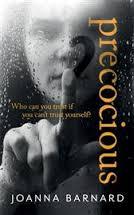
An interview with Joanna Barnard, author of Precocious (Ebury, 2015) and winner of the 2014 Bath Novel Award
Posted on June 16, 2015
AN INTERVIEW WITH JOANNA BARNARD
‘Write the book you have to write, the story that keeps you awake at night.’
Joanna Barnard won The Bath Novel competition in 2014 with her novel, Precocious. The literary agent Juliet Mushens went on to represent her and Precocious was subsequently bid for in a four way publishing auction – with Ebury Books taking it on. Exciting stuff! The book will be out this July and Joanna is working away on her second novel. I have taken the synopsis and comment below from The Bath Novel page – with thanks.
NOVEL SYNOPSIS: As a schoolgirl, Precocious’s Fiona Palmer has an intense crush on Mr Morgan, her English teacher. She writes stories, poems and plays for him; he praises her talent and offers a glimpse of what life might have to offer beyond her council estate. The crush develops into a relationship which ends badly.
The novel opens with a chance meeting between the two fifteen years on. Morgan seems once again to offer a form of escape and they quickly begin an affair. A young woman visits Fiona, seeking her help in prosecuting Morgan who she claims abused her at school and Fiona finds she must re-visit her own version of the past.
Gillian Green, Ebury Fiction publishing director told The Bookseller: “Joanna’s debut is an utterly compelling, clever and controversial novel which the fiction team has become hooked by. It’s that Holy Grail in fiction: quality writing but with a commercial heart and a subject matter ripped straight from the headlines.”
I went to hear Joanna, the literary agent, Juliet Mushens, Caroline Ambrose, Chair of The Bath Novel Award and Dionne Pemberton, one of The Bath Novel Award‘s readers, speak at the Bath Literary festival. If you are a writer – however tentative your efforts so far – I would really recommend going to such events for the insights you will gain. It is as if you are saying to yourself, ‘Right. I am taking my writing seriously.’ And go even if you don’t enter the competition!
For me, it was the talk at this event, my manuscript review at Cornerstones Literary Consultancy and the day I said to myself, ‘I have a story I so want to get out there’ that changed things. Because I decided I wouldn’t give up or fall so early in the process. I’m a rookie, don’t you know? The quotation at the top of this article is from my interview with Joanna: that just about sums it up for me: ‘Write the book you have to write, the story that keeps you awake at night.’ It’s a great maxim, isn’t it? And, as Robert Frost had it in ‘The Road Less Taken’, ‘way leads on to way’, because through Cornerstones I found sterling encouragement in the novelist, Alison Taft; because of The Bath Novel talk I read Joanna Barnard’s blog – and the exchanges we subsequently had were so encouraging; she’s generous with her time and hers is a great story – that she almost put the ms away before giving it one last shot. Finally, after The Bath Novel talk, I went for coffee and a chat with some recent graduates of the Bath Spa MA in Creative Writing, which was how I came to notice profiles on independent publishers in Mslexia magazine – and how I found someone who wanted to publish my novel.
So KEEP GOING and here’s the interview with Joanna!
1. Why did you start writing?
Well, that’s a tough one because I started writing stories at the age of six or seven years old, so I can’t really remember! Like most little girls I had loads of career ambitions growing up, from ballerina to teacher to nun (!), but I always said I was going to write books as well “at the weekends”. I just loved books so much it seemed natural to want to write them myself.
2. Do you have any particular sources of inspiration you could comment on? Events, conversations? I imagine that, as a teacher, I could not have got away with writing a book that tackles a pupil teacher crush and the dark events that ensue over a considerable time, so I am fascinated to see how you handle them. But back to the sources of inspiration!
There were certainly rumours at our school (as with every school) and instances where I would say the pupil-teacher relationship seemed inappropriate. It’s funny because at the time it doesn’t seem that big a deal, in fact you feel jealous of the girl getting the ‘special attention’ – it’s only as you get older that you look back and think, hmm, maybe that was actually a bit off. I’ve known of at least one teacher who was taken to court, but it resulted in him being acquitted, so I can’t really comment on that.
It’s a topic that’s always in the news though, isn’t it – from the Jeremy Forrest case a couple of years ago [when a teacher and his student ran away to France together] to the more recent case of Stuart Kerner [who was excused a jail sentence because the judge felt it was the student who did the ‘grooming’]. It’s an interesting and complex issue to write about.
3. How did you keep going when the going got tough? For instance, after rejections from agents?
Being part of a writing group really helped. Their feedback was so useful and they encouraged me to keep going after rejections. I’ve said before that the Bath Novel Award felt like a bit of a last chance, but for some reason I felt strongly that Precocious would find an audience – if I didn’t get anywhere in the competition, I planned to self-publish it on Kindle. I was determined to get it out there somehow.
4. Do you have any advice for aspiring writers?
Read widely. Write the book you have to write, the story that keeps you awake at night. Write every day if you can, even if it’s just a few sentences. If you get stuck, stop and write something else: a later chapter of your book, or a short story, or a poem. And if you are seeking representation and publication, present yourself and your work as well and as professionally as you can: follow the agent’s guidelines or competition rules, get someone else to proof-read for spelling and grammar, and polish, polish, polish.
5. Do you have a routine for writing? I have read that you like to write in longhand first, with a big cup of tea alongside and on the sofa or in bed (as I wrote in my blog, sometimes I hide in the shed, with earplugs in – and we’re not even talking a posh shed…). Anything else to add?
I always write in longhand first, it’s true. There’s nothing more terrifying to me than a blank screen, but an empty notebook – that’s exciting! I think the physical act of writing must unlock the creative part of my brain. I write quickly and type up slowly, making edits as I go.
I don’t have much of a daily routine, in fact I find frequent changes of surrounding very helpful. At the moment I find I’m writing a lot on trains.
6. Joanna, I already know your favourite book is Nabokov’s Lolita. Do you have any other favourite books to mention – and perhaps some comments to make on what makes them special to you?
Lolita is extraordinary for so many reasons: the voice, the language, the black humour, the pathos. I first read it as a teenager and it was the first time I was aware that an author was playing games with me, but I was powerless to do anything about it. Some of the sentences were so beautiful I had to keep re-reading them. I was blown away.
Other favourites include The World According to Garp (in fact most of John Irving’s novels) – he draws amazing, quirky characters that live long in the memory.
I came relatively late to Donna Tartt and adored The Secret History and The Goldfinch.
7. My own first novel is coming out with an indie and, as is not uncommon with indies, I don’t have a literary agent. (Note to any puzzled readers: authors published by smaller publishers – the ‘indies’ – independents – may not also be working with an agent.) I’d been wondering: you are represented by Juliet Mushens at The Agency Group. Would you be happy to comment on what you’ve learned from the process of working with an agent? Perhaps about editing, the market, presenting yourself – fire away! I think this would be interesting for writers aiming at such a target.
Working with Juliet has been brilliant. She’s warm and supportive but also honest and direct with feedback – if something’s not working, I know she’ll just tell me. There’s obviously a huge advantage to having someone ‘in your corner’ who really understands the market, too.
One thing I’ve learned is that there’s no reason to be intimidated when approaching agents – yes, it’s tough out there, but every agent genuinely wants to find that next book they are passionate about. It might be yours!
The following two questions came from two of my upper sixth students:
8. How does writing make you feel?
8. How does writing make you feel?
When it’s going well, or when it’s going badly?! To be honest above everything else it just feels natural – it feels like this is what I *should* be doing. It’s not always easy, but it always feels right.
And
9. How do you know, when you’re writing, if it’s any good? Do you think you ever really know?
9. How do you know, when you’re writing, if it’s any good? Do you think you ever really know?
I think most writers are naturally self-critical. I don’t go around high-fiving myself and saying “Wow! That’s an awesome sentence!” Most of the time I’m thinking it’s pretty terrible, but I keep going anyway. Distance is key. I think if you can finish what you’re doing, put it away for a few weeks, then come to it fresh, you can tell then if it’s any good.
10. You’re currently also training as a psychotherapeutic counsellor. In my own life and work I am passionate about how appropriate counselling routes can transform self, how we connect with the world and what we are able to do. I’m wondering why, alongside your literary success, you chose to train in this area and what its link might be, for you, with literature and with your own writing?
I previously worked in sales and I wanted a career change, but never imagined I would make any sort of living from writing. I wanted to learn and I wanted to help people (I still do), so I chose to re-train as a therapist. Like you, I think good counselling can be transformative. I do think my interest in this area comes from the same place as the writing: it stems from an intense curiosity about people, what makes them tick, why they feel how they feel, how they change and are influenced. Funnily enough, that was the same reason I enjoyed Sales.
11. Finally, what’s happening now in the last weeks before Precocious is out? And might you give us the first sentence of your book as a teaser?
Well, I’m going on holiday! I get back the night before the launch, which is quite a good thing as it will (hopefully) take my mind off my nerves. In the meantime, Ebury are contacting press and sending out copies for review.
The first sentence of Precocious is the fairly pedestrian,
‘We meet again in the supermarket.’
As for the new book…can I have 2 sentences?! With the caveat that this is early draft and may well change, here you go:
As soon as we got him home, it started. I obsessed about him dying.
Thank you so much, Joanna. I am really looking forward to reading your new book….and the next one!
An interview with Joanna Barnard, author of Precocious (Ebury, 2015) and winner of the 2014 Bath Novel Award
My interview with the lovely Joanna Barnard

AN INTERVIEW WITH JOANNA BARNARD
‘Write the book you have to write, the story that keeps you awake at night.’
Joanna Barnard won The Bath Novel competition in 2014 with her novel, Precocious. The literary agent Juliet Mushens went on to represent her and Precocious was subsequently bid for in a four way publishing auction – with Ebury Books taking it on. Exciting stuff! The book will be out this July and Joanna is working away on her second novel. I have taken the synopsis and comment below from The Bath Novel page – with thanks.
NOVEL SYNOPSIS: As a schoolgirl, Precocious’s Fiona Palmer has an intense crush on Mr Morgan, her English teacher. She writes stories, poems and plays for him; he praises her talent and offers a glimpse of what life might have to…
View original post 1,874 more words
 Anna Vaught Writes - Dr Anna Vaught: teacher, mentor, author, campaigner