Day 3 of my alphabet – a gift for you, all about looking after ourselves. The letter C – for comfort

Not The Booker Prize 2016

Super short post this! I was just reading the information on this:

https://www.theguardian.com/books/booksblog/2016/jul/18/not-the-booker-prize-2016-vote-for-your-favourite-book-of-the-year

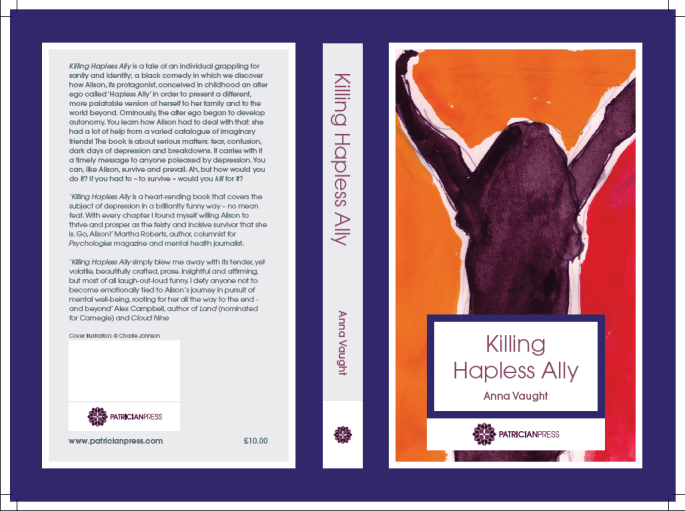
And here is a wonderful thing, now in its eighth year. I am just about to place my nomination and I wonder: if you have read Killing Hapless Ally, my debut novel, and you liked it and it meant something to you, do nominate that, if you like!

Every year, the list gives you some brilliant reading. Say, a book that we might not otherwise have heard of and which turns out to be outstanding. Oh – there are a lot of writers out there. (Not to mention a lot of small but exceptional presses.)

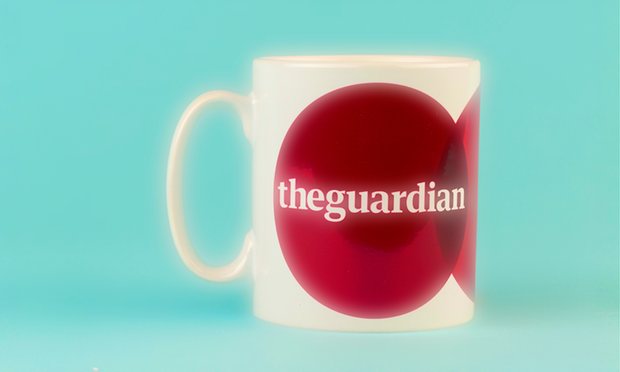
Have a look? The picture featured is of the lovely mug that a writer might win!


Anna

‘Yes, Mfanwy: in the midst of life we are in death and here with the Dead Dears it is fair to say that we are in love.’

From The Life of Almost as I draft it…

  And there was another book that had only been seen by its owner.

Evans the Bodies wrote poems. Often for the Dead Dears who had no-one and whose lives must, he thought, be recorded for posterity. So the timid lady from the post office, who had customers and bread but no friends and a mother who would have tossed her out with the peelings for the pigs, became a cowslip in a warm meadow and drank deep of the sun and was happy; so a coarse and crooked man, who lived in the last house before St Brides Bay and whose children hated him but sang like larks for his money, was limned as a quiet man, skimming stones on the beach and smiling into the auroras of a coastal morning when no-one knew. But Evans the Bodies was a watcher for the sad and lonely. He was a dresser of bodies, to be sure, but he also had a talent for the sad soul and the lonely. And alongside his careful stitch and suture and his eye for the sick at heart, he had always loved Mfanwy: when she was someone else’s, as she laboured for and lost her child, when both times he bought her milk-white lilies and she said, ‘Evans, there’s a soft man you are’ and he cried with his back to her, as he did when she lost her husband. He put poems in the book for her, too. Imagined he was taking pictures of her, watching her written into the world all around and, as he watched the frosty lines on the windows in his cold parlour and saw the feathers and curlicues of winter, he scratched her monogram in the frost and rime and, again, he cried, and saw himself at a window as the beautiful ship Mfanwy his Love sailed away and thus he wrote again.

I had seen the rapture and the writing called ‘Mfanwy’, of course, though he did not know. I had learned it by heart and whispered it into the Pembrokeshire night, whose kind tendrils carried it to her and caressed her, then softly laid waste to sadness and silence and made her think clearly about Evans the Bodies, who loved her and always had, just so.

The Life of Almost – and an invitation, if you’re local, like.

An invitation if you are a local-ish writer or reader and would like to come for some reading and discussion of the first few chapters of the book I am working on, my follow up to Killing Hapless Ally (March, 2016, Patrician Press).

The Life of Almost is a re-working of Great Expectations, with its protagonist, Almost, roughly modelled on Pip. It has a predominantly Welsh setting, much of it being in Pembrokeshire. As such, it draws on the stories I have been listening to my whole life and so I have adapted these for the book. Stories of sailors, the strange dangers of the sea and those who love in it and on it; dark events at steam fairs; predicaments at village shows; kelp, barnacles, tough salty men, the cree of the curlew and the dead across the estuary and of how gentry moved in and spoiled all. Stories of beatings known about but hidden in plain sight; curses and vendettas; strange harpists, madness, mutism; poltergeists who threw pictures from walls and plants from windowsills and vases from above the fireplace. People who went away and never came back: stories, stories, stories. Shootings, hangings, disappearances. My idea of a picnic could still revolve around sitting by graves describing the dreadful manner in which relatives died, except I desist because I’m the mother of three young boys and I think my upbringing was definitely weird and I’m sure the kids think I’m quite peculiar, already.

So, you know roughly the story arc if you know Great Expectations, I’ve told you a little of the settings, but there’s more to it. Because, as Almost takes you through stories of his world – as he tells them to Catherine, who opens the first chapter, so tired of life – you come to realise that he is not entirely of this world and not entirely of this time: he is something more protean and unconfined; a storyteller who can shift substance in an extraordinary way and who is not compromised by, shall we say, temporal and ordinal rules…I hope, when it finds its home, that you will find the book darkly funny, maybe a bit shocking in places and that you’ll enjoy what I have done with my favourite book, Great Expectations, such as reworked Jaggers into a nasty (Ben Jonson’s) ‘Volpone’, basking in his gold somewhere off a great motorway and given you many elements of the supernatural. I did something a bit radical the other day and incorporated, euphemistically, some of the Brexit scoundrels – they are part of why Catherine, who begins the book, is so jaded and sad and thus why she has Almost come to visit. And, you know, one might question: is Almost really there at all? Or is he created by others when….they need him. Oooohhhh.

Because I stand by this and know it to be true: a story can save your life.

Like a copy of Killing Hapless Ally? Order from Waterstones, your local bookshop (Ex Libris and Mr B’s have copies in our area), the Patrician Press website or Amazon here: https://www.amazon.co.uk/Killing-Hapless-Ally-Anna-Vaught-ebook/dp/B01CA5F21Y/ref=tmm_kin_swatch_0?_encoding=UTF8&qid=1468239225&sr=1-1


A fine new anthology to come


Patrician Press Anthology of Poems and Short Stories

Patrician Press Anthology of Poems and Short Stories, by Anna Johnson, EditorPublished February 1st, 2017

Prices
£3.99 (e-book)
£8.00 (print)

ISBN
9780993494543 (e-book)
9780993494567 (print)

By Anna Johnson, Editor

This anthology of poems and short stories is the result of short-listed works from a competition Patrician Press ran in 2016 on the themes of Refugees and Peace-Seekers. The entries were judged by Joceline Bury, Anna Johnson, Emma Kittle-Pey and Petra McQueen.

The selected works are now included in the anthology. Further contributions from Patrician Press and other authors are as follows: Emma Kittle-Pey, Petra McQueen, Suzy Norman, Robert Ronsson, Sara Elena Rossetti, Anna Vaught, Kenneth Steven and more. Some of the latter works are much more loosely connected to the original themes.

The collection is edited by Anna Johnson who has also written the introduction.

No shame; no stigma. An event for you.

I realise this is very much a UK and west country event, but if you are in the area, do please come! Or let me just show you what I’m up to. x

For the BOA fringe this year, I am hosting an evening at The Three Horseshoes pub, Frome Road, Bradford on Avon Wiltshire. It’s called ‘No shame; no stigma’ and its focus is mental health. That’s a key theme of my debut novel, Killing Hapless Ally, which was published in March this year and has been featuring in the national press. I have also written a series of articles around its key themes for various publications and stepped up my engagement in mental health campaigning and advocacy. A subject close to my heart, this.

Do please come along. I’d love it. Thursday 7th July, from 8 pm. I will be speaking frankly. Ask me anything! Also, some readings from the book and, with the book as a starting point, a lively extended discussion about mental health, well-being, anxiety, depression and other tricky things. What it means to be ill; what it means to be well, maybe. The language we use and that which is unhelpful. How we challenge taboo. All sorts. Being me, I am not straying away from dark humour  (and the novel is a black comedy rooted in real events) so I hope it will be entertaining for you too. And it’s free. Buy a drink at the bar and come through to the marquee. We’ll stay until we get chucked out. Copies of my book, Killing Hapless Ally, are on sale locally at Ex Libris and Mr B’s in Bath, but you could also order from Amazon, Waterstones and so on, or get a copy from me on the night

No shame; no stigma. 

Do come.

Anna x

Here’s the link to buy at Amazon. https://www.amazon.co.uk/s/ref=nb_sb_noss?url=search-alias%3Dstripbooks&field-keywords=killing+hapless+ally


http://www.fringeboa.co.uk/

From The Life of Almost


‘So, my sea girls have always come to me when I needed them and they know about the human world because, as this old book tells you, they explore the land-ways in animal form and they wait and listen. As a doe, Nerys looked through the windows of Clandestine House and watched Miss Davies try to make her nest anew, wresting the photos from the paper and crying as she did it. Sometime, Dilys sat as a wren on the windowsill of the house and heard what Miss Davies said to Seren.

‘Break their hearts, girl. The world is too much with us, all men are cads, there is filth under the rack and the green sea is no place to sail away on. Make yourself a carapace of bitterness, Seren. Make yourself a cruel, lovely, burning star. Break their hearts.’

And Seren would cry, but she would nod assent.

A Taster: welcome to Almost’s World. Or rather, one of Almost’s Worlds.

Amongst other things, I am drafting a second novel: The Life of Almost. Here’s something for you. x

Chapter two. Almost’s World

‘Are you listening, Catherine? These are the people you are going to meet. I’m making it a bit old fashioned, but then you and I do not naturally co-exist.

Almost. The protagonist and teller of this story. Well, that’s me, your always friend.

Perfection. She was my sister and her name didn’t suit her. I loved her, though.

Mammy. That’s my mother. She’s dead, but it never makes any difference, does it?

Daddy. That’s my father. He was misplaced. We never found him. That didn’t make any difference, either. it’s funny what doesn’t. Ah – another indeterminate man…That shrub and the indeterminate man out back: they seem to infect every corner of your life, don’t they? But why? I will tell you of terrible deaths and high tides that took centuries and mermaids that could walk and love like no other. That is the sort of thing that should make a difference, but we’ll see. I was saying:

Bronwen Llewhellin. My grandmother. She’s dead, but extremely active and her teeth go clackety-clack and she won’t have them fixed because it’s vanity.

Eleri No-name. That second bit is a mystery waiting for you to solve. She was my great-grandmother, also dead, but never greater. she was rich in vision of the Holy Queen.

Miss Davies. Now she was a rich elderly lady, the crabbed keeper of Clandestine House on the pretty estuary I will bring alive for you. She looked after me, in her own way. Paid for things I needed.

Seren. A beauty. She was Miss Davies’s adopted daughter. A sour, suffering beauty.

Rhys. He was a good man. I didn’t prize him as I should have done. He was my brother in law, husband to Perfection. She treated him like a child, lectured and harangued. But he cared for her well.

Muffled Mfanwy Llewhellin was my aunt. Her voice stopped when she lost her son, Lewis, the Younger. Sometimes it came out in a hoarse whisper, but always her place in the world was minute. She looked out across The Sound, but never said what she saw out there. But I managed to help her change thingsoh yes. And she did well to get a job with the Dead Dears

Philip Llewhellin. Now, he was my uncle, Mfanwy’s husband, and dead by hanging, above the garden tools.

Lewis (the Younger) Llewhellin, Mfanwy’s son, dead by shooting over the shuffleboard.

Lewis (the First) Llewhellin. He was a school teacher, stern but we loved him. I found him dead, in a bed of violets, with a half smile on his face.

Derian Llewhellin. A mysterious, wild man and supposed criminal.

Nerys and Dilys. Two beautiful mermaids, they were friends to me. They taught me so much about the beauties of the body and the spirit.

Ishmael Jenkins. My childhood friend.

Evans the Bodies. Undertaker. I was apprenticed to him. He was happier with the waxy bodies than any body he’d known in much life. I think they understood him better. And Mfanwy came into his life, you know.

Gwyneth. She came to help Perfection and Rhys at my childhood home. Perfection chided her and was jealous because she had a certain beauty and Rhys looked at her from the corner of his eye and smiled. I saw him and he knew that I’d seen.

Stephen Garlick. A hostile man who loved Gwyneth and hated everyone else.

Williams, a lawyer. A thing of the darkness. An Englishman who hated Welshmen.

Laura. Williams’s quiet, pretty housekeeper. She was lovely, but not the girl for me, although in a different time…

Ned Owens. My friend in Bath, who went posh.

Anna-Katrina, Ned Owens’s fiancée, who was always posh.

Roland Griffiths. A cruel but manly landowner; courted Seren. I hated him, Catherine. And I had reason.

Robin Nathaniel. A gentleman criminal.

Oh, Catherine. Are you listening carefully and can you remember them all? I know there is much there, but you asked for a story and here is a story of one of my lives. The story of how I got my name and travelled, travelled, travelled. And I have written the names down for you, look. You can refer back, if you need. There is a whole world in what I have written.’

‘But how did you know I would want a story? You prepared your characters ahead for me.’

‘This is why I came. Why I always come. And the story is always true.’

‘I am ready for the story now, Almost.’

 And so Almost began and he was on fire with beauty and delight and with a sadness that was victorious.

Lost Child to Loved Momma.


Anna Vaught

Lost child to loved momma. Parenting for the sick at heart

‘My childhood was not the terrible of which we read in the papers. It was not an imprisonment or a brutal and terrifying thing, so why I am here?’ This is what I said, apologetically, to a skilled, kind psychologist as she helped to put me back together after I had conspicuously failed to function. I stopped apologising, in the end, at her prompting. What I saidit could have been so much worsewas true. But there was no getting away from it: where I had come from had scuppered me and sent me fearfully scurrying from place to place in search of shelter. So to get better, I had to ‘lie down’, as W. B. Yeats had it in ‘The Circus Animals’ Desertion’, ‘where all the ladders start/In the foul rag and bone shop of the heart’. And when I did, wounds began to healbut only after I had confronted things that were frightening and that happened as a commonplace in childhood: the scoff and thump of my brilliant mother; the soft acquiescence then rage of my father; the curses and scorn of a sibling. And I had to do thishad tobecause I was mother of three young ones. And they needed me to be well.

I came from a middle class and well connected family, with both parents paragons of the community, and I had a substantially older brother who was, by turns, angel and devil. When he was devil, I thought it must be me. Within this socially lauded family, there was risible dysfunction, for if you, as a child, are repeatedly told that you were lucky to have been kept at allthat you are an aberration, dreadful, responsible for terrible things and that this is a view held by your entire family and that everyone out there in the chilly old world can see who or what you arethen I am not sure it is easy to rebound and feel at ease. It HAS to be you you you. It cannot be her or them, can it? You are not blameless, but are you that bad?

So, as a young kid, I did this.

I packed it down tightly.

I invented an alter ego (partly to have someone else to confess to; partly to provide a more palatable version of my horrid child-self to provide in company) and gradually began elaborate conversations with imaginary friends from books (and their writers) and songs (and their singers). I had to tell someone, otherwise the anxiety and sadness were so bad that I knew I was going to explode. It sort of worked, but it wasn’t a strategy for a lifetime, or as a mother. And, always, up came the voices from behind the chintz:

Look at you. You should never have been born!’

When I became a mum, the sorrow did not abate and when I look back at all those years of parenting, I well up: I was looking at my babies through a glass darkly and thought I was blight not blessing to these kids. I didn’t feel at ease or safe. It was that horrid internal narrative, you see.

You you you.

If I told you that, at my lowest points, I could barely hear my babies cry without feeling waves of anxiety; if I said I was frightened that I would somehowjust because I was meharm them by dint of being their mother, would that make sense? Self-loathing like this is corrosive and hard to tolerate. I had internalised the notion that I was the bringer of terrible events and no matter how hard I set logic to work, I couldn’t get over it.

But there came a different day.

I remember sitting, paralysed, in the front room. My youngest, then six months old, was there with me; the other two were at primary school. I was frightened, that horrid morning, of everything and thought that I had broken irretrievably. But this is also where life shifted; the paradox of the thing. Now, for the first time, I began to let people in. Friends rallied and advocated for me and I want you to know, if you are looking for help or at sea as I was, that eventually I got the help I needed: partly because of CATcognitive analytic therapydelivered by a hugely skilled psychologist and long-term support, and partly because I let others in. It was life-changing to see what friends did, entrusted with my care and thus that of my three boys, and then to be with this clever, kind lady and God Bless the NHS. We unpicked patterns of thought and found new pathways; gradually, I got rid of the nagging voices (and, in fact, those other voices of which I told you!) in my head and became more dependent on my own voice and judgement. I began to look at my world more clearly and understand that there were some people (especially dead ones!) I could say goodbye to and that I could disentangle myself from past situations by freeing myself from blame for terrible occurrences that had happened to others.

Appropriate therapeutic support meant I could heal and re-build. It meant I could be with my children with less anxiety and shame. And I remember that near the end of my support, I came out of MHRS (Mental Health Rescue Services, but I prefer ‘squad’it’s cooler) and cried a massive cry, up from my toes, like a quake. I was seeing the world from a happy child’s eye: colours were brighter; life was simpler. An epiphany. A breakthrough.

These days, post CAT, are different. It’s imperfect, but I have, in my head, the resources I need. And I know that ultimately, it boils down to this. My kids have seen me sick and well; they know a bit about my own past, but not too much. And when I was really poorly and friends swept in, I knew, despite my distress, and as I wrote above, that this was a turning point. Both in the way my friends were family and in how my kids coped in the midst of crisis and kindness. I wrote about it in my semi-autobiographical book, Killing Hapless Ally. And it went like this:

‘There was no choice but to let the exigencies of motherhood force her to cope. But today, everything was back to front and in the incorrect place; there were two packed lunches in one bag and she was crying and her knees were buckling as she came apart. It is a testament to these children that they went off and out, knowing that they were loved. And knowing you are loved is all, perhaps. Not feeling guilty; dirty; too responsible too soon or with a head full of macabre images and angels howling.

Bye Mum.”

The boys’ eyes were like saucers.’

Knowing you are loved is all. That, I think, cuts to the heart of it. For you and for your children.

Anna Vaught’s debut novel, Killing Hapless Ally, was published by Patrician Press this March. She is currently working on two further novels and a collection of poems. Anna is also a freelance author and blogger, secondary English teacher and tutor, mental health campaigner and advocate and a mother of three boys. www.annavaughtwrites.com or follow her on twitter where she’s @bookwormvaught