Not The Booker Prize 2016

Super short post this! I was just reading the information on this:

https://www.theguardian.com/books/booksblog/2016/jul/18/not-the-booker-prize-2016-vote-for-your-favourite-book-of-the-year

And here is a wonderful thing, now in its eighth year. I am just about to place my nomination and I wonder: if you have read Killing Hapless Ally, my debut novel, and you liked it and it meant something to you, do nominate that, if you like!

Every year, the list gives you some brilliant reading. Say, a book that we might not otherwise have heard of and which turns out to be outstanding. Oh – there are a lot of writers out there. (Not to mention a lot of small but exceptional presses.)

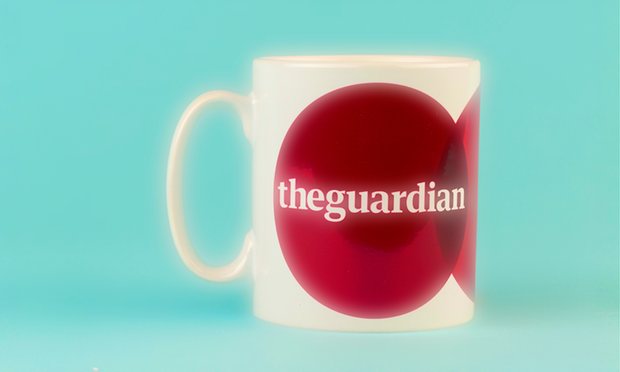
Have a look? The picture featured is of the lovely mug that a writer might win!


Anna

‘Yes, Mfanwy: in the midst of life we are in death and here with the Dead Dears it is fair to say that we are in love.’

From The Life of Almost as I draft it…

  And there was another book that had only been seen by its owner.

Evans the Bodies wrote poems. Often for the Dead Dears who had no-one and whose lives must, he thought, be recorded for posterity. So the timid lady from the post office, who had customers and bread but no friends and a mother who would have tossed her out with the peelings for the pigs, became a cowslip in a warm meadow and drank deep of the sun and was happy; so a coarse and crooked man, who lived in the last house before St Brides Bay and whose children hated him but sang like larks for his money, was limned as a quiet man, skimming stones on the beach and smiling into the auroras of a coastal morning when no-one knew. But Evans the Bodies was a watcher for the sad and lonely. He was a dresser of bodies, to be sure, but he also had a talent for the sad soul and the lonely. And alongside his careful stitch and suture and his eye for the sick at heart, he had always loved Mfanwy: when she was someone else’s, as she laboured for and lost her child, when both times he bought her milk-white lilies and she said, ‘Evans, there’s a soft man you are’ and he cried with his back to her, as he did when she lost her husband. He put poems in the book for her, too. Imagined he was taking pictures of her, watching her written into the world all around and, as he watched the frosty lines on the windows in his cold parlour and saw the feathers and curlicues of winter, he scratched her monogram in the frost and rime and, again, he cried, and saw himself at a window as the beautiful ship Mfanwy his Love sailed away and thus he wrote again.

I had seen the rapture and the writing called ‘Mfanwy’, of course, though he did not know. I had learned it by heart and whispered it into the Pembrokeshire night, whose kind tendrils carried it to her and caressed her, then softly laid waste to sadness and silence and made her think clearly about Evans the Bodies, who loved her and always had, just so.

The Life of Almost – and an invitation, if you’re local, like.

An invitation if you are a local-ish writer or reader and would like to come for some reading and discussion of the first few chapters of the book I am working on, my follow up to Killing Hapless Ally (March, 2016, Patrician Press).

The Life of Almost is a re-working of Great Expectations, with its protagonist, Almost, roughly modelled on Pip. It has a predominantly Welsh setting, much of it being in Pembrokeshire. As such, it draws on the stories I have been listening to my whole life and so I have adapted these for the book. Stories of sailors, the strange dangers of the sea and those who love in it and on it; dark events at steam fairs; predicaments at village shows; kelp, barnacles, tough salty men, the cree of the curlew and the dead across the estuary and of how gentry moved in and spoiled all. Stories of beatings known about but hidden in plain sight; curses and vendettas; strange harpists, madness, mutism; poltergeists who threw pictures from walls and plants from windowsills and vases from above the fireplace. People who went away and never came back: stories, stories, stories. Shootings, hangings, disappearances. My idea of a picnic could still revolve around sitting by graves describing the dreadful manner in which relatives died, except I desist because I’m the mother of three young boys and I think my upbringing was definitely weird and I’m sure the kids think I’m quite peculiar, already.

So, you know roughly the story arc if you know Great Expectations, I’ve told you a little of the settings, but there’s more to it. Because, as Almost takes you through stories of his world – as he tells them to Catherine, who opens the first chapter, so tired of life – you come to realise that he is not entirely of this world and not entirely of this time: he is something more protean and unconfined; a storyteller who can shift substance in an extraordinary way and who is not compromised by, shall we say, temporal and ordinal rules…I hope, when it finds its home, that you will find the book darkly funny, maybe a bit shocking in places and that you’ll enjoy what I have done with my favourite book, Great Expectations, such as reworked Jaggers into a nasty (Ben Jonson’s) ‘Volpone’, basking in his gold somewhere off a great motorway and given you many elements of the supernatural. I did something a bit radical the other day and incorporated, euphemistically, some of the Brexit scoundrels – they are part of why Catherine, who begins the book, is so jaded and sad and thus why she has Almost come to visit. And, you know, one might question: is Almost really there at all? Or is he created by others when….they need him. Oooohhhh.

Because I stand by this and know it to be true: a story can save your life.

Like a copy of Killing Hapless Ally? Order from Waterstones, your local bookshop (Ex Libris and Mr B’s have copies in our area), the Patrician Press website or Amazon here: https://www.amazon.co.uk/Killing-Hapless-Ally-Anna-Vaught-ebook/dp/B01CA5F21Y/ref=tmm_kin_swatch_0?_encoding=UTF8&qid=1468239225&sr=1-1


A fine new anthology to come


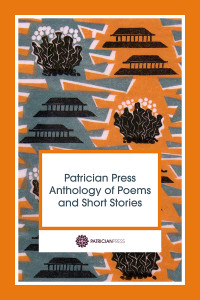
Patrician Press Anthology of Poems and Short Stories

Patrician Press Anthology of Poems and Short Stories, by Anna Johnson, EditorPublished February 1st, 2017

Prices
£3.99 (e-book)
£8.00 (print)

ISBN
9780993494543 (e-book)
9780993494567 (print)

By Anna Johnson, Editor

This anthology of poems and short stories is the result of short-listed works from a competition Patrician Press ran in 2016 on the themes of Refugees and Peace-Seekers. The entries were judged by Joceline Bury, Anna Johnson, Emma Kittle-Pey and Petra McQueen.

The selected works are now included in the anthology. Further contributions from Patrician Press and other authors are as follows: Emma Kittle-Pey, Petra McQueen, Suzy Norman, Robert Ronsson, Sara Elena Rossetti, Anna Vaught, Kenneth Steven and more. Some of the latter works are much more loosely connected to the original themes.

The collection is edited by Anna Johnson who has also written the introduction.

From The Life of Almost


‘So, my sea girls have always come to me when I needed them and they know about the human world because, as this old book tells you, they explore the land-ways in animal form and they wait and listen. As a doe, Nerys looked through the windows of Clandestine House and watched Miss Davies try to make her nest anew, wresting the photos from the paper and crying as she did it. Sometime, Dilys sat as a wren on the windowsill of the house and heard what Miss Davies said to Seren.

‘Break their hearts, girl. The world is too much with us, all men are cads, there is filth under the rack and the green sea is no place to sail away on. Make yourself a carapace of bitterness, Seren. Make yourself a cruel, lovely, burning star. Break their hearts.’

And Seren would cry, but she would nod assent.

Lost Child to Loved Momma.


Anna Vaught

Lost child to loved momma. Parenting for the sick at heart

‘My childhood was not the terrible of which we read in the papers. It was not an imprisonment or a brutal and terrifying thing, so why I am here?’ This is what I said, apologetically, to a skilled, kind psychologist as she helped to put me back together after I had conspicuously failed to function. I stopped apologising, in the end, at her prompting. What I saidit could have been so much worsewas true. But there was no getting away from it: where I had come from had scuppered me and sent me fearfully scurrying from place to place in search of shelter. So to get better, I had to ‘lie down’, as W. B. Yeats had it in ‘The Circus Animals’ Desertion’, ‘where all the ladders start/In the foul rag and bone shop of the heart’. And when I did, wounds began to healbut only after I had confronted things that were frightening and that happened as a commonplace in childhood: the scoff and thump of my brilliant mother; the soft acquiescence then rage of my father; the curses and scorn of a sibling. And I had to do thishad tobecause I was mother of three young ones. And they needed me to be well.

I came from a middle class and well connected family, with both parents paragons of the community, and I had a substantially older brother who was, by turns, angel and devil. When he was devil, I thought it must be me. Within this socially lauded family, there was risible dysfunction, for if you, as a child, are repeatedly told that you were lucky to have been kept at allthat you are an aberration, dreadful, responsible for terrible things and that this is a view held by your entire family and that everyone out there in the chilly old world can see who or what you arethen I am not sure it is easy to rebound and feel at ease. It HAS to be you you you. It cannot be her or them, can it? You are not blameless, but are you that bad?

So, as a young kid, I did this.

I packed it down tightly.

I invented an alter ego (partly to have someone else to confess to; partly to provide a more palatable version of my horrid child-self to provide in company) and gradually began elaborate conversations with imaginary friends from books (and their writers) and songs (and their singers). I had to tell someone, otherwise the anxiety and sadness were so bad that I knew I was going to explode. It sort of worked, but it wasn’t a strategy for a lifetime, or as a mother. And, always, up came the voices from behind the chintz:

Look at you. You should never have been born!’

When I became a mum, the sorrow did not abate and when I look back at all those years of parenting, I well up: I was looking at my babies through a glass darkly and thought I was blight not blessing to these kids. I didn’t feel at ease or safe. It was that horrid internal narrative, you see.

You you you.

If I told you that, at my lowest points, I could barely hear my babies cry without feeling waves of anxiety; if I said I was frightened that I would somehowjust because I was meharm them by dint of being their mother, would that make sense? Self-loathing like this is corrosive and hard to tolerate. I had internalised the notion that I was the bringer of terrible events and no matter how hard I set logic to work, I couldn’t get over it.

But there came a different day.

I remember sitting, paralysed, in the front room. My youngest, then six months old, was there with me; the other two were at primary school. I was frightened, that horrid morning, of everything and thought that I had broken irretrievably. But this is also where life shifted; the paradox of the thing. Now, for the first time, I began to let people in. Friends rallied and advocated for me and I want you to know, if you are looking for help or at sea as I was, that eventually I got the help I needed: partly because of CATcognitive analytic therapydelivered by a hugely skilled psychologist and long-term support, and partly because I let others in. It was life-changing to see what friends did, entrusted with my care and thus that of my three boys, and then to be with this clever, kind lady and God Bless the NHS. We unpicked patterns of thought and found new pathways; gradually, I got rid of the nagging voices (and, in fact, those other voices of which I told you!) in my head and became more dependent on my own voice and judgement. I began to look at my world more clearly and understand that there were some people (especially dead ones!) I could say goodbye to and that I could disentangle myself from past situations by freeing myself from blame for terrible occurrences that had happened to others.

Appropriate therapeutic support meant I could heal and re-build. It meant I could be with my children with less anxiety and shame. And I remember that near the end of my support, I came out of MHRS (Mental Health Rescue Services, but I prefer ‘squad’it’s cooler) and cried a massive cry, up from my toes, like a quake. I was seeing the world from a happy child’s eye: colours were brighter; life was simpler. An epiphany. A breakthrough.

These days, post CAT, are different. It’s imperfect, but I have, in my head, the resources I need. And I know that ultimately, it boils down to this. My kids have seen me sick and well; they know a bit about my own past, but not too much. And when I was really poorly and friends swept in, I knew, despite my distress, and as I wrote above, that this was a turning point. Both in the way my friends were family and in how my kids coped in the midst of crisis and kindness. I wrote about it in my semi-autobiographical book, Killing Hapless Ally. And it went like this:

‘There was no choice but to let the exigencies of motherhood force her to cope. But today, everything was back to front and in the incorrect place; there were two packed lunches in one bag and she was crying and her knees were buckling as she came apart. It is a testament to these children that they went off and out, knowing that they were loved. And knowing you are loved is all, perhaps. Not feeling guilty; dirty; too responsible too soon or with a head full of macabre images and angels howling.

Bye Mum.”

The boys’ eyes were like saucers.’

Knowing you are loved is all. That, I think, cuts to the heart of it. For you and for your children.

Anna Vaught’s debut novel, Killing Hapless Ally, was published by Patrician Press this March. She is currently working on two further novels and a collection of poems. Anna is also a freelance author and blogger, secondary English teacher and tutor, mental health campaigner and advocate and a mother of three boys. www.annavaughtwrites.com or follow her on twitter where she’s @bookwormvaught

My 2016 in books so far…

Updated. I think that’s probably it for 2016 with the books I’ve just ordered or bought…

A sixth form student asked me which books I’d read so far this year and could I list them  for her – so here you go. Hope I’ve not forgotten anything. The list comprises fiction and non fiction I have read since new year and doesn’t include things that I have needed to read or re-read for English teaching, such as novels, poems, short stories, non-fiction texts, web texts, articles, essays and reviews – or blog posts, poems, magazines, journals and papers that I have read outside of this. And the list doesn’t include my own novel, published on 3rd March this year or the series of features I have written this year – or the poems or the bits of research I’ve been doing for the next book or the books I’ve read to or shared with the kids! Actually, all that adds up to a lot, now I think about it! But here’s the list you asked for, Sasha. And it’s fun to see what people read: you’ll see there are a couple of Horrible Histories in there. I love Horrible Histories. x

No reviews here: haven’t quite had time, what with writing the second book, the day job, the litter of boys, the MH stuff, the PTA…anyway, I think this is it, so far…

The Loney: Andrew Michael Hurley

Galaxy: Explore the Universe, Planets and Stars (Collins). I pinched this from one of the kids and plan to read a great deal more on the subject now that I’m clear what a neutron star is…

1.2 Billion: Mahesh Rao (short stories)

It’s All in Your Head: Suzanne O’ Sullivan.  I thought this was fascinating and compassionate and I also trawled through many reviews, which were fascinating in themselves: she has had many detractors for her observations on ME, in particular.

Reasons to Stay Alive: Matt Haig. It was nice to meet him at an event in Toppings Bookshop, too. I thought he spoke with humour and compassion; I was also aware that some members of his audience were acutely anxious about situations in their own lives or in those of their loved ones. Conversations were had; questions were asked. I have struggled with mental health problems since I was a child. I wondered if, in writing the book, he had subsequently felt burdened by others’ concerns and by their sadness.

The Seven Storey Mountain: Thomas Merton

The Death of the Heart: Elizabeth Bowen

Playthings: Alex Pheby

A Girl is a Half-Formed Thing: Eimear McBride

Horrible HistoriesHenry VIII and his Wicked Wives and Cut-throat Celts

The Outsider: Colin Wilson

Orlando: Virginia Woolf

Duff: Suzy Norman

A Country Road. A Tree: Jo Barker

In Her Wake: Amanda Jennings

Armadillos: P.K. Lynch.

Local Girl Missing: Claire Douglas.

Middlemarch: George Eliot. (This was a re-read. I hadn’t looked at it  properly for years and, of course, I was glad I did.)

The Last Act of Love: Cathy Rentzenbrink

Cloud Nine: Alex Campbell

Depression: The Way Out Of Your Prison: Dorothy Rowe (read for the third time!)

We Are All Completely Beside Ourselves: Karen Joy Fowler

Our Mutual Friend: Charles Dickens (second reading) and Great Expectations (a third)

The Story of Blanche and Marie: Per Olov Enquist

This Book is Gay and Mind Your Head: Juno Dawson. I do think these are excellent books on sexuality and identity and on mental health for young people. Juno is a YA novelist too and used to be a PSHE teacher.

The Bell Jar: Sylvia Plath (second reading)

Crap Towns. The 50 Worst Places to Live In The UK (ed. Sam Jordison and Dan Kieran).

The Beckoning Silence: Joe Simpson

Very British Problems. Rob Temple.

How Novels Work: John Mullan

Lost at Sea. The Jon Ronson Mysteries: Jon Ronson

Talking About It Only Makes It Worse: David Mitchell

The Buried Giant: Kazuo Ishiguro

Dear Stranger: Various (Penguin/Mind – and this was a re-read).

I tend to dip into recipes and food writing a lot and my two favourite cookbooks so far this year are Mamushka: Recipes From Ukraine and Beyond: Olia Hercules; My Kitchen Year: Ruth Reichl.

Sometimes a River Song: Avril Joy (read twice). This is a haunting book. It is quiet, but in capturing the voice – of the river; of the White River Arkansas  communities in the 1930s – Avril has done something ambitious.

Great Expectations (read multiple times before; it is still, probably, my favourite book).

Bleak House: Charles Dickens. This is my husband’s favourite Dickens and so it’s a sort of shared project, this.

More Dickens: I had never read The Mystery of Edwin Drood or Master Humphrey’s Clock. Have now. Genius.

Solar Bones: Mike McCormack. Boy does this deserve the plaudits it has been getting.

As I Lay Dying: William Faulkner. Again, a re-read. I love Faulkner and he is my husband’s favourite author. So, again, things to talk about here.

Feeding Time: Adam BilesNow, I am reading my way through the Galley Beggar catalogue, as I am for a number of smaller presses, and this was a signed copy sent to me as a friend of Galley Beggar

Also, because of this,  I have the proof of Paul Stanbridge: Forbidden Line. Yes, it is brilliant. Currently reading this.

Just pre-ordered Good Me Bad Me by Ali Land (which is out in February) and Kate Armstrong’s The Storyteller is at the ready. Because it was in The Guardian’s Book Club, I have just bought Chuck Palahniuk’s Fight Club and also – I do love it when this happens – a student I am currently supporting told me it was one of his favourite films and so we agreed that we would both read it and compare notes. That’s a new buy, as is Jessie Greengrass’s  short story collection, An Account Of The Decline Of The Great Auk, According To One Who Saw It, which would get my prize for favourite title of the year and I do love a short story

I also…read through the draft of Patrician Press Anthology of Peacekeepers and Refugees (out January, 2017) and my poem ‘Emigre’ is in this; ditto The Emma Press Anthology of The Sea, where you would find my funny little poem, ‘Cast Out My Broken Comrades’ – set in Pembrokeshire and inspired partly by Homer’s Odyssey (from which its title comes). This is one beautiful anthology from an innovative and hard working press.

Michael Ondaatje’s In The Skin Of A Lion for a book group.

And, ALWAYS, I am dipping into all my poetry books and short stories (John Donne and Isaac Azimov got a lot of time this year and I read a few of last year’s listed short stories in the Galley Beggar story competition). I spent an evening reading Donne’s Collected Sermons too, as one does.

And back to what I was saying about texts I haven’t included, now that would be a quick re-read of ‘An Inspector Calls’, ‘Macbeth’ – you know – GCSE texts, plus things for IGCSE, A level English Literature and the anthologies for A Level Language and Literature. And, for example, a romp through The Great Gatsby, in which I always find new things.

And

I have been learning Welsh (which feels right with my heritage) and beginning, in such faltering terms, to attempt poems in it. Thus I turned to Gwynn Williams’s Welsh Poems, which has long been on my shelf and  I have also been reading The Mabinogion.

Oh – and a side project: reading Thomas Wolfe at bedtime with my Georgia-born husband. We began with Look Homeward Angel – note the gorgeous paradox of this review on Goodreads – This book is a masterpiece that I wouldn’t recommended to my worst enemy. It is dense, repetitive, overly descriptive to the nth degree, filled with page after page of infuriating, hard-to-like characters, and more or less moves like molasses. It also is possibly the most beautifully written, poetic and longing book I’ve read. And I have been reading The Web and The Rock. Or rather he has been reading it to me. That’s how we met, you know. He asked me for directions, did Georgia Boy, on a street in Kolkata, then read to me in a hammock on a roof. He says he thinks my writing is like Faulkner or Wolfe, which probably means I should keep the day job. But oh.

Latest review and what I have been reading – particularly from The Wellcome Prize Shortlist

It is early days for Killing Hapless Ally. Which is a strange feeling as I am already working on at least one other book. I am both letting her go and keeping an eye on her, and writing pieces on mental health, anxiety, literature and well-being, young people and mental health and parenting and mental health. You can access any of these through the pages of this blog, linked at top, or read some of them as blog posts here. I notice that even when I write on more frivolous topics – such as in my posts for http://www.selfishmother.com – I am also mindful of the topic of mental health. I have so much more to say here, I think.

Anyway, I liked today’s review of Killing Hapless Ally. It’s nicely written, isn’t it? That ‘So’ had me at hello.Here we are:

So. I suggest you don’t try to approach this as a book to dip into, in the few minutes before sleep for instance. The early chapters are a roller coaster of happenings expressed in dense, layered prose full of wit and horror. They are gripping and challenging at the same time, and the style cleverly reflects the state of the young Alison’s mind as she tries to cope with her family. It almost feels like the literary pizazz and black humour is there to deflect the tale of such cruelty to a child. When we get to the adult Alison’s showdown with her demons, and her work with Drs Hook and Crook, the style becomes calmer as Alison’s voice takes over. This packs even more of a punch when describing the dispatching of the chorus of Hapless Ally, Dead Santa Maria, Brother who Might as Well have been Dead, Vaguely Dead Dad and her other demons. This dispatching is incredibly moving, as is the knowledge that Alison’s voice, spirit and fierce intelligence was not dimmed despite everyone’s best efforts including her own. Highly, highly recommended.’

What am I reading? I am about to write a review of The Loney and A Girl is a Half-formed Thing, about which I have conflicting views, but both of which interested me greatly. I thought, for example, that the language of the former was utterly beautiful; its evocation of landscape is something that will stay with me for a long time. I also felt it pulled off the difficult feat of making one laugh at the very time one is unsettled by the prose and full of dread. The latter, I am torn by. I am a huge fan of both Beckett and Joyce and instinctively felt at home here and yet…More to come. On my bedside table at the moment, Playthings by Alex Pheby, which is, I am convinced, entirely brilliant. Again review to come, when I get time. I do want to say, though, that all three of these fascinating titles found their home (at least initially) with small presses. May I remind you of my article on publishing with a small press myself. Here:

A Small Press State of Mind

And what with Alex Pheby’s book by my bed (and some rather ravishing other things to come from Galley Beggar Press) and most of my way through the whole Wellcome prize list, I want to recommend to you Suzanne O’ Sullivan’s It’s All In Your Head: True Stories of Imaginary Illness. She is a neurologist and has a deep interest in and respect for psychosomatic illness, which I should add is not ‘imagined’ as in ‘faked’, but a gamut of really experienced physical symptoms which, it is argued, may have their root in psychological issues. That does not under-value their reality, the pain these things cause or the havoc they wreak in people’s lives.

I felt that O’Sullivan is elucidating in what seems to me a very sensitive way the subtle link between the mind and the body. I can see from some of the negative (some furiously so) reviews on Amazon that many people have taken her to task, accusing her of misunderstanding illness for which, at the end of the day, it is hard or impossible to attribute physical cause, but I also have some personal understanding of this, in that, as someone who received mental health support and who had many years of struggling with anxiety, depression and OCD, I also had a raft of  (physically) unexplained medical problems alongside them: pain, awful fatigue and IBS to name three. Now I am mentally much stronger, because – and it would have been different otherwise: I cannot emphasise this enough – I have been helped to find the tools for health by appropriate MHRS support and I had to choose to engage with that support. And my physical health is very different. When it wavers, as it must do, both my psychological and physical responses are very different.  I would have to posit, therefore, that these things – the pain, IBS and fatigue – were, for me,  quite possibly psychosomatic and rooted in the psychological distress I was experiencing. I do feel uncomfortable stating this, but thus was my experience: pain came from pain; illness came from sadness – a fruit of what, in other times, might have been called hysteria or melancholia. It is this same inference on which some of those Amazon reviewers have taken her to task because they feel it is a misunderstanding of subtle illness.

I know that it is not easy for people and that shifting illness for which there is no attributable cause (which is not the same as saying there isn’t a cause which needs treatment or that the illness is not real to its sufferer or that it isn’t a serious matter) does not receive the compassion it should in the everyday world, so that those who suffer from something which may, by some definitions, be termed psychosomatic, also have to cope with others’ lack of understanding and sympathy. I am afraid it is also thus with mental health disorders and I certainly felt stigmatised within society and even within my own family; people still do – and that’s partly why I wrote my novel. No-one should feel both ill and persecuted and I wanted to punch stigma roundly on the nose. So, I did find much of what O’Sullivan wrote resonated with me – particularly its thornier or more uncomfortable points – because I also knew that I could, at several stages, have accepted further medical and/or psychiatric intervention which, on paper, was not essential. It is for serious illness – mental illness, I mean (and you see I am pains to point out that I am speaking only of myself because mental health problems are complex, diverse and peculiar to the individual) but I was encouraged to see I had the answers and, of course, I had my Dorothy Rowe books beside me. Her line – also not popular with all – is that depression is a prison where you are both prisoner and jailer; ergo, you put yourself in there and you have the key to getting yourself out. Human beings have the most extraordinary resources and we should never forget that.

I will take some weeks to digest the book and I urge you to read it. I hope that the tone of my comments comes across well.

Anna.


A new piece on anxiety and some suggestions for managing your world….

https://brizzlelass.co.uk/2016/05/12/guest-post-anxiety-where-it-came-from-and-how-i-manage-it/


Here is a guest blog piece I wrote for this rather lovely blog (above).

ANXIETY. WHERE IT CAME FROM, WHAT IT DID AND HOW I MANAGE IT

I just wrote a cheerful book about things that suck. In it, I drew on episodes in my own life, early childhood onwards. It was a carnival of anxiety.

I came from a middle class and well connected family, with both parents paragons of the community and I had a substantially older brother who was, by turns, angel and devil. When he was devil, I thought it must be me. Because the thing was that within this socially lauded family, there was risible dysfunction. Don’t laugh: I am aware that there will always be dysfunction to some extent because we humans are inconsistent and not one thing; we are flawed and wanting. So let’s say this is only a question of degree. If you, as a child, are repeatedly told that you were lucky to have been kept at all – that you are an aberration, dreadful, responsible for terrible things and – more to the point – that this is a view held by your entire family and that everyone out there in the chilly old world can see who or what you are, then I am not sure it is easy to rebound and feel at ease. If, to others, your immediate family is praised and if, say, your mother is referred to as if she were a saint by people she worked with, or people that you would meet, sometimes family, sometimes just passers by coming to receive benediction from the blessed lady, then what do you do? It HAS to be you you you. It cannot be her or them, can it? When your sibling repeatedly tells you weren’t wanted and are a burden, the bringer of illness and the harbinger of death, you think that’s about right. And you cannot tell anyone because, on the occasions you tried, you were told, ‘Who would believe YOU? Everyone knows what you are like!’ That is the sort of dysfunction I am thinking of. If they think you’re that appalling, then you must be.

So, as a young kid, I did this.

I packed it down tightly.

I invented an alter ego (partly to have someone else to confess to and partly to provide a more palatable version of my horrid child-self to provide in company) and gradually began elaborate conversations with imaginary friends from books (and their writers) and songs (and their singers), because I had to tell someone otherwise the anxiety and sadness were so bad that I knew I was going to explode.

I kept up the imaginary friends for years; my first was Frida (the brunette one) from Abba. She was cool and complimented me a lot and always told me how pretty I was and that I was really a good kid and that even if I ended up in prison, she would visit me. And I was a reader; a devourer of books. I still am. So I used lines from them as a talisman (which went awry at several points when such lines became incorporated into elaborate and frightening OCD ritual) or as a place to find people to have conversations with, which is how, as I got older, I came to speak to Keats and Yeats and Dickens and Dante and Charlotte Bronte and Albert Camus. Despite these early strategies, however, I needed, in the end, to know others – other ways to cope – because life as an adult was awash with shame for me and could not be corralled just by speaking to Mary Lennox from The Secret Garden. My mother had been ill most of my life and died when I was twenty. I thought that I had contributed to her illness and was told that I had ushered in her early death; one of her closest friends told me I had begun the ushering with my very birth. My father (who went not long before her) had been fit and strong all his life and was diagnosed with serious illness, all too late. He refused most treatment, as far as I could ascertain, and in his final year he entered a startling decrepitude, shuffling around the house and refusing to speak to me. His last words were ‘You have let me down’ and when I went to see him, toes up and surrounded by the lilies he had loathed in life, my thoughts were confused, jarring, terrifying: I thought I had killed him. I had nightmares about it for years, lilies and all. Also, a childhood friend that I had used to play with when we were in reception class died around the same time as my father and my mind was in such a maelstrom by this point that I thought I might be implicated – things I had done aged five, when rough and tumbling. It didn’t matter how little logical sense this made, to me I was scared that this bad little girl had hurt a good little girl and fourteen years later had caused her death. I think I lived on my nerves constantly by this point. I was leaving university; both parents had now died; I felt ill, scared and confused, but thought that I had deserved it all and out I went into the adult world and made a fist of it. In the adult world, I had to keep up the cheery voices because inside my head were the cackling voices of my late parents and their assumed entourage.

‘Look at you. You should never have been born!’

What gave? I established a teaching career, did some pretty adventurous travelling and some satisfying volunteer work, but it would all come crashing down periodically and the self-harming of childhood took up: what gave? I did. Twice in my teens I had tried to take my own life; periodically in my twenties and early thirties things would come crashing down and I was given various courses of anti-depressant as my anxiety was linked to low mood and some more serious periods of depression. I had disabling and regular panic attacks, frequent insomnia and horrible nightmares, where I would wake up shaking and crying. The same recurrent dreams and their pointing, screeching, accusatory phantoms. I was offered CBT and, for me, it didn’t touch the sides; then, when I was ill after my first baby I was sent for psychotherapy, which achieved very little and when I had my third child, my whole world came crashing down and I was temporarily unable to function at all.

I remember sitting, paralysed, in the front room. I was frightened of everything and thought that I had broken irretrievably. Even looking at my shoes or bag made me anxious. But this is where things shifted. Now, for the first time, I began to let people in. I told more people of how I was feeling. Friends rallied and advocated for me and, dear reader, after thirty odd years I got the help I needed partly because of them. CAT – cognitive analytic therapy – delivered by a hugely skilled psychologist and long-term support. It was life-changing to be with this clever, kind lady. We unpicked patterns of thought and found new pathways; I did homework and wrote letters; she wrote to me and I wrote back. Very gradually, I got rid of the nagging voices in my head and became more sure and more dependent on my own voice and my own judgement, because it was as if I were a sort of composite person, arranged of other people’s motley opinions and condemnations. I gradually looked at the whole picture; at how I couldn’t have caused the things that I thought I had: it was as if someone had finally given me permission to let go. I began to look at my world more clearly and understand that there were some people (especially dead ones!) I could say goodbye to and that I could disentangle myself from past situations by freeing myself from blame for terrible things that had happened to others. I think that I had been incapacitated by shame and fear for so long and these things were at the heart of the anxiety I felt: I was perpetually at the point of annihilation, if that makes sense. I had always wanted to explore faith properly. I would try to pray. But I thought I was beyond redemption. Appropriate support meant I could begin to do this. I do believe that in therapy we could do well to explore our attitudes to faith (or not) and to end of life and what comes next. We all think about it. But that is a story for another day (although the Dorothy Rowe book I mention below tackles this).

I wasn’t totally fixed at the end of this year of CAT but now, these days, I am very different. To celebrate this and, I suppose, acknowledge the bedding down of new ideas, I based my novel, Killing Hapless Ally, on my experiences. It got picked up by a publisher and, while, it’s billed as literary fiction, I hope that there is much in it to guide and give hope to those suffering from severe anxiety, or other mental health problems. If you read the book, I should love to know what you think. But in the meantime, for what it’s worth, here are my coping strategies. I’d say for anxiety, but we need to remember that anxiety, in mental health terms or in terms of mental illness, may be a complex thing and bound up with a myriad mental health disorders – so it is not a case of one size fits all here. So much rubbish is peddled about mental health; there is so much sloppy vocabulary around it. Please accept what follows only as a list of what helped me and of what I have to remind myself pretty frequently. So…

1. Accept that just because you feel something does not mean it is real. Sounds simple, but having that expressed to me, in therapy (or by my favourite psychologist writer, Dorothy Rowe, in Depression. The Way out of your prison) was revelatory and revolutionary. Unpick a situation. Tweak it. Look at in a different way. When I tell you that at one point I fell from my chair with relief and that at another I thought I could see colours as brighter and truer…well, I know that sounds excessive or hallucinatory, but to me it was as if I had entered a new world. One in which I could be at ease and which I didn’t experience only through a glass darkly.

2. Be kind to yourself. No-one has ever treated me as unkindly as I have treated myself and I would never judge anyone as harshly as I do myself. Nope. That doesn’t work, so practise getting rid of it.

3. Be aware of your triggers, but laugh at them, reason with them and don’t run away. Face them down because, in my experience, anxiety amplifies if you don’t look it in the face. Know that you CAN do this.

4. Bad day? Overwhelmed by conflict and to do lists and things you’ve screwed up? I think ‘tomorrow is another day’ sounds trite and twee, so I say ‘Keep it in the day’ otherwise you shift today’s concerns and start tomorrow burdened.

5. Think, the past is a different country and that tomorrow is up ahead, where you cannot be or live. Focus, therefore, on the present, the hour, the minute, In other words, mindfulness.

6. Frankly, don’t give up on finding the appropriate MHRA help for you. If your GP is not understanding, ask to see a different GP. If questioning your treatment feels too daunting to you, ask someone to come with you, if you can.

7. Decent food; fresh air; self care. Reading to refresh and renew and help you see and entertain new ways of doing things; of building or re-building your mind. I do not say this lightly. I would not have survived without my books. And relax. If the pace of modern life and tirade of information and stimulation through social media make you feel overloaded, then give yourself permission to take a break. Pressing the ‘off ‘ button does not make you a total Luddite or a social outcast. (But see below*)

8. Friendship or familial relationships. Keep at it. BUT I have had to learn to be ruthless, though. If someone puts you down constantly or if they are workaday cruel to you, ditch them. I hope that doesn’t sound too harsh. And maybe remember something I have learned: family is a flexible construct – both internally in terms of roles and externally in that friendships may provide you with a warmth or love you never had in your family. Also *know that there is a great deal of support out there on social media; I find twitter a source of such – for example, through @mhchat every Wednesday night

9. Focus on others. Look at what they need. I have found that if I am taken out of myself because I am absorbed by the needs of others, then I can help them and, as a side effect, it is healthful for me, too.

10. Accept yourself. Compare and despair. No-one else can be you; don’t try to be someone else. Also, accept difficulty as normal. Failure is part of life. In a way, when we continually ramp up expectations, we raise the stakes and find ourselves feeling anxious and got at. I am not saying that I don’t look forward to things. Just that, for me, I find I am regularly delighted because I have let go of such weighty expectations.

I cannot promise you this is easy and I am realistic that MH treatment varies around the country; to say ‘help is out there’ is trite and all too glib. But, as I have learned, all the answers, for me, really lay, after all, within myself. These days I experience anxiety, but it is not the terrifying, all-encompassing thing it was for a long time. I teach; I write; I do volunteer work; I am raising three young sons and I have had over thirty years of depressive episodes, self harming, OCD, Generalised anxiety disorder and two suicide attempts.

But things are different now. I am well and I am happy and so I am sending you love and encouragement as I type this and I am crying a little bit now because I have just realised that I have never written the words ‘I am happy’ before.

Anna xxx

http://www.annavaughtwrites.com Follow on twitter /bookwormvaught

Killing Hapless Ally is published by Patrician Press (2016) and available to order from bookshops, on Amazon and Waterstones online and from http://www.patricianpress.com Latest review here: https://thecontemporarysmallpress.com/2016/05/04/darkly-funny-and-courageous-killing-hapless-ally/

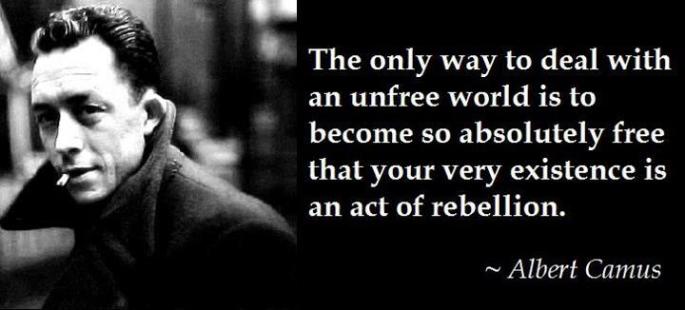
For help with anxiety or other problems: Mind, Saneline and The Samaritans have all helped me. For young people Healthy Minds is a great resource and @respectyourself is of great encouragement on twitter. Also there, @MHChat is for everyone, every Wednesday night; it is used by a diverse group of people. My favourite book about mental health: Depression. The Way Out Of Your Prison by Dorothy Rowe (Routledge, 2003). And, by the way, that’s Albert Camus in the picture. He was there, in my head, all the way through. x