Friendship. Article for ‘At Home’ magazine.

This is by the journalist, author and broadcaster, Wersha Bharadwa. She has been a wonderful source of encouragement to me and this section of her article on friendship – authors reflecting thereon – is reproduced here with her kind permission. Wersha: thank you. xxxx

At Home January

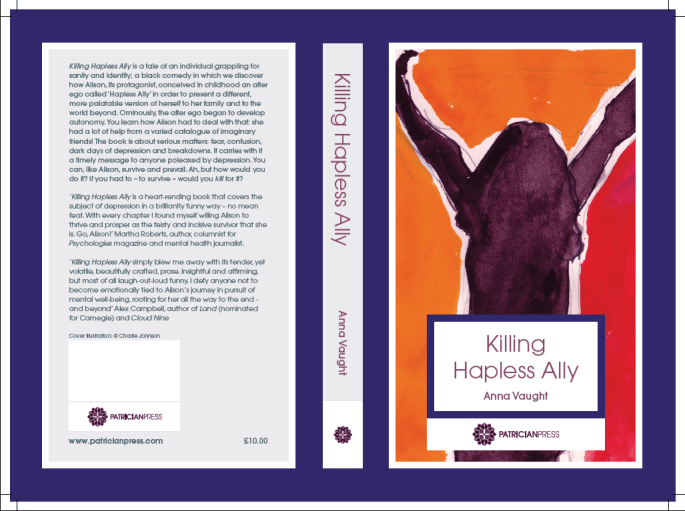
Here’s the cover of Killing Hapless Ally

cover of killing helpless ally

So here’s the cover, with some nice words, at back, from Martha Roberts (author and journalist) and Alex Campbell (YA author of Land and Cloud 9). At the moment, media interest is building momentum prior to the launch. Fingers crossed for pitches up and coming…

While it’s a work of fiction, the experiences Killing Hapless Ally describes are very much based upon my own – the extraordinary measures a child went to to stay afloat, and how she maintained them in her adulthood: varied gallery of imaginary friends, alter ego (who turned nasty) and all. So while I hope the book entertains and makes you laugh, I’d be lying if I said I didn’t hope readers might reflect on what mental health is, what we think mental illness is (clue: there are many different types of it), how problems can develop very early in a child who learns to compensate quite flamboyantly, but who feels under a great deal of stress, and possibly how – even within someone who is otherwise healthy – there may be a great lability of mood; a rather too quick shift  from normalcy to near despair and back again. I loathe, however, any text that insists you dissociate yourself from negative thought, because feelings of melancholy, sadness and even despair may be benchmarks of an emotionally healthy person able to run the gamut of all human feeling.To run away from those things is to live fearfully. I already know that some people may be horrified at my literary evocation of self harming, suicide, therapy, funerals and maleficent dead relatives, but these things I stared in the face – and my protagonist stared in the face – and found that feet were still on the ground and eyes were to the stars.

It’s interesting. As I was bemoaning on twitter earlier, a couple of folk have said, for all the best reasons, that they’ll be glad to buy the book – it’s important to support ‘people like you’. By which they mean, I think, that as kind and civilised members of our society we have to support those members referred to – in a tongue in cheek way in my book – as ‘those who can’t’. But there is another narrative tumbling along in the book, you see: it comes first from the mouth of Helen, Alison’s (the protagonist’s) godmother who is dying in a house on Cyclamen Terrace on Tyneside, to the tune of Countdown jacked up to full volume downstairs and stifling plug-in air fresheners. (Actually, this was a formative experience for me, I must admit – for Helen is based on my own godmother and the situation not dissimilar). But as I was saying, Helen looks at little Alison with fire in her eye and she says, ‘You will be the girl who did.’ She understood and she was right. People go through tremendous difficulty, but that does not mean they don’t have an intellectual life, raise a family, run a business, maintain friendships or hold down a job. I want to say that – albeit by the skin of my teeth sometimes – I have managed to do these things, never more so than when I finally accessed the care and support that, for me, was life changing and enabled me to effect permanent change. Having difficulty or illness does not make a person lesser or someone for whom we should give the sort of sympathy that also manages to demean them and suggest that they are not autonomous.

Hey look: I’ve had about thirty five years of mental health problems, but I’ve written three books, taught many hundreds of secondary age pupils, am raising three boys, feed three cats, rescued many chickens, been to two universities, travelled the world, married a bloke who stopped me on the street and asked for directions. Yeah, I know. People with MH problems do those things too. I’ve been off and on meds, received hospital support and spent a lot of time with my GP and MHRS: sometimes I broke. Then I couldn’t do any of the things I describe. I stared into a hole in the middle distance and everything was through a glass darkly and hope was a broken, jagged thing.

So how about this: say that the person who, after many years of anxiety, depression, breakdowns, self harming and OCD, kept rebounding and, eventually and moreorless, got better, well that would be some marathon, wouldn’t it? Say that the person didn’t, but kept battling. Is that not impressive? It isn’t the work of a weakling – as some may see it. It isn’t the work of a sub-species; a sort of collusion of ‘people like yous’. It’s the determination of an individual to survive and thrive. And my battle has been but a skirmish compared with what others have to combat.

But back to the book. Read it for a laugh, for company, to be startled; root for Alison; be horrified at The Hill and what happens to Muffled Mfanwy; wince at siblings like Jaggers in his vile horsehair-stuffed chair and never look at a pickled egg again! And if the book does just one tiny thing to diminish stigma around mental health problems, I’ll be so happy.  And maybe no-one will come up to me and say they are glad to support ‘people like you’ – because I am you, and you are me and I am glad we met.


A New Writing Competition

Patrician Press

The Patrician Press Short Story and Poetry Prize

We are pleased to announce that the first ever Patrician Press Prize is now open for submissions


Age 18 upwards
Closes 31 March 2016
Results 30 June 2016
Maximum length  Short stories and poems can be any length up to 2,500 words.

Judges Anna Johnson, editor; Emma Kittle-Pey, writer; Petra McQueen, writer and lecturer in Creative Writing at University of Essex; Joceline Bury, journalist.

Prizes

First – One week stay at writer’s retreat in Italy* and publication of story or poem in Patrician Press Anthology

Second – Full set of Patrician Press titles and publication of story or poem in Patrician Press Anthology

Third – Patrician Press title of your choice and publication of story or poem in Patrician Press Anthology

The winning entries will be chosen from a shortlist of six stories and poems. All six entries will be published in the anthology.

The competition is free

How to Enter On-line

http://www.patricianpress.com/submissions/

Please follow the instructions. Under ‘genre’ insert ‘SHORT STORY/POEM PRIZE’.

MAKE SURE YOUR NAME AND CONTACT DETAILS ARE NOT ON THE STORY or POEM. (Judging is done anonymously.) Your story or poem and name are linked automatically when you enter.

Stories will not be returned.

Rules for Short Story and Poetry Prize

  • Entry is online only via Patrician Press Submissions page.
  • Only one entry per person.
  • The competition is open to writers of any nationality writing in English.
  • The theme is based on ‘Refugees and Peace-Seekers’.

“No one leaves home unless home is the mouth of a shark.” Warsan Shire, Teaching My Mother How to Give Birth

“When the power of love overcomes the love of power the world will know peace.” Jimi Hendrix

(Stories and poems can be light-hearted in approach, reflecting the subjects of refugees or peace, or both.)

  • The winning stories or poems must not have been published previously.
  • Patrician Press will hold electronic and paperback publishing rights for a period of three months after which the electronic and paperback publishing rights revert to the author.
  • Notification of receipt of entry will be by email.
  • The judges’ verdict is final. No correspondence will be entered into.
  • Stories or poems cannot be altered or substituted once they have been entered.
  • Judging is anonymous. Name and contact details must not appear on the stories or poems, but inserted into the boxes on submissions form.
  • Entry is taken as acceptance of these rules.


* Airfare to writer’s retreat is not included. Pick-up from airport and travel inside Italy is included.

——————————————————————————

Patricia Borlenghi who runs Patrician Press is severely hearing impaired and tries to encourage writers with disabilities as much as possible.

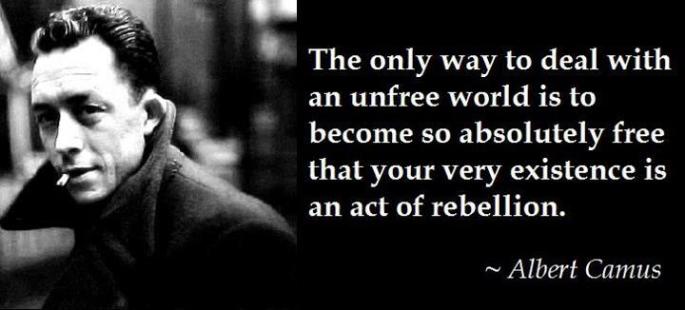
Alas, no – I cannot offer you Albert, but look within the book and you will find him: a vital presence – and with a motley crew alongside him.

Killing Hapless Ally will be with you on March the third! This novel will be published with Patrician Press and you can order it through any bookshop or buy online at Amazon, GB Books, Waterstones and so on. I will be talking about the book and doing signed copies at its launch at Mr B’s Bookshop on March the third. Meanwhile, I have been in ‘At Home’ magazine talking about friendship and its ebbs and flows(viz a viz Killing Hapless Ally),  I am looking forward to my first poetry publication with The Emma Press next year, I am completing a pamphlet and working on The Next One.

As you see below, the award-winning mental health journalist, Martha Roberts, has written in praise of Killing Hapless Ally and  I hope that when the book comes out, readers will enjoy its rattling tale as well as find comfort in its pages. It is a work of fiction, but, as I write in the foreword, very much based on experiences in my own life. There is still so much stigma surrounding mental health and mental illness – neither of the terms is ideal – but I have tried to tackle it head on in the book as I saw it and as I experienced it.

So here’s the back cover of the book.

Killing Hapless Ally is a tale of an individual grappling for sanity and identity; a black comedy in which we discover how Alison, its curious protagonist, conceived in childhood an alter ego called ‘Hapless Ally’ in order to present a different, more palatable version of herself to her family and to the world beyond. Ominously, the alter ego began to develop autonomy. You learn how Alison had to deal with that: she had a lot of help from a varied catalogue of imaginary friends! The book is about serious matters: fear, confusion, dark days of depression and breakdowns. It carries with it a timely message to anyone poleaxed by depression and associated problems – or any reader interested in the windings of such things. You can, like Alison, survive and prevail. Ah, but how would you do it? If you had to – to survive – would you kill for it? Now that is an interesting question.

‘Anna’s story of Killing Hapless Ally is a heart-rending book that covers the subject of depression in a brilliantly funny way – no mean feat. With every chapter I found myself willing Alison to thrive and prosper as the feisty and incisive survivor that she is. Go, Alison!’
Martha Roberts, author, columnist for Psychologies magazine and award-winning mental health journalist.


Cover illustration: © Charlie JohnsonkillinghaplessallycoverISBN 978-0-9932388-4-0]

WRITING…READING…BIBLIOGRAPHY

WRITING

So, my manuscript has gone back and I have a little time (ha!) to work on the chapter book I’m submitting for both Bath Children’s Novel award and Chicken House/The Times competition. I have also discussed writing a YA novel with someone rather wonderful I met through discussions of all sorts (including writing books) on twitter. I also, chancing my arm, submitted feature pitches to ‘Mslexia’ and ‘The Atlantic’ – both were about mental health and writing.

READING

I read – as I tweeted to him – the whole of James Dawson’s This Book is Gay in one chomp. As an exploration of sexuality FULL STOP this is an excellent book. It’s comprehensive, funny and wise; I hope it will get used in PSHE in schools – and I say this with my day job hat on: as an English teacher and one who used, like James, to teach PSHE. PSHE is the starting point, I think, for teachers: do it well and students may come and find you at other times to talk things over. For the digital natives, there is a great deal of LGTB* support online – but this book is an essential for bookshelves: for young people, for their teachers and for their parents. I have already looked at the book with one of my boys: with my almost twelve year old because he saw the cover and was, of course, intrigued (my fourteen year old saw it and ran away. Make that two copies for this household  – I’ll leave it by his bedroom door).

Other reading…I’ve almost finished John Carey’s The Violent Effigy, his fine exploration of themes, images and symbols in the work of Charles Dickens, just started Ian McEwan’s The Children Act, which I think I will stay up late reading tonight as I am already, as you could predict, hooked by its first characters; I want to know what the dilemmas are; I want to know about the first protagonist and her husband and what the consequence will be of his so unapolagetically announcing an affair with Melanie who wears heavy amber beads…I want to know about the legal papers in a fan on the floor and about the title of the book and whether I am to read ‘act’ as both noun and verb.

And it has been the morning of the em dash, of writing to Catherine Camus, daughter of Albert, for literary permissions and of doing the draft bibliography of my debut novel, Killing Hapless Ally. Why the bibliography? The book is about, shall we say, unusual methods of staying sane; of being less alone; of not being terrified in a home of desolate proportions. Bound up with that is reading and the novel does refer to and quote a good number of books. Some are in the acknowledgements section, which houses Kavanagh, Camus, Larkin, Plath, Auden and Dorothy Rowe. Here are the (draft) others!

BIBLIOGRAPHY

I have referred to, used very brief paraphrase, or quoted where the text is out of copyright from the following and I hope my book has piqued your interest in some of those which follow. I have listed the editions I own, but where these are out of print, I have given an obtainable alternative. Albert Camus: The Outsider, (Penguin, 2000, translated by Joseph Laredo), The Myth of Sisyphus‘ (Penguin, 1975, 2000, translated by Justin O’ Brien); Louis MacNeice: ‘Thalassa’, ‘The Sunlight on the Garden’ and ‘Autumn Journal’ from Collected Poems Louis MacNeice (Faber and Faber, 1966, 1987), Simone de Beauvoir: Force of Circumstance (Penguin, 1987, translated by Richard Howard); Jean Paul Sartre: Nausea (Penguin,1966, 1986, translated by Robert Baldick) and Annie Cohen-Solal: Sartre. A Life (Heinemann, 1987); Sylvia Plath: ‘Superman and Paula Brown’s New Snowsuit’ from Johnny Panic and the Bible of Dreams (Faber and Faber, 2001) and the poems ‘Lady Lazarus’,‘Cut,’ ‘Daddy’ from Sylvia Plath Collected Poems (Faber and Faber, 2002); Dylan Thomas: A Child’s Christmas in Wales (New Directions, 2009); T. S. Eliot:‘The Love Song of J. Alfred Prufrock’ from T. S. Eliot Collected Poems 1909-1962 (Faber and Faber, 2009), Michael Ondaatje: The English Patient (Bloomsbury, 1992, 2009); Samuel Beckett’s ‘Happy Days’ and ‘Waiting for Godot’ from The Complete Dramatic Works of Samuel Beckett (Faber and Faber, 2006); and his Collected Poems (Grove/Atlantic, 2015); W. B Yeats: ‘The Circus Animals’ Desertion’ from The Collected Poems of W. B Yeats (Wordworth Poetry Library 2000); Andre Gide: Fruits of the Earth (Penguin 1970, translated by D. Bussy); Dolly Parton: My Life and Other Unfinished Business, (Harper Collins, 1995); Peter Hogan: Shirley Bassey. Diamond Diva (ReadHowYouWant.com LTD, 2013); definitions of disorders are as given on the NHS website on its mental health and associated medication information pages and from the DSM-5. [An abbreviation of] The Diagnostic and Statistical Manual of Mental Disorders Fifth Edition (Various. Published by the American Psychiatric Association, 2013); Robert D. Hare: Without Conscience: The Disurbing World of the Psychopaths Among Us (The Guildford Press, 1993) and his site, www.hare.org, which is devoted to the study of psychopathy; Charles Dickens: Great Expectations and David Copperfield, (Gerald Duckworth and Co Ltd, 2005; this is the Nonesuch Dickens six volume collection); Frances Hodgson Burnett The Secret Garden (Vintage Children’s Classics, 2012); Helen Bush Mary Anning’s Treasures (Puffin, 1976); Charlotte Perkins Gilman: The Yellow Wallpaper and Other Stories (Dover Publications, 1997); John Skelton: ‘On the Death of the Noble Prince King Edward the Fourth’ from John Skelton. The Complete English Poems edited by John Scattergood (Penguin, 1992); Walt Whitman; ‘Song of Myself’ from ‘Leaves of Grass’ (Penguin, 1986); Andrew Marvell: ‘A Horation Ode Upon Cromwell’s Return from Ireland’, from The Complete Poems of Andrew Marvell (Penguin Classics edition, Penguin, 2014); D.H. Lawrence: Sons and Lovers (United Holdings Group, 1922); William Empson: Seven Types of Ambiguity (Pimlico, 2004), John Keats: ‘The Eve of St Agnes’ from Collected Poems of John Keats (William Ralph Press, 2014) and John Keats. Selected Letters (Penguin, 2014), Kenneth Graham: The Wind in the Willows; Robert Browning:The Pied Piper of Hamlin’ from Selected Poems of Robert Browning (Penguin, 2004); Matthew Arnold:Sohrab and Rustum’ from The Poems of Matthew Arnold (Oxford University Press, 1922); Moliere:Tartuffe’ – the title of which is sometimes translated as ‘The Hypocrite’ (NHB Drama Classics, 2002, translated by Martin Sorrell); Duncan C. Blanchard: The Snowflake Man. A Biography of Wilson A. Bentley (Ohio, 1998); W. A. Bentley and W.J. Humphreys: Snow Crystals (New York, 1931); Father Ted: Arthur Mathews and Graham Linehan for Hat Trick Productions and Channel 4. The poem (my own) you find in chapter one contains the first line of Richard Lovelace’s ‘To Althea. From Prison’ from The Poems of Richard Lovelace (Clarendon Press, 1963) and the rest of the poem is a pastiche of its form, with a hint of its theme of confinement. The story about Eric Newby’s A Book of Travellers’ Tales (Picador, 1986) being found in Kolkata, as signed by the author, is true and the book is on my shelves at home. The story of meeting Johnny Cash in a lift is also true and happened to my husband; as with the Newby incident, I took it for the book. Signposts you see.

Slight change to the book’s title and other things!

This is a bits and pieces post. The next one will be a review.

Guidance from my publisher has resulted in a change to the book’s title and to that of its protagonist. The novel is now called Hapless Ally and its protagonist is Alison. This is partly a stylistic issue – that is, Hapless Annie doesn’t sit so well with Anna on the cover – but it is also important for me, as author, because the new title helps to make it clear that this is literary fiction and not memoir. It is also helpful from the point of view of clear genre and, moreover, because the book does describe and entertain real people in the public domain – Shirley Bassey, for one – I’m emphasising that any conversation with her is imaginary and had in the head of an imaginary character. Well, actually, it’s all a bit more complicated than that, but enough on the subject. And I hope you like the disclaimer which runs,

Disclaimer: this is a work of fiction and, while real authors and musicians are characters in the book, they are in the role of imaginary friends and are the author’s interpretations only; any celebrity or individual in the public domain who features in the text in no way endorses it or is associated with it; any dialogue is an invention of the author and resemblances to anyone else living, dead or undead but still quite lively, are drawn as literary creations only. I did, however, write regularly to Tony Benn and once sent him some rock cakes.

WARNING: this book contains bad language, graphic accounts of suicide attempts, self-harming, sex, funerals, deaths and some brutal culinary episodes.

What else happened this week? Well, somehow, I managed to work through all the editor’s comments and requests for changes. There has only been one big change and, oh my, was she right. But I won’t say what happened!  Also, I got permissions back for quotations from Kavanagh and MacNeice and I completed requests for Johnny Cash, Dorothy Rowe, Larkin, Plath and Auden, which latter preceded a very nice email from Faber and Faber correcting me: Curtis Brown NY office holds the Auden rights. Oops. Now, should you ever be seeking literary permissions, there is one very quick way to check who holds the key:

http://norman.hrc.utexas.edu/watch//

This site lists writers, artists and their copyright holders, so you know to whom you should write. Don’t assume it’s the publisher (which I had, with Auden) and don’t assume it’s the first publisher of a text – as I had been advised for Albert Camus, hence my applying to Gallimard (I now know it is his daughter, Catherine, I shall be writing to). Then there’s the issue of whether or not I use my own translations….We’ve got round the issue of translation from Dante’s ‘Inferno’ because my wonderful, bilingual publisher did the translation for me; easy to attribute that!

And, finally, I have drafted a plan of Life of Almost  (that’s the Next One) and written the first chapter. It’s a YA novel based on Great Expectations. I’ve enjoyed corresponding with various writers and spoken to someone about working on a collaborative YA piece (clue: genetics; off-world colonies, replicants: I realise that all sounds rather ‘Blade Runner’…) There is a great supportive community out there. Also, because I’ve had, shall we say, a bit of a dip, I’ve had some great exchanges with Mind and with the extraordinary MH survivors I have made contact with through social media. Some of them were contributors to Dear Stranger (Penguin/Mind) – which I will review in the next post. It’s brilliant. Here are some links to it; one from Mind and one from the Penguin blog. I have asked one of its contributors to write the foreword to my own book.

http://www.mind.org.uk/news-campaigns/news/dear-stranger-is-published-today-in-aid-of-mind/#.Vb0IwflViko

http://penguinblog.co.uk/2015/07/02/dear-stranger-a-letter-from-rowan-coleman/

And, I was pondering: in my book there is a GP called ‘Dr Krank-Werden’, who is ‘possibly the best loved doctor in Albion.’ I was thinking about this earlier. I have talked to a lot of people about the kind of care they have received, over the years. Some have had no continuity of care at all; not all have a GP they find supportive. But I have been lucky. Together we have been down various routes: some things have worked; some have failed. Sometimes, somebody else lost the paperwork or support came to an end without any explanation at all: I didn’t know whether to laugh or cry. But she never gives up on me. So, while my book might be fiction, Dr Krank-Werden has some elements of my GP in her – and I thought that, if Dear Stranger could ever gain a second volume, I’d like to write a letter to her. It is partly for her that on the acknowledgements page of Killing Hapless Ally there is a thank you, ‘to the kind and determined people in our NHS which on many occasions has made me cry with pride, gratefulness and not a small amount of embarrassment…

Night night.